Project Management Certificate: What Trainers Should Know

The Part Most Trainers Rush
You probably spent months on your course. Choosing the modules, testing the exercises, rewriting the parts that confused people.
Then the final session ends, and the certificate gets made in about ten minutes. A quick template, a name, a date, and off it goes.
Here is the thing. Your project management certificate is the only part of your program that leaves the room. It sits on LinkedIn profiles and resumes for years, and it reaches hiring managers who have never heard of you. It markets your course whether you planned it that way or not.
So it is worth ten minutes of thought instead. This guide covers what it actually is, why it matters more than most trainers expect, and how to build and send one with Wauld.
What Project Management Certification Is
Let's clear up the language, because learners mix these terms up constantly.
A project management certificate is proof that someone completed a course you designed. You set the syllabus, you set the pass mark, and you award it under your own name.
A certification comes from a standards body. It usually requires documented experience in project management, a proctored exam, and renewal every few years.
Both have real value. They just answer different questions. Your certificate says "this person did the work." The other says "this person met an external bar."
Who Issues These Credentials
Three groups hand out awards:
- Standards bodies. The Project Management Institute (PMI) is the largest, and its Project Management Body of Knowledge shapes the field of project management.
- Training providers. Independent trainers, coaches, and colleges run their own certificate courses.
- Course platforms. Marketplaces issue completion awards, such as Google Career Certificates.
The Main Certification Types
- PMP. The Project Management Professional suits experienced managers doing advanced project management work. PMP prep is its own market.
- CAPM. The Certified Associate in Project Management suits people starting a career in project management.
- PMI-ACP. Built for teams working in agile.
- PRINCE2. A process-based method used widely across Europe.
- Provider certificates. Your own program, shaped around the learners you serve.
What These Programs Cover
Almost every route teaches the same essential project management skills a project manager uses each week, including how to work alongside AI.
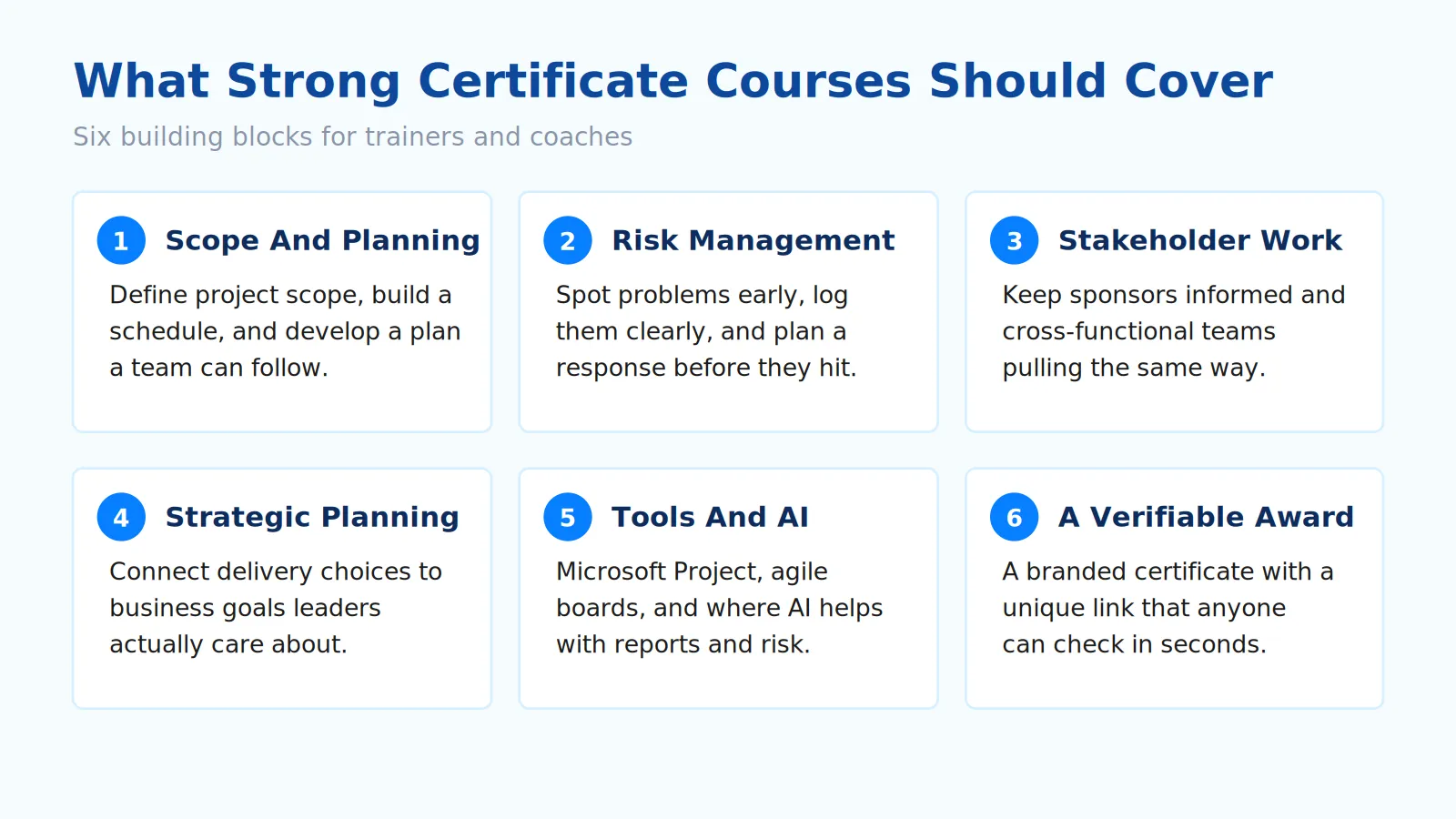
- Scope and planning. Define project scope, build a schedule, and develop a project plan a team can follow.
- Risk management. Spot problems early and log them clearly.
- Stakeholder management. Keep sponsors informed and cross-functional teams aligned.
- Strategic planning. Connect delivery choices to business goals.
- Project management tools. Microsoft Project, agile boards, and where AI for project management genuinely helps.
A quick note on that last one. AI now sits inside daily delivery work, drafting status reports and flagging schedule risk. Cover AI honestly in your course materials, then be clear that project managers ensure projects land safely and no tool takes that accountability.
What These Awards Require
- Training hours. PMP certification asks for 35 hours of project management education before the exam, which is why an online project management certificate course sells well.
- Experience. Senior awards want documented project management experience leading a project team, often three years or more.
- An exam. Usually proctored, timed, and scenario based.
- Renewal. Holders collect professional development units through continuing education and short management courses, so expiry and renewal reminders matter.
So a certification journey does not end on exam day.
Why Certificates Matter So Much
Here is what surprises trainers. The certificate is not paperwork at the end. It is one of the hardest working assets in your business.
Learners Want Proof, Not Praise
Demand for project managers is real, and your students know it. The Bureau of Labor Statistics projects 7 percent growth in the project management field from 2025 to 2035, with roughly 76,500 openings a year and median pay of $102,320. PMI warns of a shortfall of up to 29.8 million project professionals by 2035.
That job outlook makes the skills in-demand. Many people search for a project management certificate online before they ever speak to a trainer. Most are aiming for a first project management role, so they will judge your program against their career goals.
Certificates Keep Learners Finishing
Enrollment is easy to buy. Completion is harder, especially with online coursework. A 2024 study in Open Praxis found overall course completion of 30 percent, rising to 48 percent among learners who said upfront that they intended to finish.
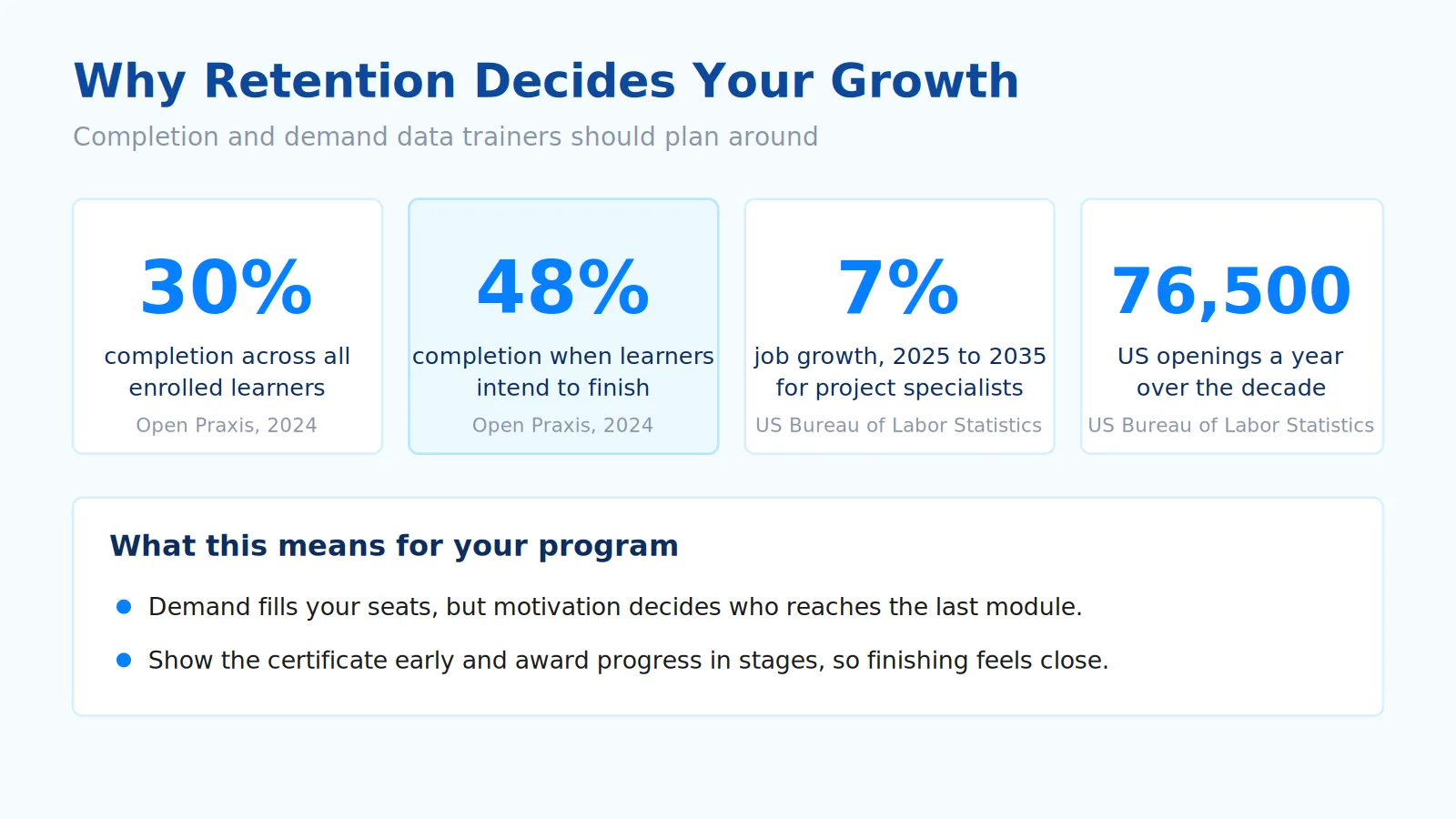
Motivation, not content quality, decides who reaches the end. Learners who earn a project management certificate leave with skills and confidence, and a visible finish line gets them there.
Marissa Cole, who coaches entry-level project managers in Denver, awards a badge after each stage of her six-week program. Learners see how far they have come, and completion improved across her next two cohorts.
Verification Protects Your Name
A PDF can be edited in a browser in about a minute. Employers know this, so they discount what they cannot check.
Give every certificate a unique verification link, and that problem disappears. Potential employers confirm it in seconds, and your reputation stays intact.
How Wauld Helps You Issue
This is where Wauld comes in. It handles the whole certificate side so you can stay focused on teaching.
- Design Studio. Start from over 1,200 certificate and badge templates, then apply your colors, logo, and signature.
- Bulk issuing. Send one award at a time, or a full cohort from your form responses.
- Built-in verification. Every credential gets a unique link and QR code anyone can check.
- One-click sharing. Recipients add their award to a LinkedIn profile without saving a file.
- Engagement analytics. See who opened, downloaded, and shared their award.
- Workspaces. Run a separate space for each certificate program, with role-based access.
Wauld supports Open Badges 3.0 and W3C Verifiable Credentials, so your awards stay portable. It is free to start, and there are no onboarding fees.
How To Build Your Certificate
Here is the whole workflow, start to finish. Most trainers get through it in an afternoon.
- 1
Create your free account.
Sign up at wauld.com and name your first workspace after your course.
- 2
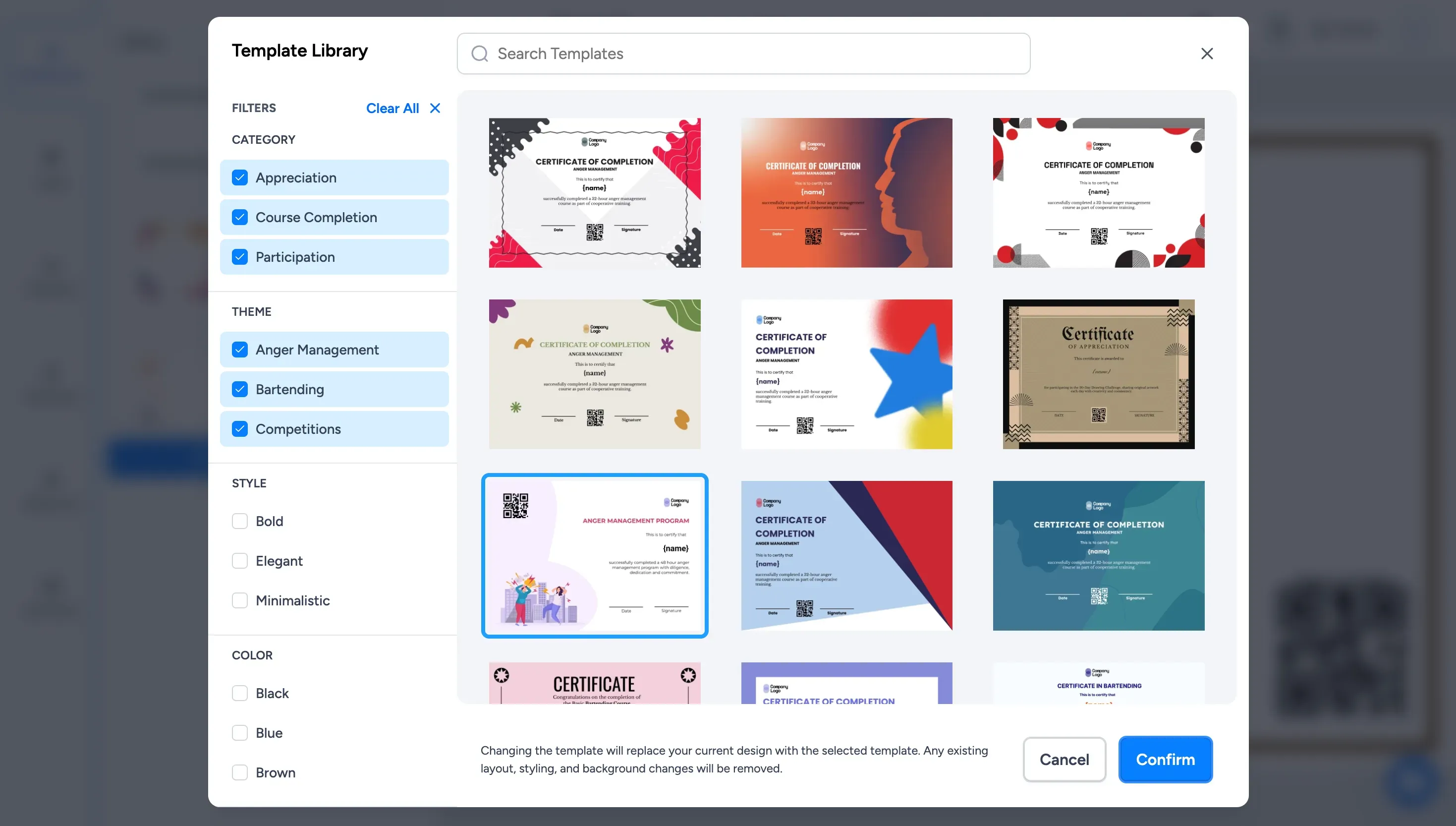
Pick a template.
Browse the gallery and choose a layout that suits your brand. Clean and simple beats busy every time.
- 3
Make it yours.
Add your logo, colors, and signature in the Design Studio. Include the course name, the contact hours, and the date.
- 4
Add your recipients.
Enter them one by one for a small group, or upload a cohort in bulk when a class finishes.
- 5
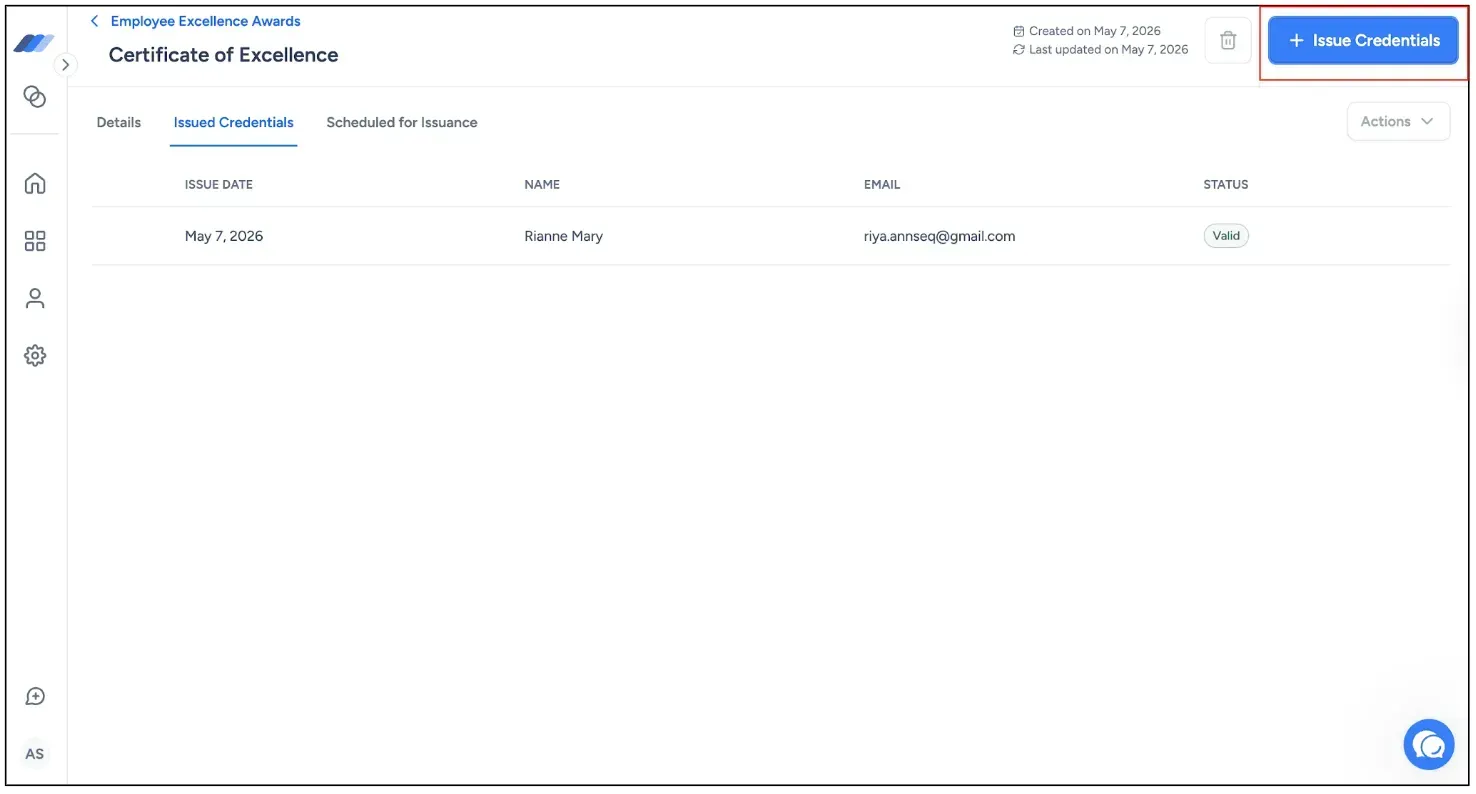
Preview, then issue.
Check one certificate carefully, especially name spelling. Then send the batch.
- 6
Track and follow up.
Watch your analytics to see who shared their award, and invite those learners into your next program.
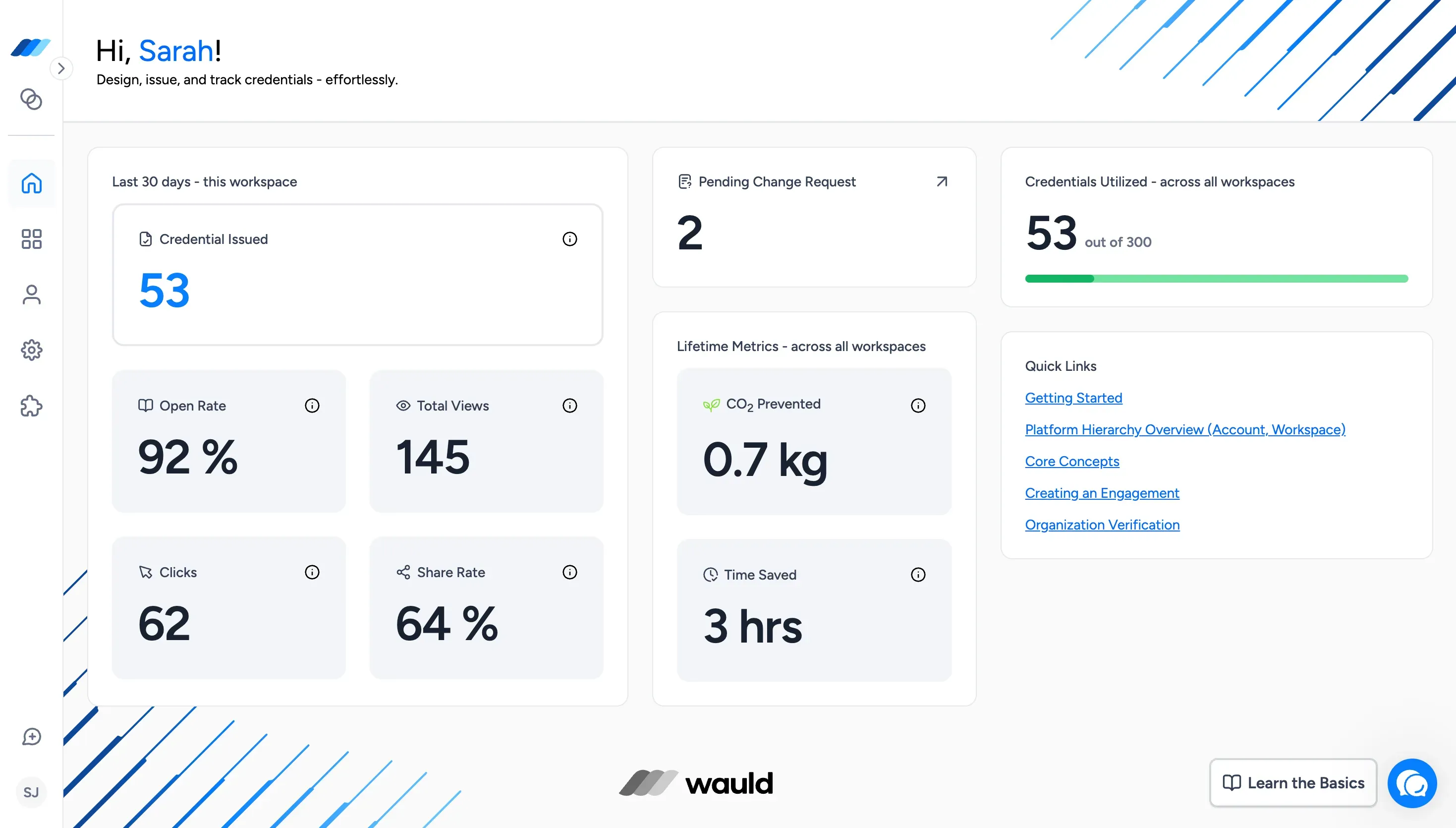
One small tip pays off. Add the contact hours to the certificate itself, because learners chasing CAPM or PMP eligibility will thank you.
Bringing It All Together
A good certificate does three jobs at once. It proves real learning, it pulls people through to the last module, and it keeps working long after the course ends.
You already do the hard part, which is the teaching. This is the finishing touch, and it takes an afternoon.
Hand out certificates your students show off
Create a free Wauld account and design, issue, and track your first certificate today.
FAQs on Project Management Certificates
These are the questions trainers and learners ask most about project management certificates.
What is a project management certificate? It confirms that someone completed a project management course you designed. Unlike an award from PMI, it carries your organization's name and standards. Employers weigh it by your reputation and by whether they can verify it.
Is a certificate in project management worth it? Yes, for most learners. It builds structured skills quickly and signals commitment to a career in project management. Value depends on course quality and easy verification.
How long should an online certificate course take? Four to twelve weeks suits part-time learners. Shorter programs struggle to cover scope, risk, and stakeholder work. Longer ones tend to lose people.
Can trainers issue their own project management certification? Yes. Independent trainers and coaches can award their own certificate. Be clear that it is yours, not PMI's, and make it verifiable.
Does a certificate count toward PMP eligibility? It can. Candidates need 35 contact hours of training before the PMP exam, and provider courses often qualify. State the hours on the certificate.
How do I stop students from dropping out? Make the finish line visible early, break the program into stages, and award something at each one. Feedback and a shareable award help learners complete the course.