CPD Training in Healthcare: Improving Skills, Compliance, and Patient Outcomes

CPD Training in Healthcare
The Professionals Patients Trust Are Never Done Learning
Every healthcare professional you trust with your health is, in some way, in a constant race against time. Medicine, research, and regulations never stand still. That is exactly why CPD training in healthcare is not just a checkbox activity. It is the foundation that keeps practitioners sharp, organizations compliant, and patients safe.
This blog is written for the people behind the programs, not just the people completing them. We will walk through what CPD really means, why quality standards matter, how requirements differ across countries, and how issuing the right certificates can make a real difference to outcomes, for your learners and for the patients they serve.
So, What Exactly Is CPD Certification in Healthcare?
CPD stands for Continuing Professional Development. It is the ongoing, structured process by which healthcare professionals maintain, deepen, and expand their knowledge and skills throughout their careers.
Unlike a one-time qualification, CPD is cyclical. It covers a wide range of learning activities, including:
- Attending workshops and conferences
- Completing online courses
- Reading research journals
- Participating in peer discussions
- Undertaking reflective practice
Any activity that meaningfully develops a practitioner's ability to do their job better can count as CPD.
CPD certification is the formal recognition of those activities. When a training provider, coach, or L&D department issues a CPD certificate, they are declaring: "This learning experience meets a defined standard, and the professional who completed it has earned verifiable credit for it."
In healthcare specifically, CPD evolved from what used to be called Continuing Medical Education (CME), a model focused primarily on clinical knowledge. Modern CPD in health and social care now covers a much wider range of competencies:
- Patient communication
- Interprofessional collaboration
- Resource management
- Patient safety culture
- Population health
- Leadership skills
In short, CPD certification in healthcare is the bridge between learning and accountability.
CPD Standards That Healthcare Cannot Afford to Ignore
Not all CPD is created equal. A healthcare professional could technically "learn" from watching unverified videos online, but that holds very different value than completing a structured, accredited CPD program with measurable outcomes.
This is where CPD standards come in, and why they matter so much for anyone issuing CPD credentials in the healthcare space.
CPD accreditation bodies assess training content against a defined framework. They look at:
- Whether the program has clear learning objectives
- Whether the content is evidence-based
- Whether outcomes can be measured
- Whether the provider has appropriate subject matter expertise
When your CPD program carries accreditation from a recognized body, it signals to employers, regulators, and learners that the learning is credible and worth their time.
Internationally recognized bodies such as the CPD Standards Office, the CPD Certification Service (CPDUK), and CPD Global Standards provide accreditation frameworks used across healthcare and other regulated sectors. Their standards ensure that CPD activities drive genuine professional growth rather than just accumulate hours on a spreadsheet.
For credential issuers, meeting CPD standards is what separates your program from the noise. It is also what gives the certificates you issue real weight in the eyes of regulators, employers, and healthcare professionals themselves.
A well-governed CPD system in healthcare also protects patients. The GMC has stated clearly that lifelong learning by doctors is essential for safe patient care. A 2024 paper in ScienceDirect further confirmed that CPD improves patient care, patient safety, and physician wellbeing, making the case that quality standards in CPD are ultimately a patient safety mechanism.
How CPD Requirements Differ Around the World
CPD requirements in healthcare are not universal. They vary significantly by country, profession, and regulatory body. Here is a look at some key markets.
United Kingdom
The UK has one of the most structured CPD frameworks for healthcare in the world. The Professional Standards Authority (PSA) oversees 10 professional regulators in the health and care sector, each setting its own CPD standards.
- Nurses and Midwives (NMC): Must complete 35 hours of CPD relevant to their scope of practice over every three-year registration cycle. At least 20 of those hours must involve participatory learning, such as workshops, conferences, or team-based training sessions. The NMC audits compliance, and practitioners must maintain records of all CPD activity.
- Doctors (GMC): The GMC does not mandate a specific number of CPD credits. Instead, individual Royal Colleges and Faculties set their own guidance, typically recommending around 50 credits per year, reviewed at annual appraisals within a five-year revalidation cycle.
- Allied Health Professionals (HCPC): The Health and Care Professions Council regulates over a dozen health professions, from physiotherapists to paramedics, and requires evidence of CPD as a condition of continued registration.
For training providers in the UK, the NHS's Learning and Development teams are active CPD purchasers. Accredited CPD certificates are often a prerequisite for content to be recognized within NHS professional development frameworks.
United States
In the US, CPD in healthcare is predominantly called CME (Continuing Medical Education) or CE (Continuing Education), depending on the profession.
- Physicians: Most state medical boards require between 25 and 50 hours of AMA PRA Category 1 Credit over one to two years. The ACCME (Accreditation Council for Continuing Medical Education) is the primary accreditation body, ensuring educational content is evidence-based and commercially unbiased.
- Nurses: Requirements vary by state, but nurses generally need 20 to 30 contact hours per renewal cycle. Many states also mandate specific topics such as infection control, pain management, or opioid stewardship.
- A significant 2023 federal change: The MATE Act requires all DEA-registered practitioners (except veterinarians) to complete a one-time 8-hour training on treating patients with opioid or other substance use disorders. It is a clear reminder that CPD requirements can shift quickly in response to public health priorities.
For L&D professionals and training providers serving the US market, understanding which ACCME-accredited formats are accepted by state boards is essential when structuring your CPD content and certificates.
Australia
Australia operates its CPD framework through AHPRA (the Australian Health Practitioner Regulation Agency) and the National Boards it manages. Requirements vary by profession:
- Nurses and Midwives: Minimum of 20 CPD hours per year
- Medical Practitioners: 50 hours annually, spread across three defined categories
- Dentists: 60 hours over a three-year cycle
AHPRA's approach is notable in that CPD is not limited to formal courses. Any activity that develops competence, improves practice, or maintains currency in a professional's field can qualify, provided it is relevant to their scope of practice and properly documented.
Canada
In Canada, CPD for family doctors is managed by the College of Family Physicians of Canada (CFPC). It is managed through the Mainpro+ program. Specialist physicians fall under the Royal College of Physicians and Surgeons of Canada, which runs its own Maintenance of Certification (MOC) program. As of late 2024, organizations seeking to become eligible CPD providers now face a formal review process. This reinforces the country's commitment to CPD quality assurance.
Europe
Across Europe, CPD requirements follow a broadly similar model to the UK, with national medical councils and nursing bodies setting minimum hours and activity types. The European Union of Medical Specialists (UEMS) provides an overarching framework through the EACCME (European Accreditation Council for Continuing Medical Education), with many bodies recommending around 50 CPD credits per year as a benchmark.
Why CPD Truly Matters in Health and Social Care
If you have ever wondered whether CPD in healthcare makes a measurable difference, the evidence says yes.
A 2024 systematic scoping review published in BMC Medical Education analyzed 17 studies spanning 36 years of CPD research. It found consistent links between well-designed CPD interventions and improvements in healthcare professional performance. It also confirmed that simply delivering CPD activities is not enough. The quality of design and organizational support behind it is what drives real change.
Here is why CPD carries so much weight in health and social care specifically.
Healthcare knowledge becomes outdated fast.
Clinical guidelines, drug protocols, infection control procedures, and technology all evolve rapidly. A nurse who qualified ten years ago and has not engaged in structured CPD since is likely working with knowledge that is no longer fully current. CPD keeps practitioners updated with evidence-based practice, the gold standard for patient care.
Regulatory compliance is non-negotiable.
Failing to meet CPD requirements can cost a healthcare professional their registration. For organizations, non-compliant staff creates:
- Legal exposure
- Reputational risk
- Potential inspection failures
During CQC inspections in the UK, providers are specifically asked how they support staff development beyond mandatory training. A strong CPD offer can be the difference between a "Good" and "Outstanding" rating.
CPD directly supports staff retention.
Research consistently shows that healthcare professionals who feel their employers are invested in their growth are significantly more likely to stay. The cost of replacing a single care worker, when you factor in recruitment fees, induction time, and lost productivity, is substantial. CPD investment pays back in retention returns.
It builds a culture of learning and safety.
Organizations with active CPD cultures tend to have more engaged, competent, and reflective staff. That culture contributes to safer environments: fewer clinical errors, better communication, and the kind of team-based care that leads to better patient outcomes.
Well-being and professional confidence go up.
Research has shown that CPD not only improves patient care and safety but also supports physician and practitioner wellbeing. When professionals feel competent and supported in their growth, they are less likely to experience burnout.
Why the Certificate You Issue Matters More Than You Think
The certificate at the end of your program is not just a formality. It is a professional record, a proof of compliance, and increasingly, a piece of verified data.
Here is what high-quality CPD certificates achieve.
They serve as compliance evidence.
Healthcare regulators expect practitioners to maintain CPD records. A well-structured certificate must clearly show:
- The learning outcomes covered
- The number of CPD hours awarded
- The provider's credentials
- The date of completion
This is exactly what a nurse needs for NMC revalidation or a doctor needs for GMC appraisal. A flimsy or unverifiable certificate creates friction and doubt.
They support professional portfolio building.
Most healthcare professionals maintain a CPD portfolio throughout their careers. Clear, shareable certificates make this far easier and create a meaningful paper trail of professional growth.
They drive learner motivation.
Research shows that recognition and formal acknowledgment of learning increases completion rates and engagement. When your learners know they will receive a credible, shareable certificate, they are more likely to engage seriously with the content.
They protect your credibility as a provider.
When employers, HR managers, or procurement teams are choosing between training providers, the verifiability of the certificates issued is often a deciding factor. A credential that can be instantly verified, rather than requiring a phone call to confirm authenticity, builds trust in your brand.
They reflect standards compliance back to regulators.
For programs seeking accreditation from bodies like the CPD Standards Office or CPDUK, the ability to issue standardized, verifiable certificates is typically part of the assessment criteria. Digital, tamper-proof certificates that align with open standards make this process much simpler.
The shift from paper-based PDF certificates to verifiable digital credentials has already transformed compliance management in regulated industries. In healthcare, where verification of training records can literally be a matter of patient safety, that shift is not optional. It is a professional necessity.
How Wauld Helps You Issue CPD Certificates That Actually Count
If you are running CPD programs in healthcare, Wauld is built for exactly this kind of work.
Wauld is a digital credential platform that helps you design, issue, track, and verify professional certificates and badges. Here is how it supports CPD in healthcare specifically.
Design credentials that reflect your brand and meet professional standards.
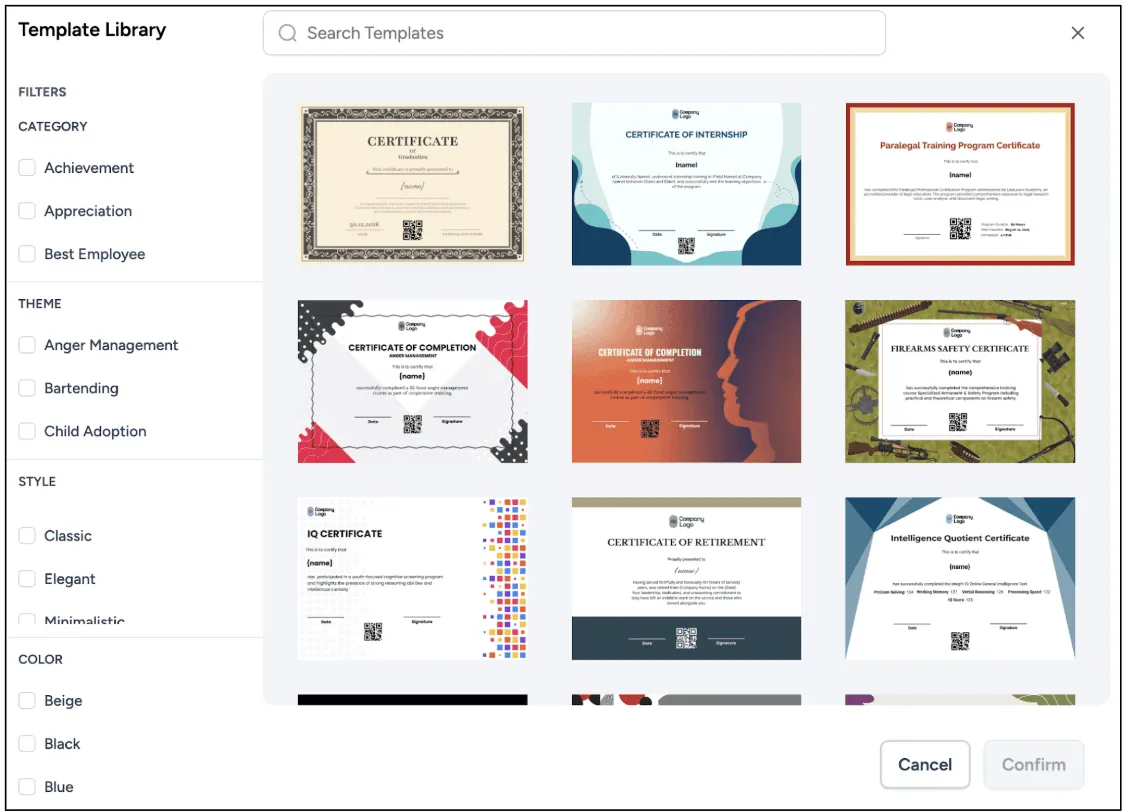
- Access 1,000+ professionally designed templates, including CPD-specific certificate templates and medical certificate templates
- Add your logo, color scheme, fonts, CPD hours, learning outcomes, and provider details
- Every certificate contains the information healthcare professionals need for their portfolios and revalidation records
Issue at scale without the admin burden.
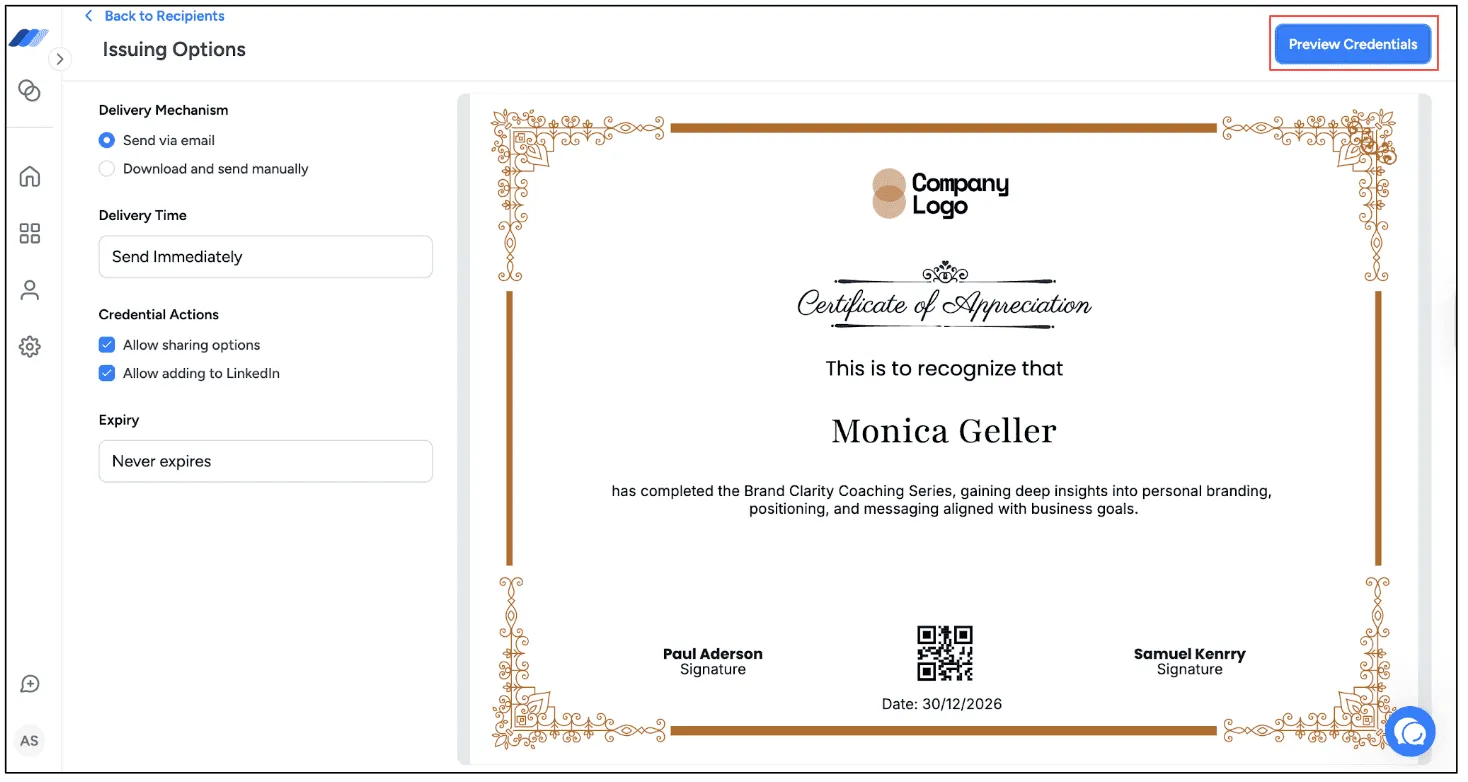
- Issue certificates in bulk in minutes with multiple issuing options.
- Significant time saver for L&D teams managing CPD compliance across large healthcare organizations
Instant, tamper-proof verification.
- Every certificate includes a unique QR code for instant authentication
- Employers and regulatory bodies can verify credentials in seconds, without contacting you
- Particularly important in healthcare, where fraudulent credential claims have real patient safety implications
Compliant with global digital credential standards.
- Wauld certificates comply with Open Badge 3.0 standards
- Portable and recognized across platforms and institutions worldwide
- Ideal for healthcare providers working with internationally mobile professionals
Learner-friendly sharing.
- Certificates can be shared on LinkedIn, embedded in email signatures, or presented via a unique URL
- Encourages healthcare professionals to engage with and showcase their CPD portfolios
Track credential status in one place.
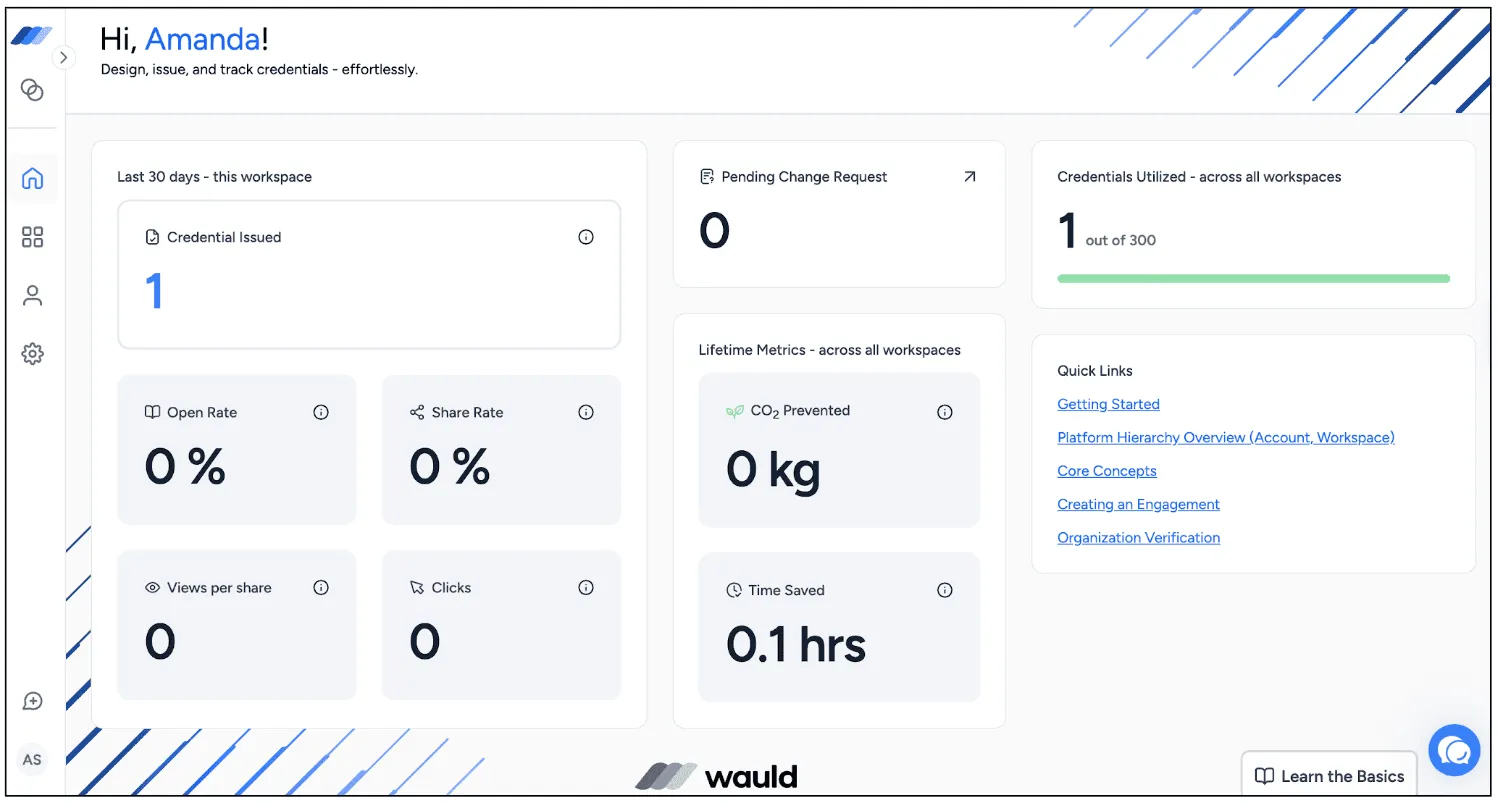
- Centralized dashboard showing who received what, when it was issued, and whether it has been viewed or shared
- Invaluable for HR and L&D teams managing compliance across departments
Whether you are a health coach, a training company supplying programs to NHS trusts, or an internal L&D function managing clinical staff development, Wauld gives you the infrastructure to issue credentials that are professional, verifiable, and trusted. Browse the full Wauld template library to find a design that fits your healthcare training program.
Raising the Bar for Healthcare, One Certificate at a Time
CPD training in healthcare is not a bureaucratic obligation. It is one of the most direct levers we have for improving patient care, reducing risk, and building a workforce that is capable, confident, and compliant.
The programs you design and the credentials you issue sit at the heart of that system. When you issue a CPD certificate, you are not just closing out a course. You are creating a verifiable record of professional growth that has real consequences in real clinical settings.
Getting that right matters. And the tools you use to get it right matter too.
If you are ready to issue CPD certificates that healthcare professionals can trust, that regulators will accept, and that reflect the quality of your programs, explore Wauld today. See how easy it is to design, issue, and verify credentials that stand up in the real world.