

Key Takeaways
Heartbeat.chat lacks native certificate generation and verification features for course completions.
Community creators can automate certificate issuance using Zapier, Pabbly, APIs, or manual workflows connected with Wauld.
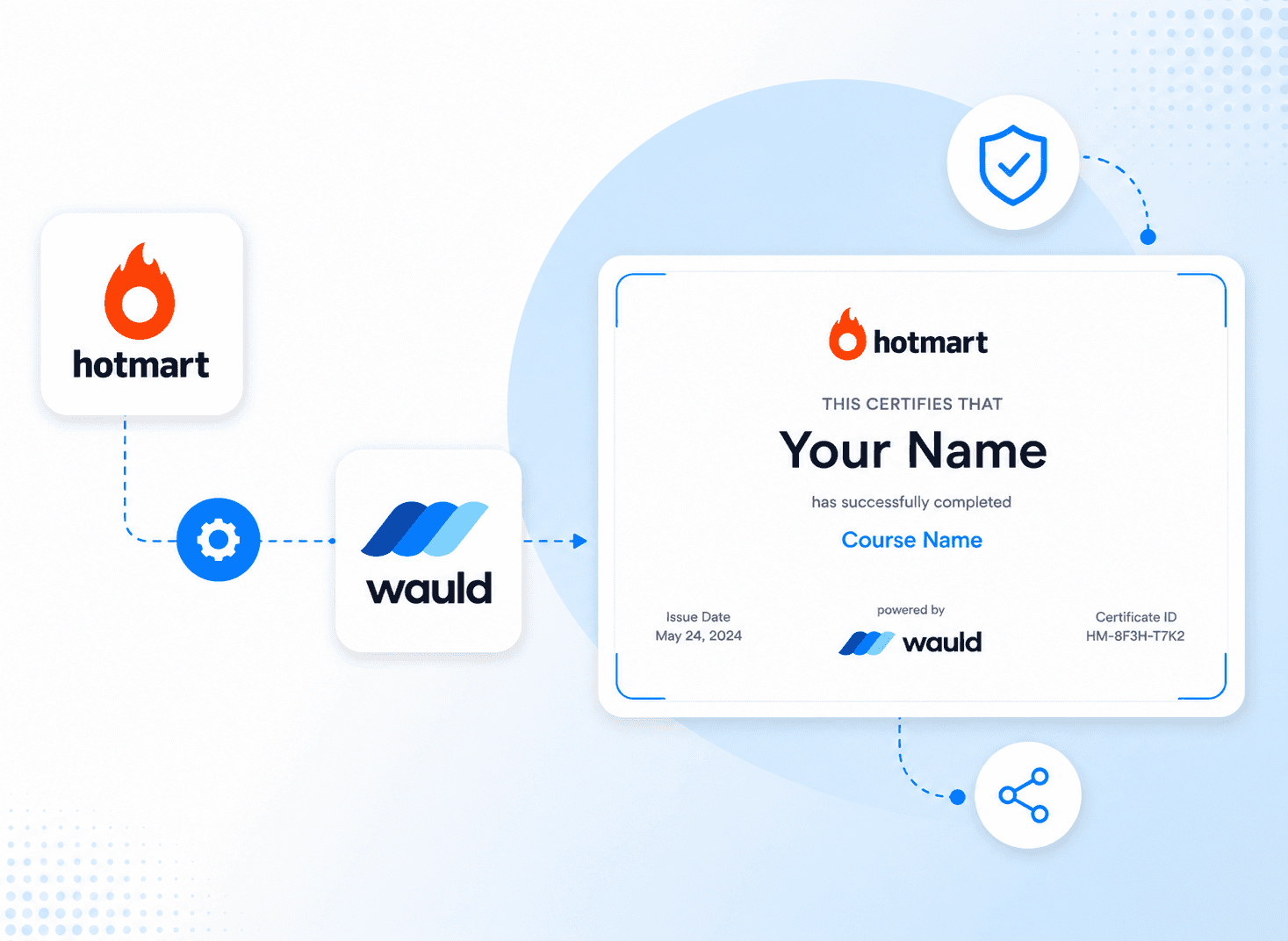
Wauld enables verifiable, shareable certificates with QR codes, LinkedIn sharing, and credential tracking.
5 Methods to Issue Certificates for Heartbeat.chat Courses
Your member just finished your Heartbeat.chat course. They showed up to every session, submitted their assignments, and hit every milestone you set for them.
And then nothing happens.
No certificate. No credential. No proof that any of it occurred.
That moment matters more than most community builders realize. A course completion certificate is the tangible outcome that members in paid coaching programs and cohort-based communities are often working toward.
If you run courses on Heartbeat.chat, this gap is real and confirmed. Heartbeat does not have a native certificate builder or verification system. The feature has been publicly requested on their feedback board, currently sits at 35 upvotes, and its status is still Open with no confirmed shipping date.
This blog walks through every method available today to issue verifiable digital certificates from a Heartbeat community. We cover the exact steps, pros, cons, and cost for each one. At the end, we show you how Wauld fits in as the cleanest solution for community builders who want certificates that actually mean something.
What Heartbeat Does for Courses
Before getting into certificates, it is worth understanding what Heartbeat actually offers on the course side. The platform is genuinely strong in several areas.
Two course structures:
Evergreen courses: Always available, with optional drip delivery so lessons unlock over time.
Cohort-based courses: Run with fixed start and end dates, live sessions tied to specific modules, and a group moving through the material together.
For coaches running structured eight-week programs, certification tracks, or bootcamps, the cohort structure is one of the better-built options at this price point.
Course features:
Discussion channels attached to individual courses
Live events tied to lessons or available as recurring office hours
Automated matchups pairing members for peer accountability
Assignment submission and review with file uploads or long-form text
Document sections visible only to course participants
Native video hosting:
Available as a $19 per month add-on on the Build plan
Included on the Grow plan (50 hours) and the Scale plan (200 hours)
Analytics:
Admins get visibility into participation rates, lesson completion, and overall course progress
What is missing:
When a member finishes your course, Heartbeat has nothing to give them
No certificate, no credential ID, no verification link, and no way to share proof of completion
The course completion workflow trigger exists and is useful for sending DMs, emails, or adding members to groups
But nothing in the platform converts that trigger into a certificate
Why This Gap Costs You More Than You Think
Certificates are not just a nice touch. They serve a real function for creators building trust-based businesses.
Organic promotion at scale:
Members who receive a verifiable credential are more likely to share it publicly.
A certificate shared on LinkedIn by 50 graduates reaches thousands of people who have never heard of your community.
That is free promotion with zero additional spend.
Program credibility and pricing power:
Coaches who issue verifiable credentials with a unique ID and a verification link signal something different from those who send a plain PDF.
That distinction supports higher pricing and stronger member retention.
Higher course completion rates:
Learners working toward a credential outcome complete courses at significantly higher rates than those with no tangible outcome to aim for.
The certificate is part of the motivation structure, not an afterthought.
The 5 Methods: What Community Builders Actually Use
Method 1: Manual Certificate Design and Delivery
The simplest approach with no setup required. You design a certificate template, fill in each member's details by hand, and send it by email.
How to set it up:
Sign up for Wauld's free plan at wauld.com. Select a certificate template from the 900+ library. Customize it with your logo, brand colors, course name, and any signature fields you want to include.
In your Heartbeat admin, go to the course dashboard. Check the completion list to see who has finished.
In Wauld, click Issue Credentials and select Manual Issuance. Enter the member's name, email, and the completion date. Preview the certificate and click Send.
Wauld emails the credential directly to the member. It includes a unique verification link, a QR code, and a one-click LinkedIn sharing button.
Log the issuance in your Wauld dashboard. All records are stored automatically.
Pros:
No automation tools or integrations required.
Full control over certificate timing and design.
Wauld's free plan covers up to 300 credentials at no cost.
Issued credentials are verifiable even in manual mode.
Cons:
Every certificate requires individual action from the admin.
Does not scale past 20 or 30 completions per cohort.
No live connection to course completion events in Heartbeat.
The admin must manually check the course dashboard to confirm who has finished.
Cost: Free on Wauld's free plan up to 300 credentials. No credit card required to start.
This method works well for small or occasional cohorts. Once you are running recurring programs or growing your community past 30 active completions per cycle, the manual overhead becomes the bottleneck.
Method 2: Google Forms and Autocrat
A well-known free workaround used across the online course world. You move certificate generation outside Heartbeat entirely. Google Slides handles the template, a Google Form collects member data, and Autocrat (a free Google Workspace Marketplace add-on) merges the data and emails the PDF automatically.
How to set it up:
Create a certificate template in Google Slides. Add placeholder text like
{{Name}},{{Course}}, and{{Date}}where the personalized information should appear.Build a Google Form that collects the member's first name, last name, and email address.
Open the Google Sheet that is automatically connected to your form. Go to Extensions, then Add-ons, then Get Add-ons. Search for Autocrat and install it from Google Workspace Marketplace.
Open Autocrat from the Extensions menu. Click New Job. Select your Google Slides certificate template as the source. Map each form field to the matching placeholder in the template. Set the output format to PDF. Configure it to email the PDF to the address captured in the form.
In Heartbeat, go to the final lesson of your course. Add the Google Form URL as a link inside the lesson content or as a resource in the lesson. You can also use a Heartbeat workflow to send the form link via DM when a member's course completion is triggered.
Test the full flow by submitting a test form response. Confirm that Autocrat generates the certificate and emails it correctly.
Pros:
Free if you already have a personal Google account.
Autocrat has a clear setup interface that requires no coding.
Certificates are generated and emailed automatically on form submission.
The Google Sheet keeps a running log of all certificate issuances.
Cons:
No real completion verification. Anyone with the form URL can submit it and receive a certificate regardless of course progress.
Depends on three separate systems. If any one of them fails, the whole process breaks.
Generated certificates are static PDFs. No credential ID, no verification link, no LinkedIn sharing.
The form link is not natively connected to Heartbeat completion events. Members must submit it voluntarily.
Cost: Autocrat is free from the Google Workspace Marketplace. Google Forms and Google Slides are free with a personal Google account. Google Workspace for Business plans start at $7 per user per month (Business Starter, billed annually) if your organization uses the paid tier.
This method costs nothing to try and works at a small scale. The absence of completion verification is a real problem for any program where the certificate is meant to represent a genuine learning outcome.
Method 3: Heartbeat Workflow and Zapier and Wauld
Heartbeat's built-in workflow system includes a native Course Completed trigger. This is confirmed on Zapier's Heartbeat integration page as an instant trigger labeled "Course Completed: Triggers when a user completes a course."
By connecting that trigger to Zapier and then to Wauld as the action app, you can build a fully automated certificate pipeline without writing any code.
How to set it up:
Log into Zapier and click Create. Select Zap from the options.
In the trigger step, search for Heartbeat. Select it as the trigger app. Choose Course Completed as the trigger event. This is listed as an Instant trigger on Zapier's Heartbeat page.
Connect your Heartbeat account by entering your API credentials. Heartbeat API access is available on the Grow plan ($149/month) and above, and also on legacy Growth and Business plans.
In the trigger setup, select the specific course for which you want to issue certificates. You can leave it set to all courses if you want the Zap to fire for any course completion.
Click Test Trigger. Complete a test course in your Heartbeat community to generate sample data. Confirm that Zapier receives the member's name, email address, and course title.
Add an action step. Search for Wauld and select it as the action app. Choose the action that creates and issues a credential.
Map the fields from the Heartbeat trigger payload to the corresponding fields in Wauld. Map the member's name to the recipient name field. Map their email to the recipient email field. Map the course title to the credential name or description field.
Turn the Zap on. The next time a member completes the course in Heartbeat, Zapier fires the trigger instantly. Wauld receives the data, generates the certificate, and delivers it to the member's inbox automatically.
Pros:
Fully automated. No manual action is needed after setup.
Directly tied to a real course completion event in Heartbeat.
No code required. Accessible to non-technical community builders.
Zapier connects Heartbeat to over 9,000 apps, giving flexibility if you want to use a different action tool.
Cons:
Zapier's free plan is capped at 100 tasks per month and supports only two-step Zaps. This workflow requires a multi-step Zap and a paid Professional plan.
Heartbeat API access requires the Grow plan or above. This method is not available to Build plan users.
If Zapier has downtime, certificate delivery is delayed.
Each successful action in a Zap counts as one task toward your monthly limit.
Cost: Zapier's Professional plan starts at $19.99 per month billed annually. It includes multi-step Zaps, webhooks, and access to premium apps. The Zapier free plan (100 tasks/month, two-step Zaps only) is not sufficient for this workflow. Wauld's free plan covers up to 300 credentials at no additional cost. Heartbeat Grow plan is $149 per month or $124 per month billed annually.
Method 4: Heartbeat and Pabbly Connect and Wauld
Pabbly Connect is a strong alternative to Zapier that works on the same principle. A course completion in Heartbeat fires a trigger, Pabbly routes the data to Wauld, and the certificate is delivered automatically.
Pabbly's Heartbeat integration page lists User Completes a Course as a supported native trigger. Other available Heartbeat triggers on Pabbly include New Event, New User, New or Updated User, New Thread, and User Joins a Group.
The main reason community builders use Pabbly over Zapier is cost. Pabbly does not count internal steps like filters, routers, and formatters as tasks. Only actual app-to-app actions count toward your monthly limit. This means a multi-step workflow costs significantly less to run on Pabbly than on Zapier. Pabbly also offers a lifetime deal, which eliminates recurring automation costs entirely.
How to set it up:
Go to pabbly.com/connect and create a new account. Click Create Workflow and give it a name.
In the trigger step, search for Heartbeat. Select it as the trigger app. Choose User Completes a Course as the trigger event.
Connect your Heartbeat account. Pabbly will ask for your Heartbeat API key. In your Heartbeat admin, go to Settings, then API Keys, and generate a new key. Paste it into Pabbly to authorize the connection. API access requires the Heartbeat Grow plan or above.
Select the specific course you want to track, or leave it set to all courses. Click Save and Send Test Request. Complete a test course in your Heartbeat community and confirm that Pabbly receives the member's completion data including their name, email, and course title.
Add an action step. Search for Wauld and select it. Map the member's name and email from the Heartbeat trigger payload to the corresponding fields in your Wauld certificate template.
Save the workflow and toggle it to Active. From this point forward, every course completion in Heartbeat triggers an instant automatic certificate delivery through Wauld.
Pros:
No code required. Setup mirrors Zapier in structure.
Filters, routers, and formatters do not consume tasks. Multi-step workflows cost less per run than on Zapier.
Lifetime deal starts at $249 one-time for 3,000 tasks per month. This eliminates recurring automation costs permanently.
Pabbly supports Heartbeat natively as a trigger app.
All paid plans include unlimited workflows.
Cons:
Pabbly has around 2,000 app integrations compared to Zapier's 9,000+.
Heartbeat API access still requires the Grow plan or above.
The Pabbly interface can feel less polished than Zapier for first-time users.
Lifetime plan task limits cannot be extended once exhausted in a given month. Monthly top-up plans are always available alongside lifetime deals.
Cost: Pabbly Connect monthly plans start at $19 per month for 12,000 tasks per month. Annual plans offer approximately 15 percent savings. The lifetime deal starts at $249 one-time for 3,000 tasks per month with no recurring fees. A free plan is available with 100 tasks per month for testing. Wauld's free plan covers up to 300 credentials with no cost to start.
Method 5: Heartbeat API Webhook Directly to Wauld
For technical teams or community builders with developer support, the most direct and reliable path is to send a webhook from Heartbeat straight to Wauld's receiving endpoint. No Zapier. No Pabbly. No middleware at all.
When a member completes a course in Heartbeat, Heartbeat fires an HTTP POST request directly to any URL you configure. Wauld listens for that request, generates the certificate, and delivers it to the member's inbox instantly.
This method requires Heartbeat API access, which is available on the Grow plan and above. It is the fastest path because there is no third-party system sitting between the completion event and the certificate delivery.
How to set it up:
In your Heartbeat admin, click the gear icon in the top-right corner to open Settings. Navigate to API Keys. Click Generate New API Key and copy it.
Review the Heartbeat API documentation at heartbeat.readme.io to understand the webhook structure. Note that the base API URL is
https://api.heartbeat.chat/v0/.In Wauld, go to your workspace settings and find the incoming webhook configuration. Copy the webhook endpoint URL that Wauld provides.
Using your Heartbeat API key for authentication, register a new webhook in Heartbeat. Send a POST request to the Heartbeat API with your webhook endpoint URL as the delivery destination. Set the event type to course completion.
Complete a test course in your Heartbeat community. Check Wauld's admin dashboard to confirm that the webhook payload arrived correctly and that the test certificate was generated and delivered.
Once confirmed, the webhook runs silently and automatically every time any member completes the specified course. No monitoring or manual intervention is required.
Pros:
No Zapier or Pabbly subscription is required. Removes all recurring automation costs from this workflow.
The fastest and most direct path from a Heartbeat completion event to a Wauld certificate.
No third-party downtime risk. If Zapier is down, this method is unaffected.
Highly reliable for high-volume programs with many concurrent completions.
Once configured, it runs indefinitely without any maintenance.
Cons:
Requires basic technical knowledge to register and test the webhook via the API.
Heartbeat's API documentation notes that some endpoints are not yet available. Additional endpoint support can be requested through their public feedback board.
Debugging requires access to server logs or a webhook testing tool.
Only available on Heartbeat's Grow plan ($149 per month) and above. Not an option for Build plan users.
Cost: No additional automation tool cost. You need an active Heartbeat Grow plan and Wauld's free plan to get started. No Zapier or Pabbly subscription required.
The Real Problem: What Heartbeat Cannot Solve Natively
It is worth naming the structural issue that none of the above methods fully address on their own.
Heartbeat is excellent infrastructure for online communities. It handles course delivery, cohort management, events, discussions, payments, automation, and matchups well. Certificate issuance and credential verification sit outside what a community platform is designed to do, and Heartbeat's current system reflects that clearly.
The certificate feature request on Heartbeat's public feedback board, submitted over three years ago, asks specifically for a customizable certificate builder with automation placeholders and a QR code verification system embedded in the credential. It currently has 35 upvotes and remains Open. No shipping date has been announced.
What is missing across all of Heartbeat's native options is a combination of four things:
Verifiability - Every certificate should carry a unique credential ID and a public verification page that anyone can check. A PDF file carries neither.
Shareability - Members should be able to share their credential directly to LinkedIn or send a public link with a single click. A downloaded file cannot do this.
Tracking - You should be able to see when a member opened, downloaded, or shared their certificate. No community platform tracks this natively.
Fraud prevention - A static PDF can be copied, edited, and redistributed by anyone with a design tool. A verifiable credential with a unique ID tied to a specific completion event cannot.
How Wauld Closes the Heartbeat Certificate Gap
Wauld is a digital credential platform built specifically to manage the full lifecycle of certificates and badges: design, issue, track, and verify.
When a Heartbeat course completion event reaches Wauld through any of the three connection methods above, Wauld generates a branded certificate automatically.
What the Credential Includes
Every certificate issued through Wauld includes:
A unique credential ID tied to this specific completion event
A public verification page with a shareable URL
A QR code that links directly to the verification page
One-click LinkedIn profile sharing for the recipient
A downloadable PDF version
This is not a PDF with a name on it. It is a verifiable, shareable credential that members can use in professional settings.
Certificate Design
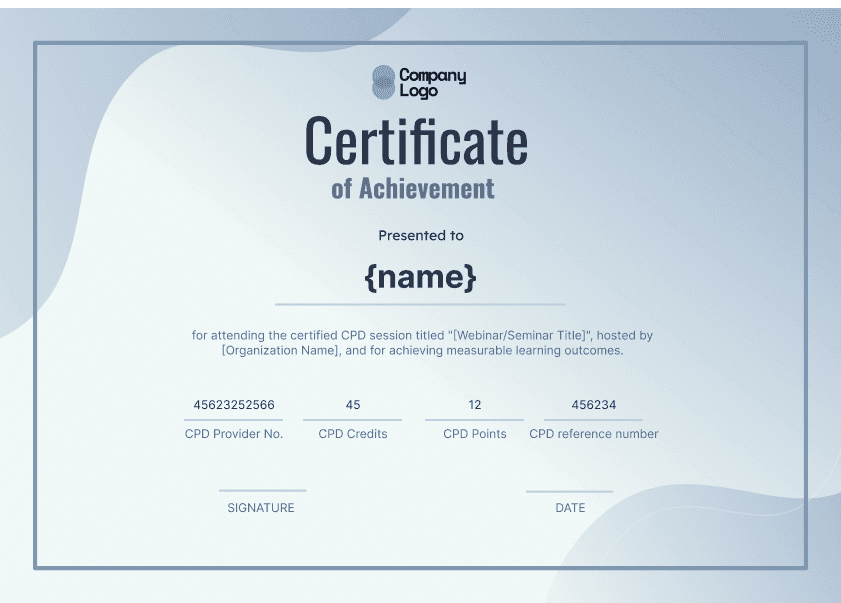
Wauld gives you full control over the credential design without requiring any design software. You can choose from over 900 professional templates, customize backgrounds, typography, colors, and logo placement, and save your design for reuse across future cohorts. The design experience is built for non-designers.
Certificate Delivery
The certificate is emailed to the member's inbox within seconds of course completion. The email comes from your brand, not from Wauld. Members do not need to log into a dashboard. The credential arrives automatically with everything they need to share it immediately.
Bulk Issuance for Past Completions
If you want to issue certificates to members who completed courses before setting up the integration, Wauld supports CSV upload for bulk issuance. Export your completed member records from Heartbeat, format the CSV with the required fields, and upload it to Wauld. The platform generates and delivers personalized certificates to every member in the batch in one operation.
Tracking and Analytics
Wauld provides credential-level analytics that Heartbeat's native system does not offer:
Who opened their certificate email
Who downloaded their certificate
Who clicked the LinkedIn sharing button
How many public verifications each credential has received
Views and engagement on public credential pages
This data tells you how much your members are actually engaging with the credential you issued them, not just whether they finished the course.
How to Connect Heartbeat to Wauld
There are three paths depending on your plan and technical setup:
Via Zapier: Use the Heartbeat Course Completed trigger in Zapier with Wauld as the action app. Requires a Zapier Professional plan ($19.99/month billed annually) and Heartbeat Grow plan for API access. Full setup in Method 3 above.
Via Pabbly Connect: Same workflow logic as Zapier but with lower per-task costs. Monthly plans start at $19/month. Lifetime deal starts at $249 one-time. Pabbly supports Heartbeat natively. Full setup in Method 4 above.
Via direct API webhook: Register a Heartbeat webhook pointing at Wauld's endpoint. No middleware required. Fastest and most reliable for technical teams. Requires Heartbeat Grow plan. Full setup in Method 5 above.
Cost: Wauld's free plan covers up to 300 credentials. It includes verifiable credentials, bulk CSV issuance, LinkedIn sharing, QR code verification, and the full 900+ template library. No credit card is required to start. The Growth plan is volume-based and adds unlimited admin users, unlimited workspaces, role-based access control, QR code verification logs, expiry management, and a verified badge for your organization. Enterprise pricing is custom and includes API access, portal white labeling, and private hosting options. See current pricing at wauld.com/pricing.
Comparing the Methods
Method | Automated Delivery | Verifiable Credential | Cost |
Manual via Wauld | No | Yes | Free (Wauld free plan) |
Google Forms and Autocrat | Yes, email PDF | No | Free |
Heartbeat and Zapier and Wauld | Yes, instant | Yes | $19.99/mo (Zapier) + free Wauld |
Heartbeat and Pabbly and Wauld | Yes, instant | Yes | $19/mo or $249 lifetime (Pabbly) + free Wauld |
Heartbeat API webhook to Wauld | Yes, instant | Yes | No extra cost (Grow plan required) |
Final Thoughts
Heartbeat.chat is a serious community platform for coaches, course creators, and membership businesses. It handles community and course infrastructure well. What it does not handle today is the credential layer.
No native certificate builder, no verification system, no QR codes, and no confirmed timeline for when that changes. The feature has been requested for over three years. It is still Open on the feedback board.
The five methods in this blog cover the full range: free and manual for small cohorts, fully automated and verifiable for programs at scale.
For most Heartbeat community builders running paid courses or certification programs, the Zapier or Pabbly route connected to Wauld is the cleanest path available today. It takes under an hour to set up, works without changing how you build or deliver your courses, and turns every course completion into a verifiable credential that your members are genuinely proud to share.
Wauld's free plan covers up to 300 credentials, so there is no cost to start. If you are running Heartbeat courses and want your certificates to mean something beyond a file that gets downloaded and forgotten, this is the fastest way to get there.
FAQs About Issuing Certificates for Heartbeat.chat Courses
Find answers about issuing, automating, customizing, and verifying certificates for Heartbeat.chat courses using manual methods, Zapier, Pabbly, APIs, and Wauld.