The Rise of Micro-Credentials: Latest Data on Future of Education

The conversation around the future of education is changing rapidly. Traditional degrees remain important, but micro-credentials, short, verifiable, skill-focused learning recognitions, are steadily gaining momentum as credible alternatives.
A recent HolonIQ survey (2021 vs. 2023) offers deep insights into how universities and EdTech partners view micro-credentials, the barriers to adoption, and where the sector is headed.
At Wauld, we believe these shifts are critical for educators, online course creators, coaches, training providers, and learners who want recognition that is modern, flexible, and future-proof. Let’s dive into the findings.
#1. Micro-Credentials as a Degree Alternative: Sooner Than You Think
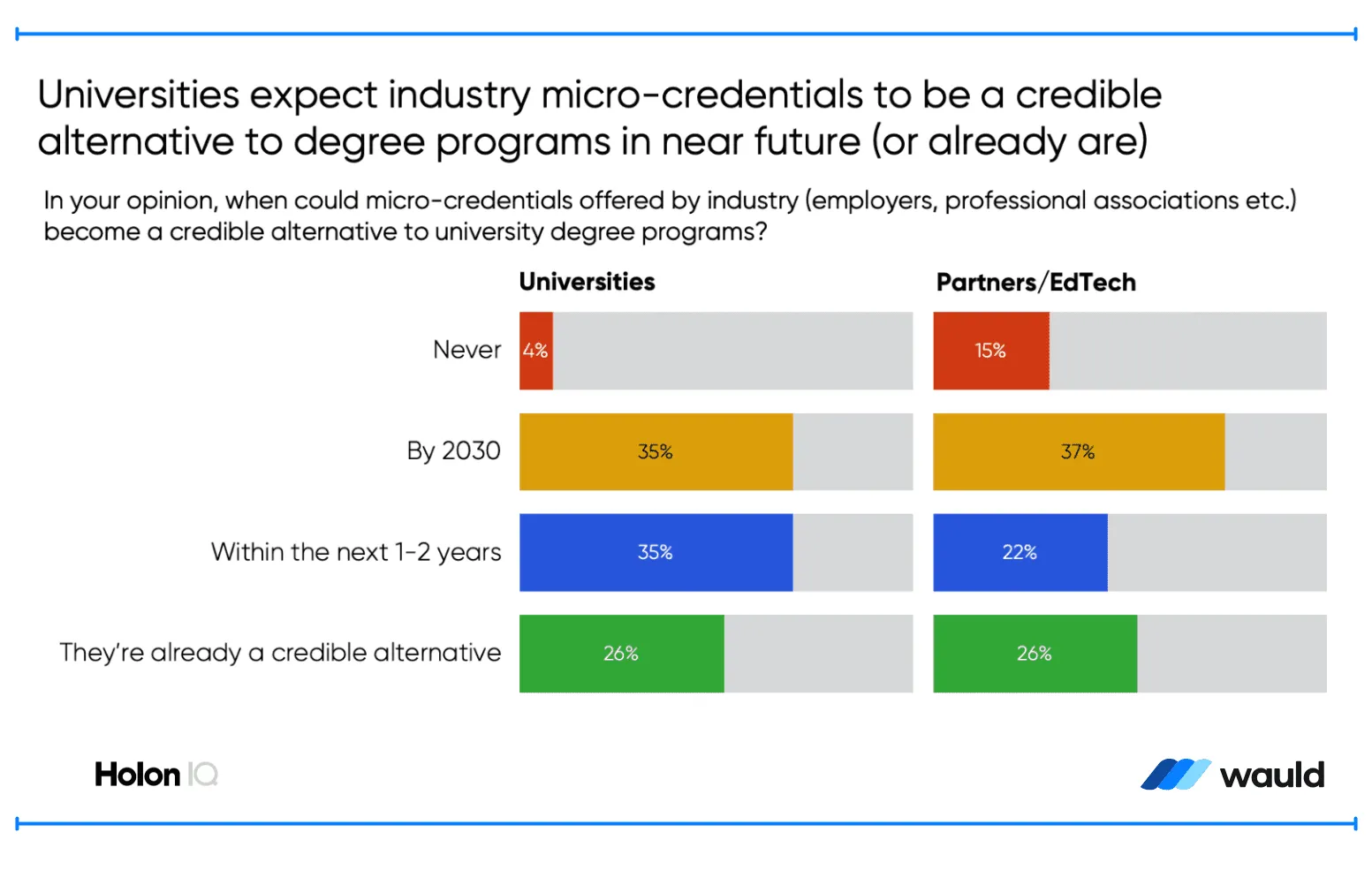
According to the survey, universities and EdTech partners see micro-credentials emerging as credible alternatives to degree programs within this decade.
- 35% of universities believe they’ll be credible by 2030, while another 35% expect this within just 1–2 years.
- Partners/EdTech providers are even more optimistic, with 26% saying micro-credentials are already credible alternatives.
Source: HolonIQ
This shows growing alignment between academia and industry, especially as employers seek faster, skills-first recognition systems.
#2. Barriers to Adoption: Recognition and Understanding Still Lag
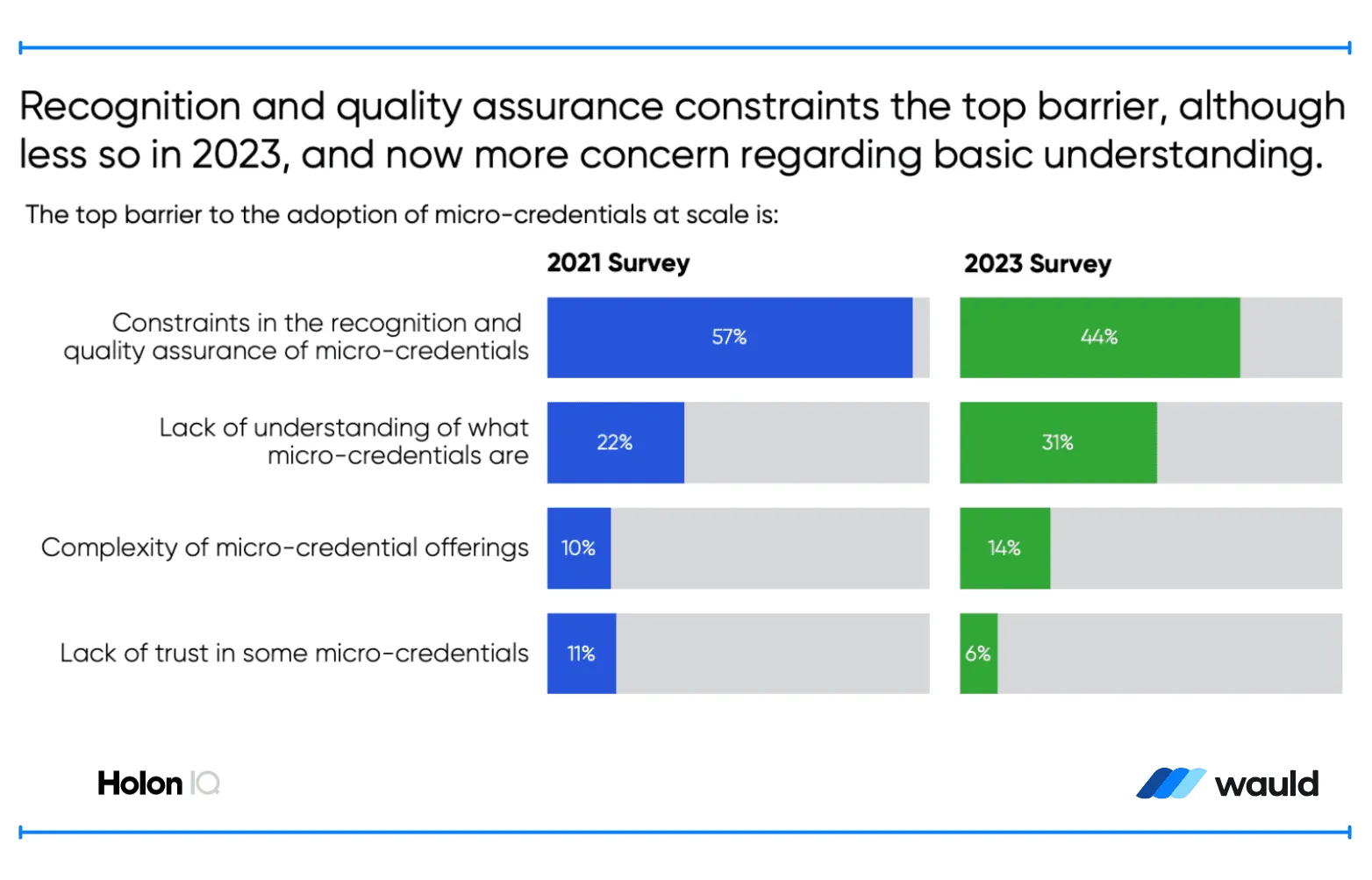
For micro-credentials to scale, they must be recognized and trusted. The top barrier remains:
- Recognition and quality assurance: Dropped from 57% in 2021 to 44% in 2023, showing progress but still the #1 challenge.
- Understanding of micro-credentials: Concerns rose from 22% to 31%, suggesting institutions need clearer frameworks and communication.
- Complexity and trust issues: Lower but persistent, at 14% and 6% respectively.
Source: HolonIQ
This highlights a crucial role for credentialing platforms like Wauld, which simplify credential creation, embed verification metadata, and ensure consistency across issuers.
#3. Institutional Strategy: Micro-Credentials as the Future
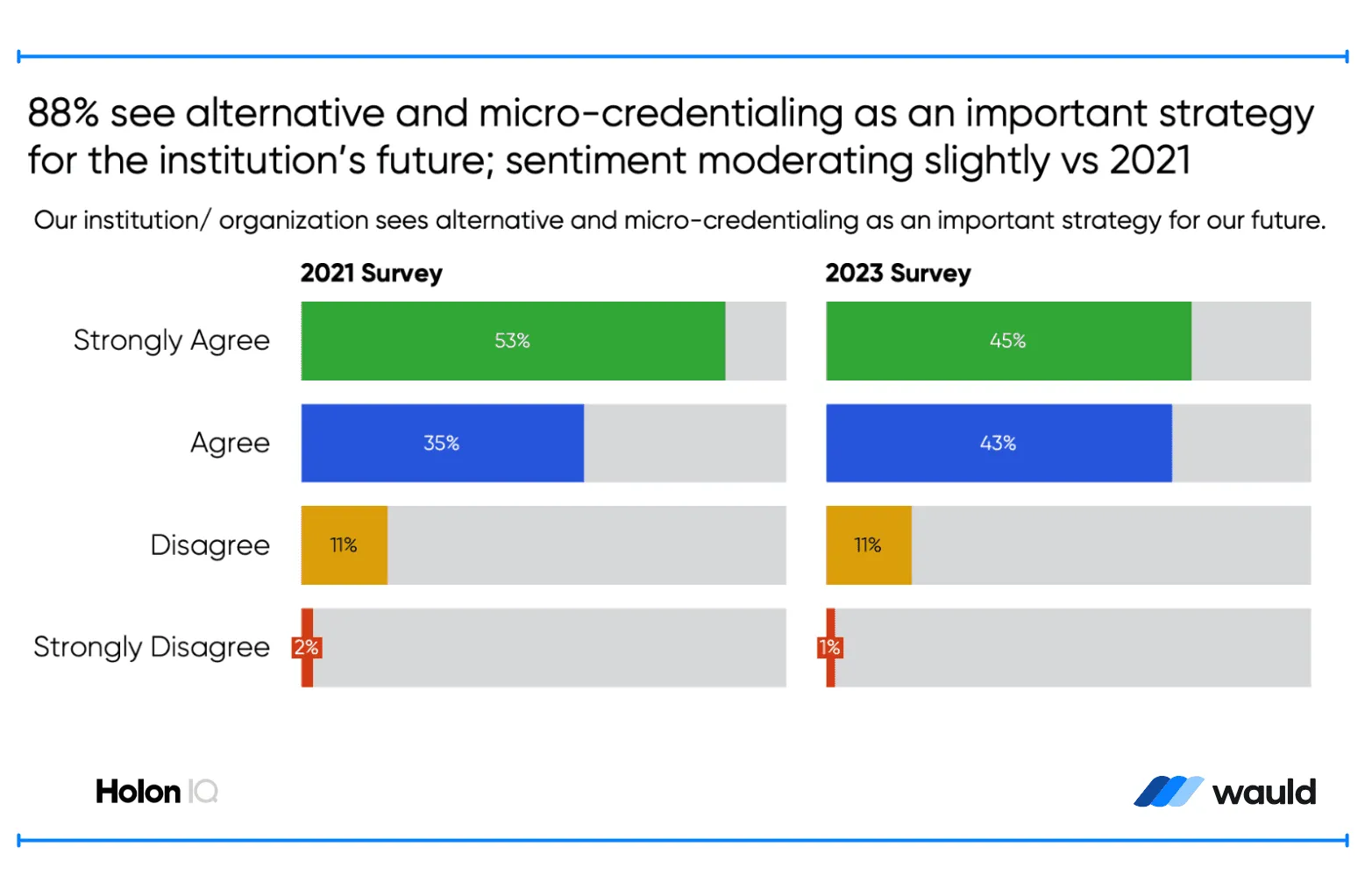
An overwhelming 88% of institutions still see micro-credentialing as an important future strategy. While strong agreement dipped slightly (53% in 2021 vs. 45% in 2023), the combined “agree” sentiment remains robust.
This shift reflects reality: micro-credentials are moving from an experimental edge case into mainstream strategy. Universities and training providers are integrating them alongside traditional learning, not just as short add-ons but as strategic levers for growth, employability, and lifelong learning.
Source: HolonIQ
#4. The Current Focus: Short Courses Dominate
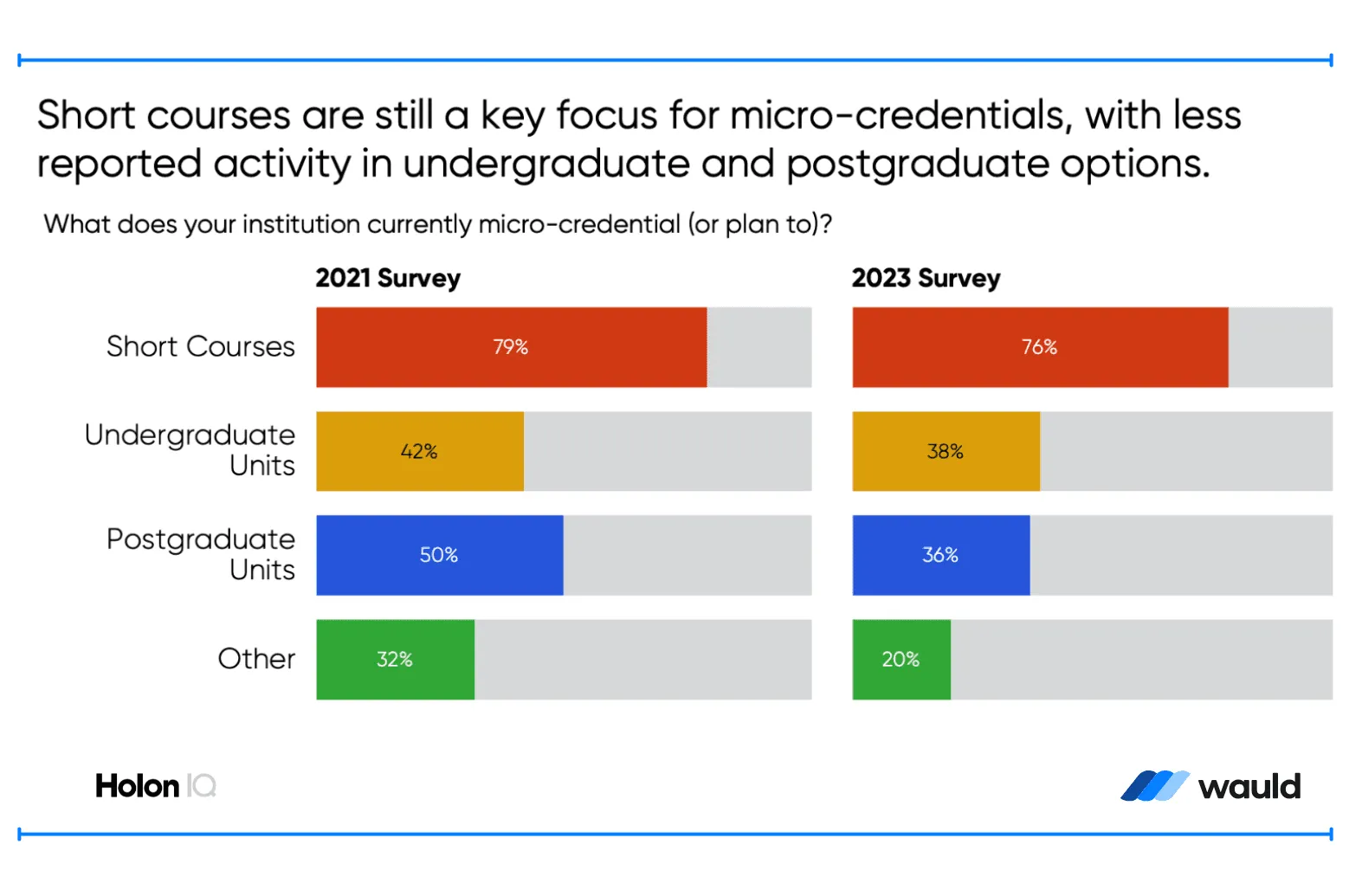
The survey shows where institutions are currently focusing their micro-credentialing efforts:
- Short courses remain dominant: 76% (2023), only slightly lower than 79% (2021).
- Undergraduate units: 38%, showing modest decline.
- Postgraduate units: 36%, down from 50%.
- Other forms: 20%.
Source: HolonIQ
This suggests micro-credentials are still concentrated in flexible, career-aligned short courses rather than integrated into full degree pathways. For learners, this makes them attractive upskilling options that can stack over time.
What This Means for Educators, Coaches, and Training Providers
The HolonIQ findings aren’t just numbers. They point to a fundamental shift in how learning is designed, delivered, and recognized. For educators, coaches, and training providers, this creates both opportunities and responsibilities:
Align with Industry Needs
Employers are moving toward skills-first hiring. By offering micro-credentials that map directly to in-demand skills, you ensure your learners are seen as job-ready. This means working closely with industry standards, sector bodies, and employer expectations to design credentials that actually carry weight in the workplace.
Build Stackable Pathways
Micro-credentials shouldn’t exist in isolation. Stackability allows learners to combine smaller achievements into larger qualifications. Creating a flexible pathway from short courses to professional mastery. This makes your programs more attractive and future-proof for learners who value progression.
Focus on Recognition and Trust
The survey highlights recognition and quality assurance as the biggest barriers. Learners will only value your credentials if employers, industry associations, and peers trust them. Partnering with a credentialing platform like Wauld ensures every certificate or badge is fraud-proof, instantly verifiable, and consistent across your offerings.
Simplify the Experience for Learners
Micro-credentials work best when they are easy to share, showcase, and integrate into professional profiles. Providing learners with a digital wallet where they can manage all their achievements in one place makes your credentials more valuable, and your brand more visible, on platforms like LinkedIn.
Position Yourself as a Future-Ready Educator
Adopting micro-credentials early differentiates you as an innovator. You’re not just teaching skills; you’re helping learners build recognized proof of their expertise. This positions your institution or practice as a leader in the skills economy.
At Wauld, we help you turn every course, workshop, or program into a credible, verifiable micro-credential; empowering learners while amplifying your brand’s visibility and trust. Explore how Wauld can help you design, issue, track, and verify digital credentials that learners and employers trust: wauld.com