Educational
5
min read
Octopus and Wauld: Connecting Learning Systems with Seamless Automation


The Challenge with Traditional Credentialing Workflows
Think about what usually happens when someone finishes a course. The learning is complete, the assessment is passed, and there is a genuine sense of accomplishment. This should be the moment when recognition arrives and reinforces that effort.
But in many programs, that is not what happens.
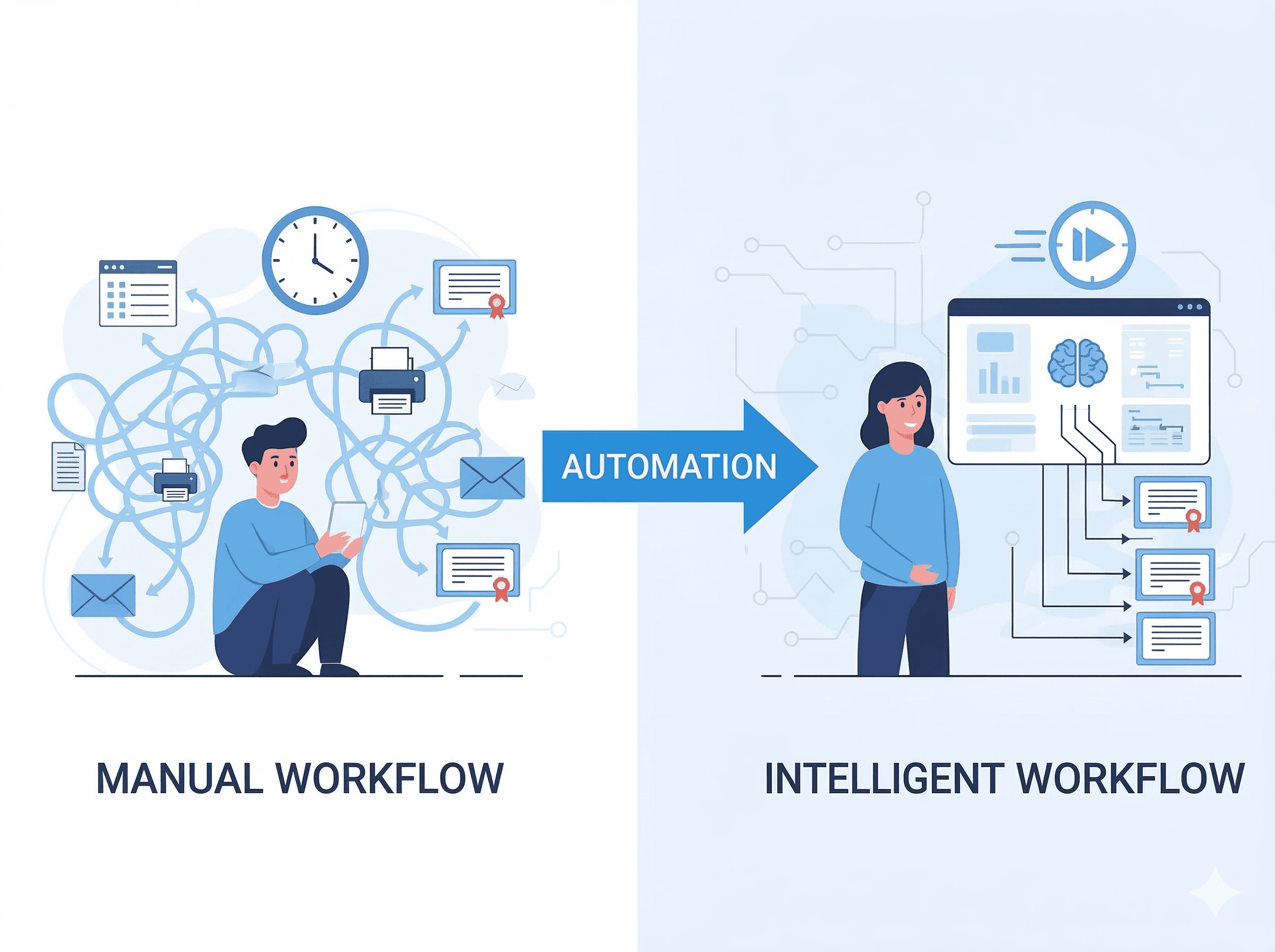
Instead, learners are told their certificate will come later. Someone needs to review the completion data, export a file, or run a process in the background. What should feel like a clear finish line slowly turns into a waiting period, and the momentum of learning begins to fade.
The issue is not the quality of learning platforms. Today’s systems are powerful and reliable. They track progress accurately and support learning at scale. The challenge is that credentialing often sits outside these platforms. Learning and recognition live in different systems, and the connection between them still depends on manual work.
For learners, this separation can make recognition feel disconnected from the effort they just invested. For learning teams, it adds administrative work that grows as programs grow. Over time, credentialing becomes a task to manage rather than a moment to celebrate.
As skills and credentials play a larger role in careers and professional growth, this approach no longer holds up. Recognition needs to feel timely, meaningful, and built into the learning experience itself, not delivered as a follow-up.
In this blog, we will explore:
Why traditional credentialing workflows fall short
How automation improves learning and recognition
How Octopus and Wauld work together
What learners and organizations gain from connected systems
Why Automation Is Now Essential in Learning Ecosystems
Learners today are used to instant feedback and seamless digital experiences. When they complete a course or earn a certification, they expect recognition to arrive quickly. Waiting days or weeks for proof of achievement no longer fits how people learn, work, or share their progress.
This shift is reflected in the growing adoption of digital credentials. Unlike traditional certificates, digital credentials are designed to be issued instantly, shared easily, and verified in real time. Research shows that learners and employers increasingly value credentials that are clear, portable, and tied directly to skills.
At the same time, learning ecosystems are becoming larger and more complex. Organizations now manage more courses, programs, and participants than ever before. Manual credentialing processes that rely on spreadsheets and batch uploads struggle to keep up as scale increases.
Automation addresses this challenge by issuing credentials as soon as learning is completed, reducing errors, and ensuring consistency across programs. It allows learning teams to spend less time on administration and more time improving learning experiences.
Market trends reinforce this shift. The global digital badges market is projected to grow significantly through 2028, driven by demand for verifiable, skill-based credentials across education and workforce training.
In this environment, automation is no longer optional. It has become a core requirement for delivering learning experiences that feel modern, credible, and learner-centered.
What Octopus Brings to the Learning Stack
Automation in learning is ultimately about connection. It is about making sure learning systems and the tools around them can respond to learner progress without manual handoffs. This is where Octopus plays a central role.
Instead of treating credentialing as a separate task after learning ends, Octopus connects learning events to downstream actions. When a learner completes a course or passes an assessment, Octopus can detect that event and trigger the next step automatically. That might include sending completion data to a credentialing platform, updating internal records, or kicking off additional workflows that used to require manual effort.
This matters because modern learning platforms are no longer standalone tools. They are part of broader digital ecosystems that include reporting, analytics, and credentialing systems. Research shows that learning platforms with automated workflows significantly reduce time spent on repetitive administrative tasks and improve the speed at which learning outcomes are processed.
Octopus acts as the connective layer that makes this possible. Using APIs, it allows systems to share data and respond in real time, without spreadsheets or manual uploads. This approach removes friction and ensures that learning outcomes trigger consistent and reliable actions.
As learning ecosystems continue to grow in complexity, automation is becoming an expected capability. Industry trends for 2025 highlight that learning platforms are increasingly evaluated on how well they integrate with other systems and support automated workflows across the learning lifecycle.
In simple terms, Octopus turns learning completion into action. It helps organizations move from disconnected systems to a learning experience that feels continuous, responsive, and ready to scale.
What Wauld Does as a Digital Credentialing Platform
While automation connects systems, credentials give learning its visible outcome. That is where Wauld comes in.
Wauld focuses on turning learning completion into digital credentials that are secure, verifiable, and easy to share. Instead of static certificates that live as PDFs or attachments, Wauld issues credentials designed to travel with the learner. These credentials can be shared on professional networks, added to portfolios, and verified by employers or institutions in real time.
This shift is important because the value of learning increasingly depends on how well it can be proven. Employers want more than course titles. They want evidence of skills. Learners want credentials they can actually use beyond the platform where they earned them.
Research supports this trend. According to Coursera, a majority of employers say that digital credentials and micro credentials help them better assess candidate skills, while learners report higher confidence when credentials clearly communicate what they know and can do.
Wauld also emphasizes trust. Digital credentials issued through modern platforms include verification layers that help prevent fraud and misrepresentation. This is especially important as credential sharing increases across platforms and regions. Credential Engine highlights that transparency and verification are critical as the number of credentials continues to grow globally.
From a program perspective, Wauld simplifies credential management. Organizations can design credential templates, define criteria, and issue credentials automatically when learners meet requirements. This reduces manual work while ensuring that credentials remain consistent and credible.
In short, Wauld turns completion into recognition that lasts. It helps learners carry proof of their achievements forward, and it helps organizations issue credentials that are trusted, meaningful, and built for today’s skills-driven world.
How Octopus and Wauld Work Together
Individually, Octopus and Wauld each solve an important problem. Together, they remove friction from the entire journey between learning completion and recognition.
The collaboration is built around a simple idea. When learning is completed, recognition should follow automatically.
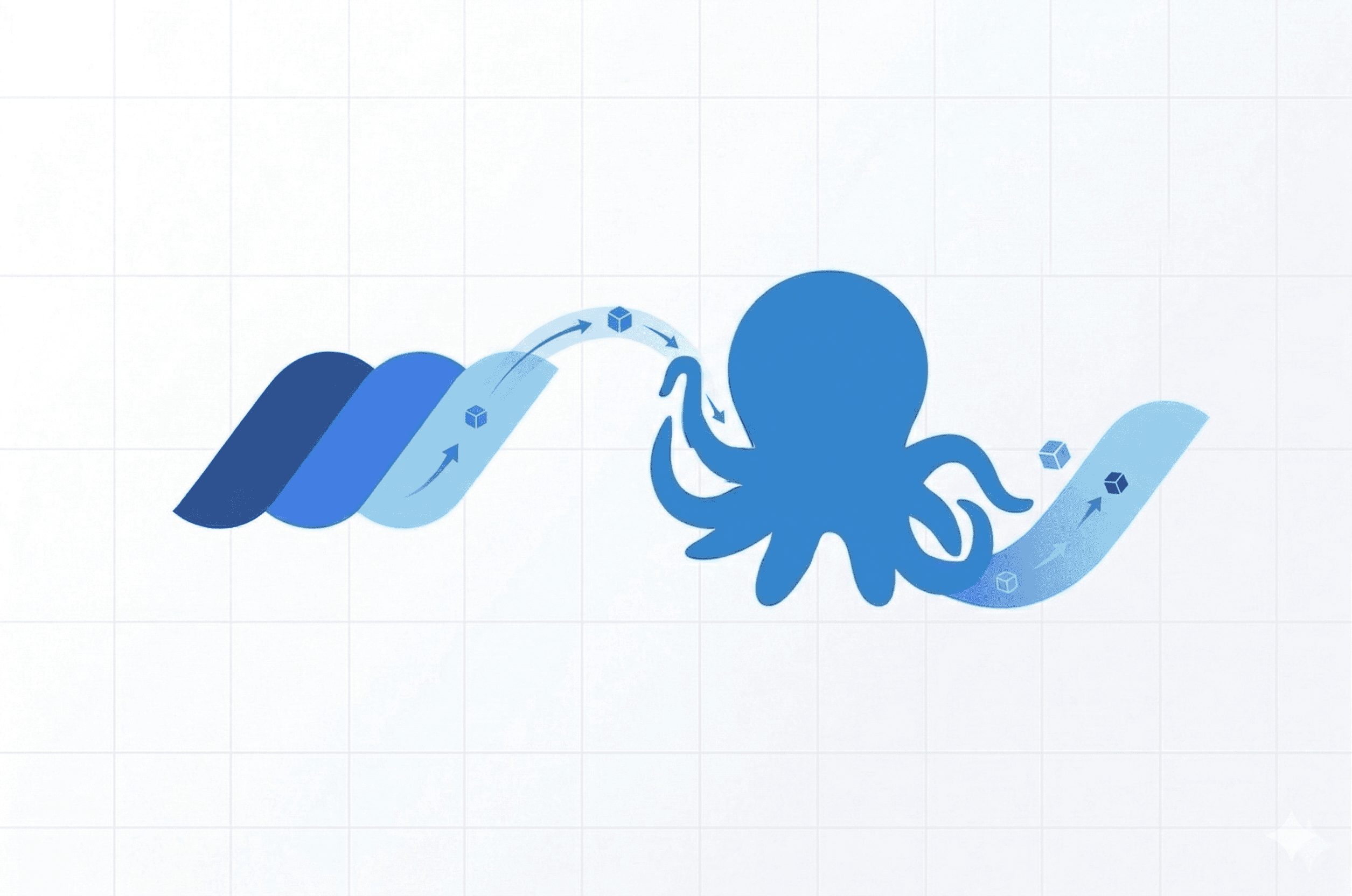
Here is how that looks in practice. A learner completes a course or passes an assessment within a learning system. Octopus detects the completion event and captures the required data, such as learner details, course information, and completion status. Instead of waiting for manual checks or exports, Octopus immediately triggers a workflow.
That workflow sends the relevant data to Wauld, where the credential is issued based on predefined rules. Wauld then delivers a secure, verifiable digital credential directly to the learner. The entire process happens in the background, without spreadsheets, batch uploads, or follow-up emails.
For learners, the experience feels simple and timely. They complete the learning and receive recognition almost immediately. For organizations, the workflow is predictable and consistent. Every learner who meets the criteria receives the right credential, every time.
This connection also supports scale. Whether a program has ten learners or ten thousand, the same automated process applies. There is no additional administrative burden as participation grows, and no risk of credentials being delayed or missed.
By connecting learning events to credential issuance through automation, Octopus and Wauld turn what was once a manual handoff into a seamless experience. Learning flows naturally into recognition, exactly when it should.
Key Benefits for Learners
For learners, recognition is not just a certificate. It is confirmation that their time and effort mattered. When credentialing is automated and connected to learning, that confirmation arrives at the right moment.
The most immediate benefit is speed. Learners receive their credentials as soon as they complete a course or assessment, while the experience is still fresh. There is no uncertainty about whether the achievement was recorded or when proof will arrive. This instant feedback reinforces motivation and encourages learners to keep going.
Digital credentials also give learners something practical they can use. Unlike traditional certificates that often sit in an email or folder, digital credentials are designed to be shared. Learners can add them to professional profiles, portfolios, or job applications, making their skills visible beyond the learning platform.
Research supports the impact of timely and shareable credentials. According to Coursera, learners who earn micro credentials report higher confidence in communicating their skills to employers, and many say credentials help them stand out in competitive job markets.
Verification adds another layer of value. Learners benefit from credentials that can be trusted by employers and institutions. When credentials are verifiable, learners do not need to explain or defend their achievements. The proof speaks for itself.
Perhaps most importantly, automated credentialing helps learning feel complete. The journey from enrollment to completion ends with recognition, not follow-up emails or waiting periods. That sense of closure strengthens the overall learning experience and leaves learners feeling acknowledged and supported.
Key Benefits for Organizations
While learners experience faster recognition, organizations see the operational impact almost immediately. Automated credentialing removes a layer of manual work that quietly consumes time and resources in many learning programs.
One of the biggest benefits is reduced administrative workload. When credential issuance is automated, teams no longer need to export reports, clean data, or issue certificates manually. This frees up time that can be redirected toward improving course design, supporting learners, or expanding programs.
Automation also improves accuracy and consistency. Manual processes introduce risk, especially as programs scale. Missed names, incorrect credentials, and delayed issuance can damage trust. Automated workflows ensure that every learner who meets the criteria receives the correct credential at the right time, without variation or error.
Scalability is another key advantage. As organizations launch more courses or onboard more learners, manual credentialing becomes increasingly difficult to manage. Automation allows programs to grow without increasing operational complexity. Whether there are dozens of learners or thousands, the process remains stable and predictable.
Industry research reinforces this shift. Reports on learning technology trends show that organizations are prioritizing system integration and automation to manage growing volumes of learning data and credentials more efficiently. Platforms that support connected workflows help reduce costs while improving learner satisfaction.
Finally, automated credentialing strengthens program credibility. When recognition is timely, verifiable, and consistent, it reflects well on the organization behind the learning. Credentials become more than a formality. They become a trusted signal of value.
Who Is This Integration Designed For?
The integration between Octopus and Wauld is designed for organizations that view learning and recognition as connected parts of the same experience. It is especially useful for teams that manage growing programs and want credentialing to scale without added complexity.
Associations are one key audience. Many associations offer continuing education and certification programs for members. Automated credentialing helps ensure that member achievements are recognized quickly and consistently, while reducing the administrative burden on small teams.
Training providers also benefit from this approach. Whether delivering professional certifications or short skill based programs, training organizations need to issue credentials accurately and at scale. Automation allows them to focus on instruction and learner outcomes instead of managing credential logistics.
Educational institutions are another strong fit. As colleges and universities expand micro credentials, certificates, and skill-based programs, they need systems that can issue verifiable credentials efficiently. Connecting learning systems with credentialing platforms supports these emerging models without disrupting existing workflows.
Corporate learning and development teams can also take advantage of this integration. Employee training programs often require proof of completion for compliance, upskilling, or career development. Automated credentialing ensures that employees receive recognition promptly and that records remain accurate across systems.
In short, this integration is designed for any organization that wants recognition to feel like a natural part of learning, not a separate process that happens later.
Building a More Connected Learning Experience
Learning works best when systems work together. When platforms operate in silos, even strong programs can feel fragmented. Learners complete courses in one place, wait for recognition in another, and move on without a clear sense of closure. Connection changes that experience.
Automation plays a key role in building this connection. Linking learning events to meaningful outcomes, it removes friction without removing the human element. Learning teams still design programs, support learners, and make decisions. Automation simply handles the repetitive steps that slow things down.
When recognition becomes part of the learning flow, it feels intentional. Completion leads naturally to acknowledgment. Credentials arrive when they matter most, reinforcing progress and motivation. Over time, this consistency builds trust in both the learning program and the credentials it issues.
Connected systems also create space for improvement. When data moves smoothly across platforms, organizations can better understand learner behavior, track outcomes, and refine programs. The learning experience becomes not just more efficient, but more thoughtful and responsive.
Ultimately, building a connected learning experience is about respect for learners’ time and effort. It ensures that learning does not end abruptly, but closes with recognition that feels timely, meaningful, and earned.
From Completion to Recognition Without Friction
Learning should not end with a checklist or a waiting period. It should end with recognition that feels timely, meaningful, and earned.
As learning ecosystems grow more complex, the gap between completion and credentialing becomes harder to ignore. Manual workflows slow things down, create unnecessary work, and weaken the learner experience. Automation changes that by making recognition a natural continuation of learning, not a separate task that happens later.
By connecting learning systems through Octopus and issuing trusted digital credentials through Wauld, organizations can close that gap. Learning events trigger action. Credentials are issued consistently. Learners receive recognition when it matters most.
The result is a learning experience that feels complete. Learners walk away with proof they can use. Teams spend less time on administration and more time improving programs. And organizations build trust through credentials that are timely, verifiable, and scalable.
If you are designing learning programs or managing credentialing today, this is the moment to rethink how recognition fits into the learning journey.
Connect your systems. Automate what slows you down. Let learning flow naturally into recognition.
Ready to take the next step?
Explore how Wauld can help you build a connected learning experience where achievement is recognized instantly and meaningfully.