How Colleges Can Build Career Pathways That Lead to Verifiable Skills

Career pathways help students connect education to real career opportunities. A strong pathway does more than move a student from one course or program to another. It shows what skills they will build, what credentials they can earn, and where those skills can lead.
For colleges, especially community colleges and other postsecondary institutions, this means implementing effective career pathing strategies and designing education pathways around clear skills and workforce needs.
The goal is simple: help students learn skills, earn credible credentials, and move toward employment or career advancement.
What Is a Career Pathway?
A career pathway is a structured route that connects education and training to a specific career or group of related career paths.
A well-designed pathway can connect:
- High school students to postsecondary education
- Certificate programs to longer programs of study
- Technical education to employment
- Apprenticeship opportunities to skilled work
- Education programs to employer needs
- Credentials to specific occupations
For students, this makes it easier to explore career options and understand what they need to do next.
For a college, it creates a clearer connection between its programs and the labor market. Platforms like Wauld help institutions design, manage, and issue verifiable digital credentials that support career pathways.
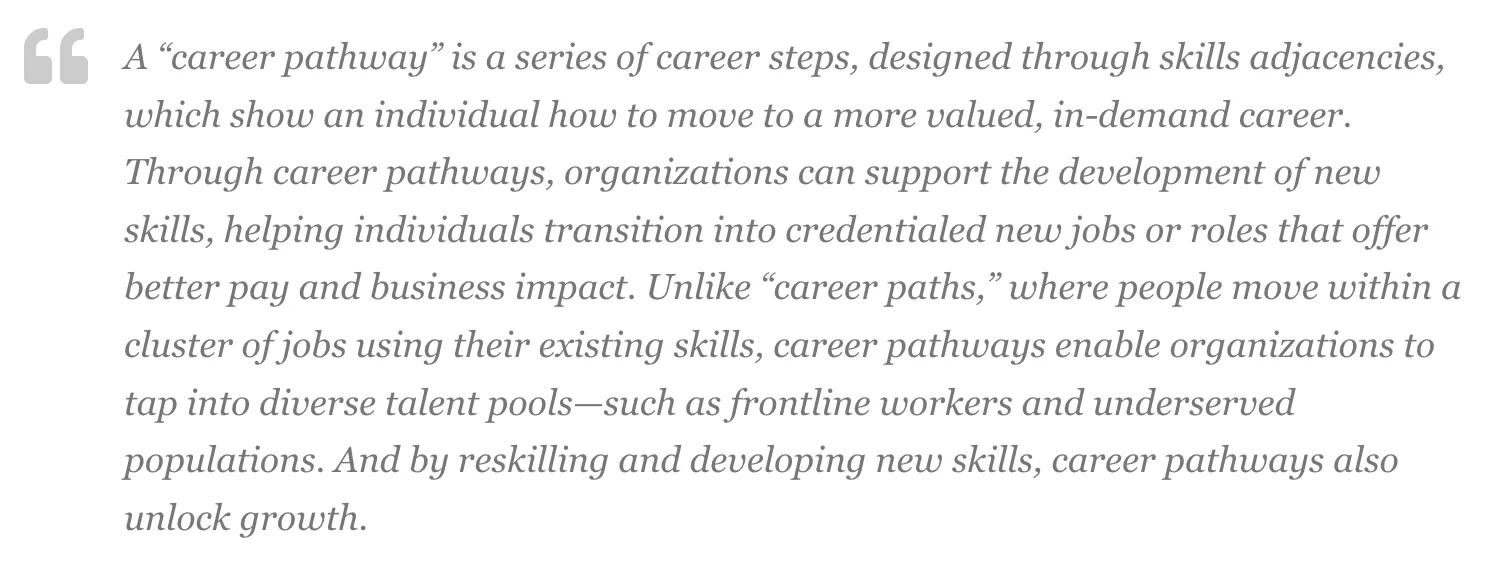
Source: Josh Bersin - "Career Pathways: The Innovation That Could Transform the Economy"
Start With the Career, Not the Course
The first step is to identify the career outcomes a program is designed to support.
Instead of asking, "What courses should we offer?", colleges can ask:
"What should a student be able to do after completing this pathway?"
As education innovator Sims explains: "We don't need hundreds of disconnected training programs that produce credentials and hope the labor market absorbs the graduates. We need workforce ecosystems designed backward from actual jobs."
This means starting with real job requirements and working backward to design educational pathways, not the other way around.
Look at:
- In-demand occupations
- Required technical skills
- Communication skills
- Common employer requirements
- Existing career opportunities
- Advancement opportunities
- Local workforce needs
For example, a manufacturing pathway might begin with foundational mathematics and technical skills, continue into specialized training, and eventually lead to roles such as an engineer or operations specialist.
This approach helps colleges align education with actual employment needs.
How to Build a Career Pathway?
Once the target career is clear, sequence the educational components that will help students achieve that career goal. Build the pathway by combining multiple learning experiences and credentials that progressively develop the skills employers need.
A strong career pathway typically includes:
- Foundational education
- Technical skills training
- Industry-specific courses
- Work-based learning
- Certificate programs
- Credentials that demonstrate specific skills
- Further education or advancement options
Design the pathway so students can see the complete route from their starting point to their career goal, rather than viewing each course or program as an isolated offering.
Each element of the pathway should be clearly connected to the career outcome and help students understand how their learning progresses toward employment and career advancement.
The Power of Clarity: As explored in "The Future of Career Development Isn't About More Pathways, It's About Clarity," the real value of career pathways lies not in offering unlimited options, but in providing crystal-clear direction. When building a career pathway, focus on making it transparent and well-defined—helping students understand where they are, where they're going, and exactly what steps get them there. This clarity enables students to navigate confidently toward their goals rather than becoming paralyzed by choice.
Connect Credentials to Skills
A certificate shows that a student completed something. A credential can go further by communicating what the student actually knows or can do.
Colleges can map each credential to specific competencies and learning outcomes. Understanding the difference between competency and completion badges helps create more meaningful credentials.
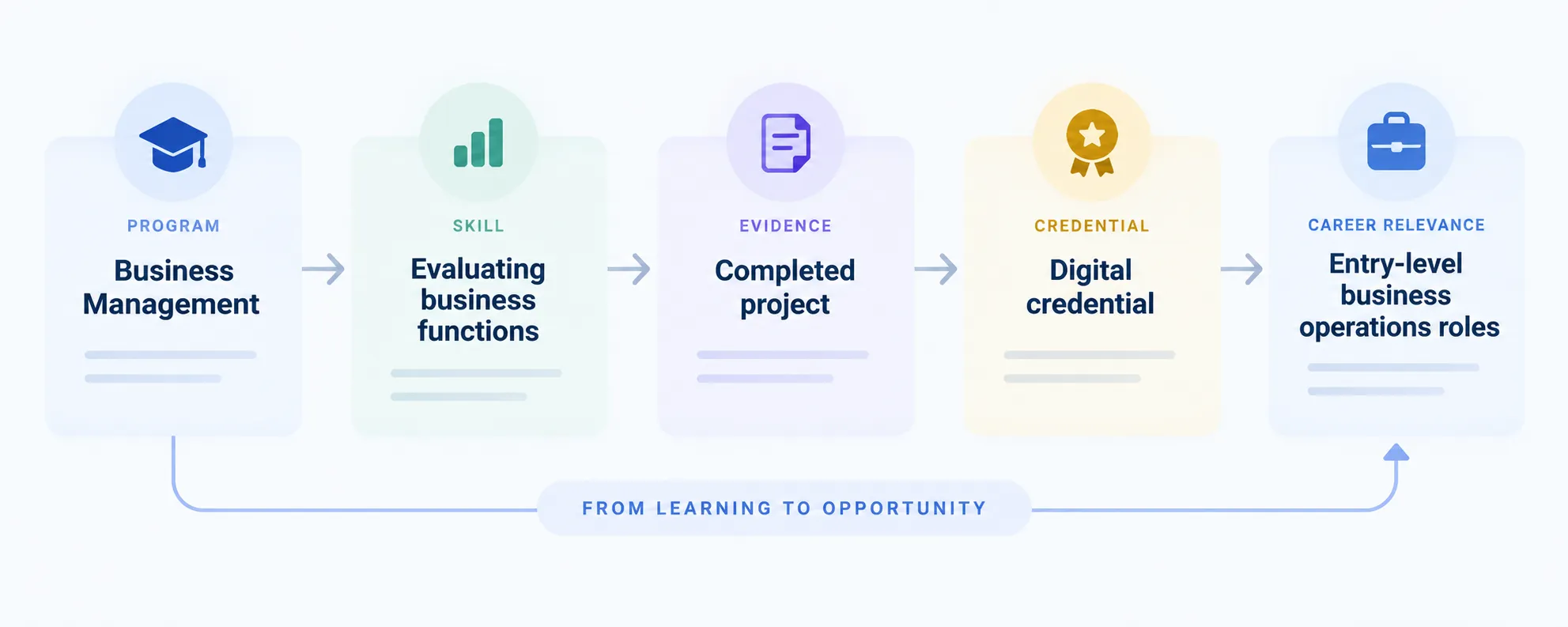
This makes the achievement easier for students, employers, and other education providers to understand.
Digital credentials can also enable colleges to provide a verifiable record of achievement that students can share beyond the college. Learn more about credential verification.
Work With Employers
Career pathways work better when employers are involved in their design.
A college can partner with employers to understand:
- Which skills they need
- Which credentials they recognize
- Which skills are difficult to find
- What would make a graduate more likely to qualify
- How programs should change as workforce needs evolve
This does not mean employers should control the curriculum. It means colleges should have a reliable feedback loop with industry.
That communication can improve programs and create a stronger workforce pipeline.
Career Pathways Examples: Guild Education's partnership with Walmart demonstrates this approach in action and serves as one of the most compelling career pathways examples in the education sector. By working directly with Walmart to understand workforce needs, Guild Education implemented career mapping that helped design educational pathways leading to meaningful roles within the company. Walmart employees can earn degrees and credentials that are directly relevant to career advancement within the organization, creating a win-win for both employer and employee.
Give Students Multiple Entry Points
Not every student starts at the same place.
A strong pathway can offer multiple entry points for different learners, including:
- High school students
- Adult learners
- Part-time students
- Current workers
- Students returning to education
- Learners changing careers
Students should also have opportunities to explore different education options before committing to a long program.
This is particularly important when tuition, time, or other barriers make a traditional degree difficult to complete.
Make Skills Visible Along the Way
Students should not have to wait until graduation to demonstrate their skills.
Colleges can issue digital badges and micro-credentials for meaningful milestones within a pathway or learning path. These might recognize technical skills, communication, project-based learning, industry competencies, or completion of a specific certificate as part of structured learning paths that guide students through career progression.
This gives students something they can use when applying for employment while continuing their education.
It also gives employers a clearer way to understand what a student has achieved. Digital credentials provide verifiable proof that transcends traditional paper documents.
How to Make Skills Truly Visible:
Several initiatives are advancing skills visibility in education and hiring:
Credential Transparency Description Language (CTDL) - Developed by Credential Engine, CTDL is a common language for describing credentials, competencies, and learning outcomes. It enhances the visibility and comparability of skills, making it easier for employers to understand what credentials actually represent in terms of real-world abilities.
The Learning and Employment Record (LER) Initiative - LERs are digital records that capture and showcase an individual's learning achievements and work experiences. By promoting skills visibility in the labor market, LERs help students demonstrate their competencies to prospective employers beyond traditional credentials alone.
These frameworks and initiatives create a shared language between educational institutions and employers, ensuring that skills visibility translates into real career opportunities.
Connect Career Counseling to the Pathway
Career counseling should be integrated into the pathway rather than treated as a separate service.
Counselors can help students:
- Explore career options
- Understand required skills
- Choose the right program
- Identify credentials they can earn
- Find employment opportunities
- Plan their next step
This support can make education pathways easier to navigate and reduce the chance that students leave without a clear career direction. Integrated career counseling is essential for career pathways training programs that aim to improve student outcomes and career progression.
Measure Career Outcomes
Colleges should evaluate whether their career pathways are actually working.
Useful measures include:
- Program completion
- Credential attainment
- Employment
- Employer satisfaction
- Further education
- Wage growth
- Career advancement
- Student participation
The important question is not only whether students complete a program.
It is whether the program produces a useful outcome.
Learning the right metrics: Research on career learning outcomes highlights the importance of measuring not just completion, but actual career readiness. Additionally, insights on measuring career outcomes and metrics that matter emphasize tracking metrics like employment rates, salary growth, and career advancement to truly understand whether pathways deliver value.
A Simple Career Progression Framework for Building Career Pathways
Colleges can use this five-step career pathing framework to implement effective career pathway programs:
- Identify the career - Choose occupations and sectors with clear demand.
- Identify the skills - Map the technical and transferable skills required.
- Build the education pathway - Connect courses, programs, work-based learning, and credentials.
- Validate with employers - Ask industry partners whether the skills and credentials reflect real workforce needs.
- Make achievement verifiable - Use certificates and digital credentials to clearly communicate what students have completed and what they can do. Tools like Wauld make it easy to design and issue verifiable credentials at scale.
The Future of Career Pathways and Career Progression
The strongest career pathway programs will connect education, skills, credentials, and employment more closely through effective career pathing and career progression frameworks.
Students need to understand where their education can take them. Colleges need better ways to demonstrate outcomes. Employers need clearer signals about what candidates can do.
A well-designed career pathway can connect all three. Modern digital credentialing platforms are making it easier for colleges to build these connections with verifiable, portable credentials.
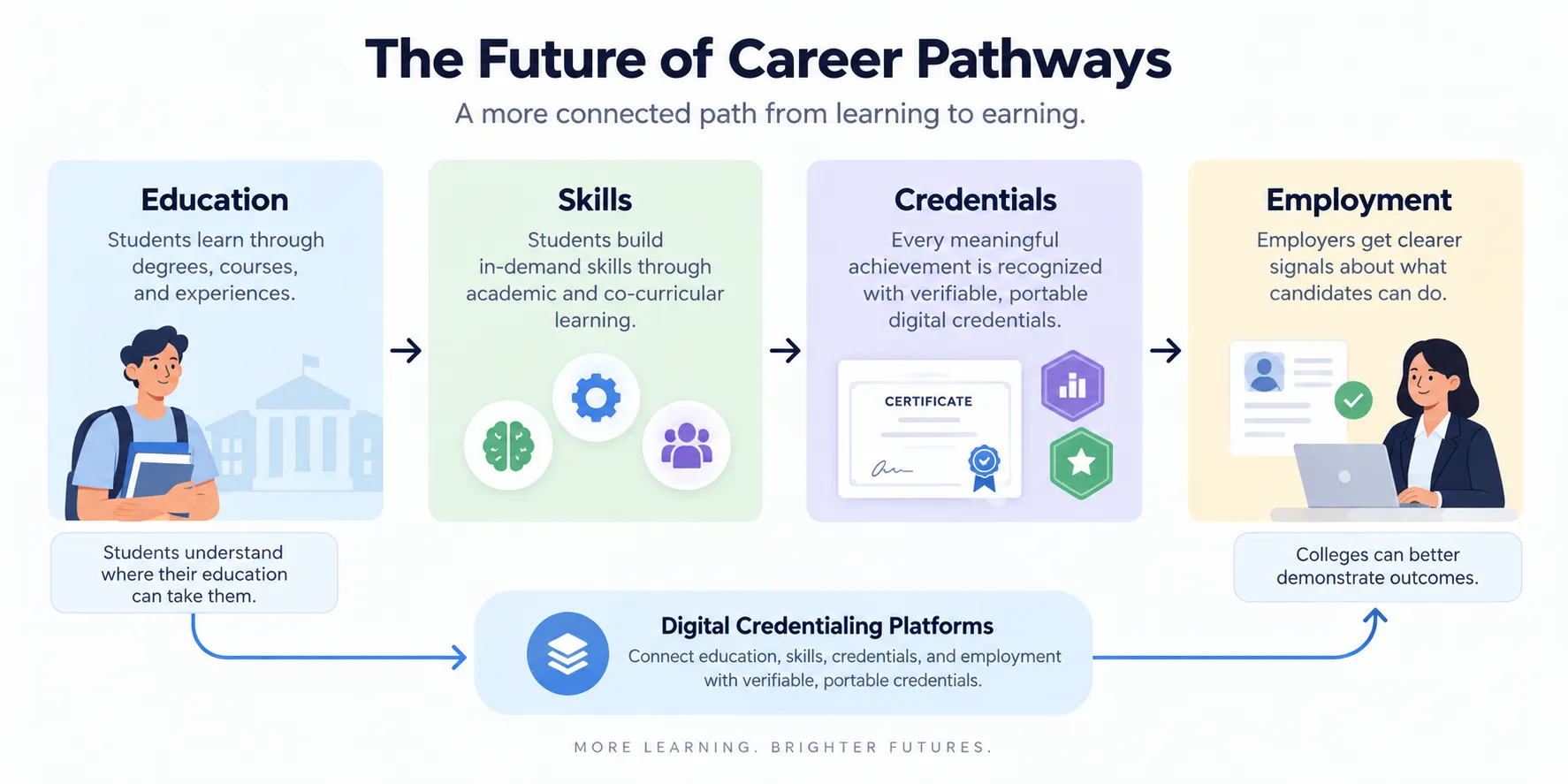
The opportunity is not simply to create more programs. It is to create education pathways where every meaningful achievement can help a student move toward a career.
Wauld makes this vision practical by providing the digital infrastructure colleges need to design, manage, and issue verifiable credentials at scale. With Wauld, colleges can create portable digital badges and certificates that students can share with employers, making skills visible at every step of the pathway. Wauld's platform integrates seamlessly with existing systems, enabling colleges to implement career pathways without overhauling their entire technology stack. By connecting education to real career opportunities through verifiable credentials, Wauld helps colleges build pathways that students trust and employers value.
FAQs on Career Pathways
What is a career pathway? A career pathway is a structured sequence of education, training, credentials, and work experiences that helps a student move toward a specific career.
Why are career pathways important for colleges? They help colleges connect programs to workforce needs while giving students a clearer route from education to employment and career advancement. Effective career pathing also supports career ladder development and helps students understand career progression opportunities.
How can colleges make career pathways more effective? Start with career outcomes, identify the skills employers need, build programs around those skills, involve industry partners, and make student achievements easy to verify.
What role do credentials play in career pathways? Credentials can provide evidence of specific skills or achievements. Digital credentials can make those achievements easier for students to share and for employers to verify.
How can employers support career pathways? Employers can provide input on workforce needs, skills, occupations, curriculum relevance, work-based learning, and the credentials they value.
Can career pathways include short-term programs? Yes. Short-term certificate programs, skills training, and other focused education can provide entry points into a pathway while allowing students to continue toward additional credentials or degrees.
How should colleges measure career pathway success? Colleges can look at completion, credential attainment, employment, wages, employer feedback, further education, and career advancement. The right measures depend on the pathway and its intended outcome.
What resources and technology do colleges need to implement career pathways? Colleges need clear communication channels with employers, career counseling staff, student information systems to track progress, and ideally a digital credentialing platform to create and issue verifiable credentials. Starting small with one pathway and then scaling is often more sustainable than trying to transform all programs at once.
How do career pathways support equity and access? Well-designed career pathways can help level the playing field by making career opportunities visible to all students, especially those from underrepresented backgrounds. By offering multiple entry points, flexible scheduling, and clear skill requirements, pathways help remove barriers to advancement. They also connect students to real job opportunities without requiring a four-year degree, making career progression more accessible and affordable.
Ready to create stronger career pathways?
Wauld helps colleges design, manage, and issue digital credentials that connect education to real career opportunities. Create pathways that students can trust and employers recognize.