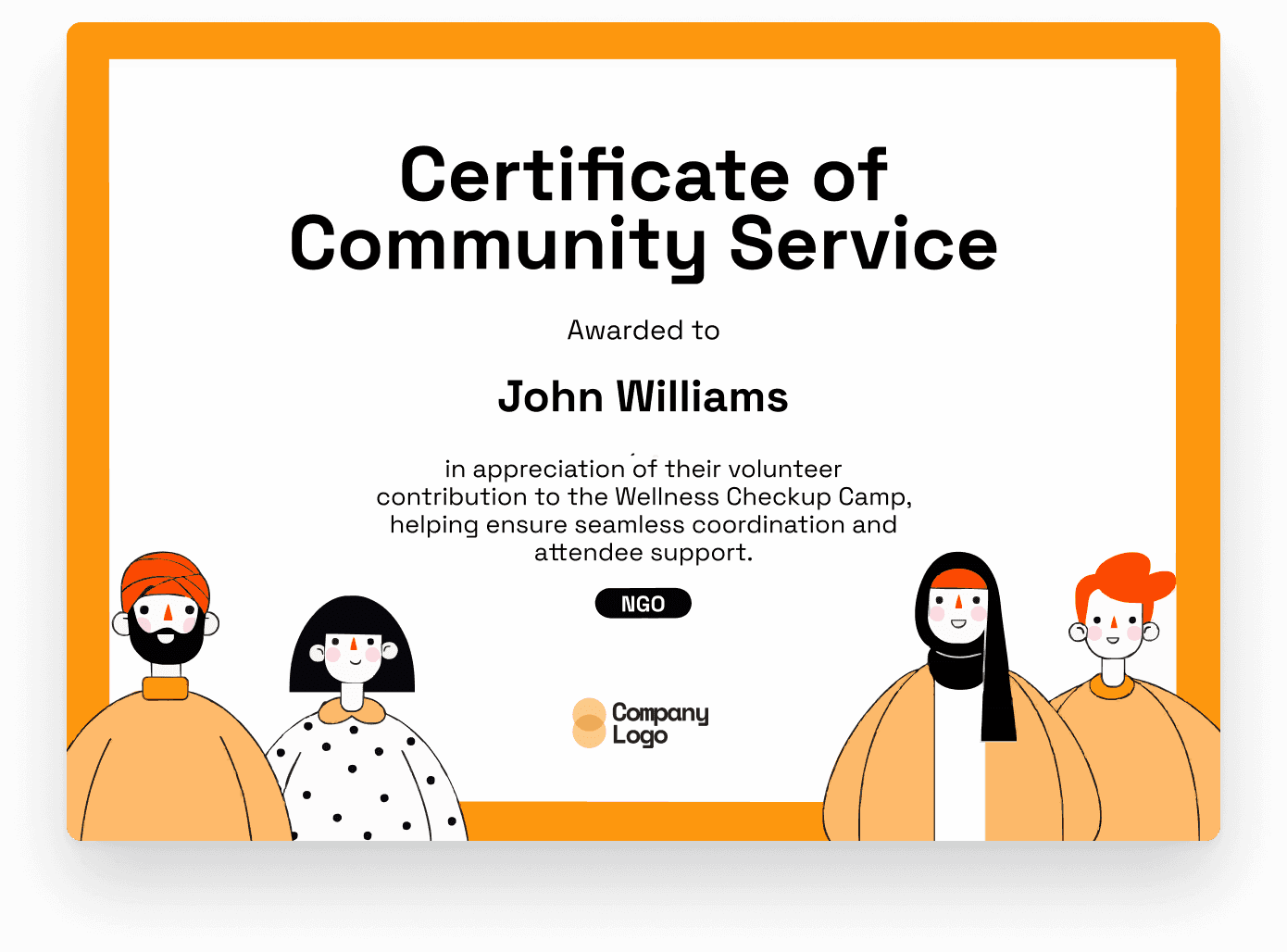

This month’s updates were built around a simple idea - a credential should tell a story, not just mark a completion.
Whether it is a learner sharing an achievement, an employer reviewing a candidate, or an institution verifying accomplishments, credentials are often expected to communicate far more than a name and a date. They should explain what was learned, what was demonstrated, and why the achievement matters.
With this month’s Wauld updates, we focused on helping credentials feel more complete, more descriptive, and more meaningful for everyone involved.
Here’s what’s new:
Add Skills and Earning Criteria to credentials
Show richer credential details to recipients
Add design attributes faster in the Design Studio
Issue credentials containing structured credential metadata in JSON-LD format in alignment with Open Badges 3.0
These updates help issuers create credentials with stronger context, help recipients better present and share their achievements, and make it easier for employers, institutions, and other viewers to understand and trust what each credential represents.
Add value and meaning to credentials with Skills and Earning Criteria
You can now add Skills and Earning Criteria to credentials, helping you showcase not just that someone earned a credential, but what that credential represents and how it was achieved. These details can be added during document creation or updated later, making it easier to keep credential information accurate, useful, and relevant over time.

With this update, you can make credentials more informative by adding:
Skills to highlight the key abilities, competencies, or areas of knowledge the credential holder possesses
Earning Criteria to explain what your recipients had to do to earn it, such as completing a course, passing an assessment, demonstrating a skill, or meeting any other specific requirement
Supporting links to add further context where needed
This gives your recipients a clearer way to understand and present their achievements, while also giving employers, institutions, and other viewers more context around the value behind each credential.

On the Recipient Portal, your recipients will now also see dedicated sections for Skills, Earning Criteria, and About Issuing Authority whenever this information is available, adding more depth and credibility to the credential experience.
Add attributes to designs faster with a simpler click flow
You can now also add attributes to your designs by clicking on the attribute chips.

Image attributes are added straight to the canvas, while text attributes adapt based on what you are doing. If you are typing inside a text box, the attribute is inserted directly at the cursor position. If not, it is added as a new text box on the canvas.
This provides an additional method to build credential designs faster, reduces extra steps while editing, and gives you a natural way to place dynamic content exactly where you need it.
Issue credentials with Open Badges 3.0 support
You can now issue credentials through Wauld with alignment to the 1EdTech Open Badges 3.0 specification (a global standard), giving your credentials a foundation for verification, portability, and trust.
Instead of being only a visual badge or certificate, each credential now carries structured achievement data in a format designed for broader compatibility across platforms and credentialing ecosystems.
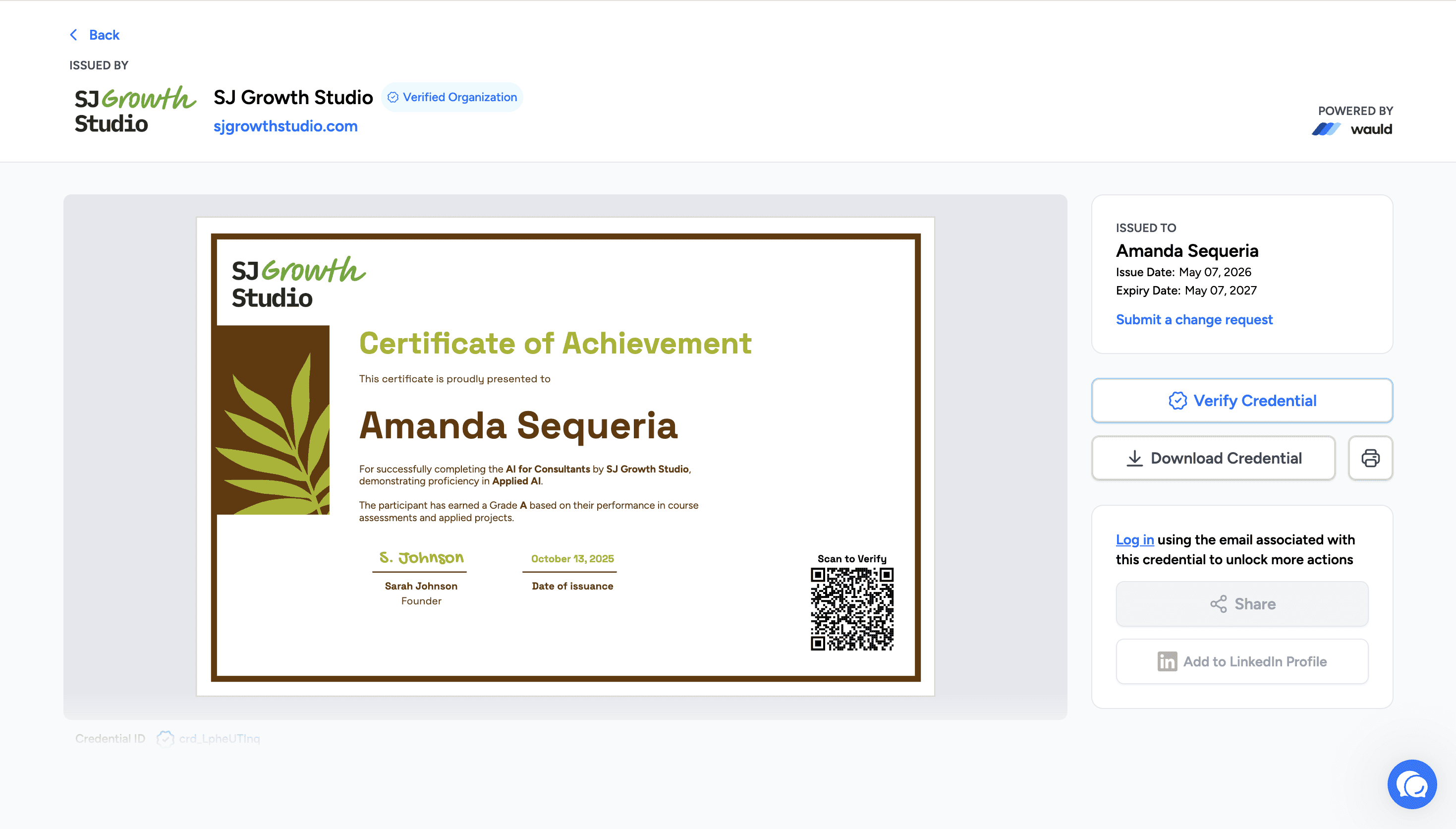
With Open Badges 3.0 support, your credentials include structured metadata for:
Issuer
Recipient
Achievement
This metadata is represented in JSON-LD format, making each credential easier to validate, interpret, and share across different platforms.
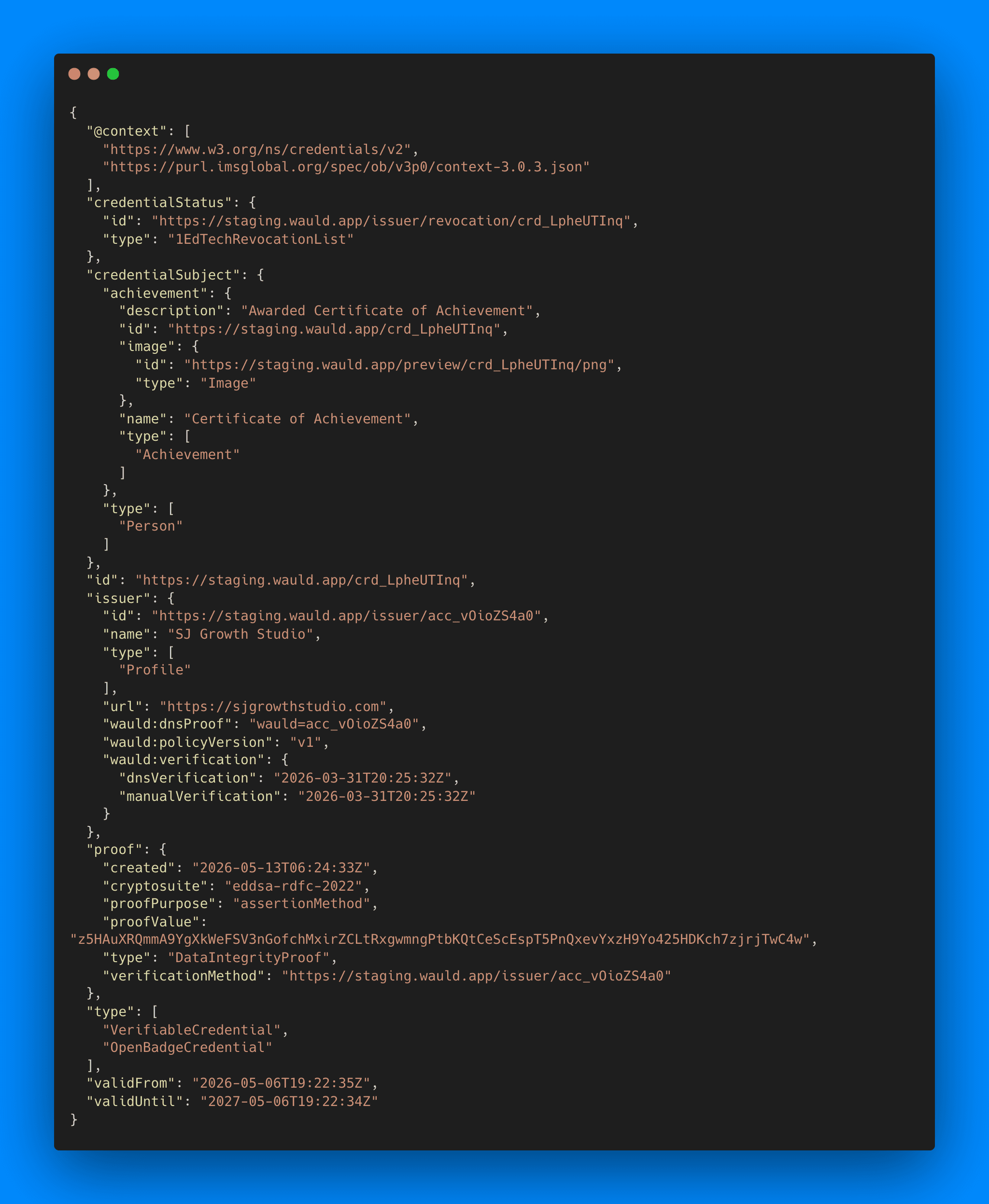
For you as an issuer, this provides a more future-ready way to issue digital credentials. For your recipients, it means the credentials they earn carry richer and more trustworthy information about what they achieved, who issued it, and what the credential represents.
This makes credentials more meaningful when shared with employers, institutions, digital wallets, or other platforms, while also making it easier for others to understand and trust the achievement behind them.
What's Next
And while this month was focused on making credentials more meaningful, next month is about making them easier to move, share, trigger, and use across more of your existing workflows. We are working on new integration capabilities, smarter automation, richer design options, and a few more improvements that should make Wauld feel less like a separate step and more like part of the process.
Basically, credentials are getting closer to doing the admin work themselves. We are supportive of their ambition, but monitoring the situation closely.
More next month.