51 Employee Recognition Ideas That Actually Get Used

Most lists of employee recognition ideas are really lists of party themes. Pizza Fridays, a wall of fame, a jar of sweets on someone's desk. They're pleasant, they cost money, and three months later nobody can remember who won anything.
This is a different kind of list. Every one of the 51 employee recognition ideas below includes how to actually run it (who does it, how often, what it costs), and wherever a real company has already made it work, we've named them and linked the source. The last third of the guide covers the part almost nobody gets right: how to turn recognition into something the person can still prove they earned two jobs from now.
If you only take one thing away, take this: recognition that leaves no record isn't recognition, it's a compliment. Both are worth giving. Only one of them still exists next year.
What the data actually says about employee recognition
Recognition is unusual among HR levers because it is cheap, fast, and measurably effective, and almost universally under-delivered.
- Only one in three U.S. workers strongly agree they received recognition or praise for good work in the past seven days, according to Gallup.
- Gallup also finds that employees who don't feel adequately recognized are twice as likely to say they'll quit in the next year.
- If a 10,000-person business doubled the number of employees receiving recognition in a given week, Gallup and Workhuman estimate a 9% productivity gain, a 22% drop in safety incidents, and a 22% drop in absenteeism, or roughly $92 million in productivity for an organization that size.
- The most memorable recognition comes from a manager (28%) or a senior leader or CEO (24%), not from a program.
That last point is the one that kills most programs. Recognition doesn't fail because the platform was wrong. It fails because it got delegated to a platform in the first place.
The five rules that make any of these ideas work
Before the list, five things that separate a recognition program people talk about from one they quietly stop using.
- 1
Name the behavior, not the person
"Great job, David" is noise. "David rewrote the onboarding doc after watching three customers get stuck on step four" is recognition. The second one tells everyone else what good looks like.
- 2
Speed beats size
A same-day thank-you outperforms a bigger award six weeks later. If your process needs an approval chain, the recognition has already gone stale.
- 3
Match the audience to the person
Some people want the all-hands shoutout. Some people would rather be told privately and given the harder project. Ask, write the answer down, and use it.
- 4
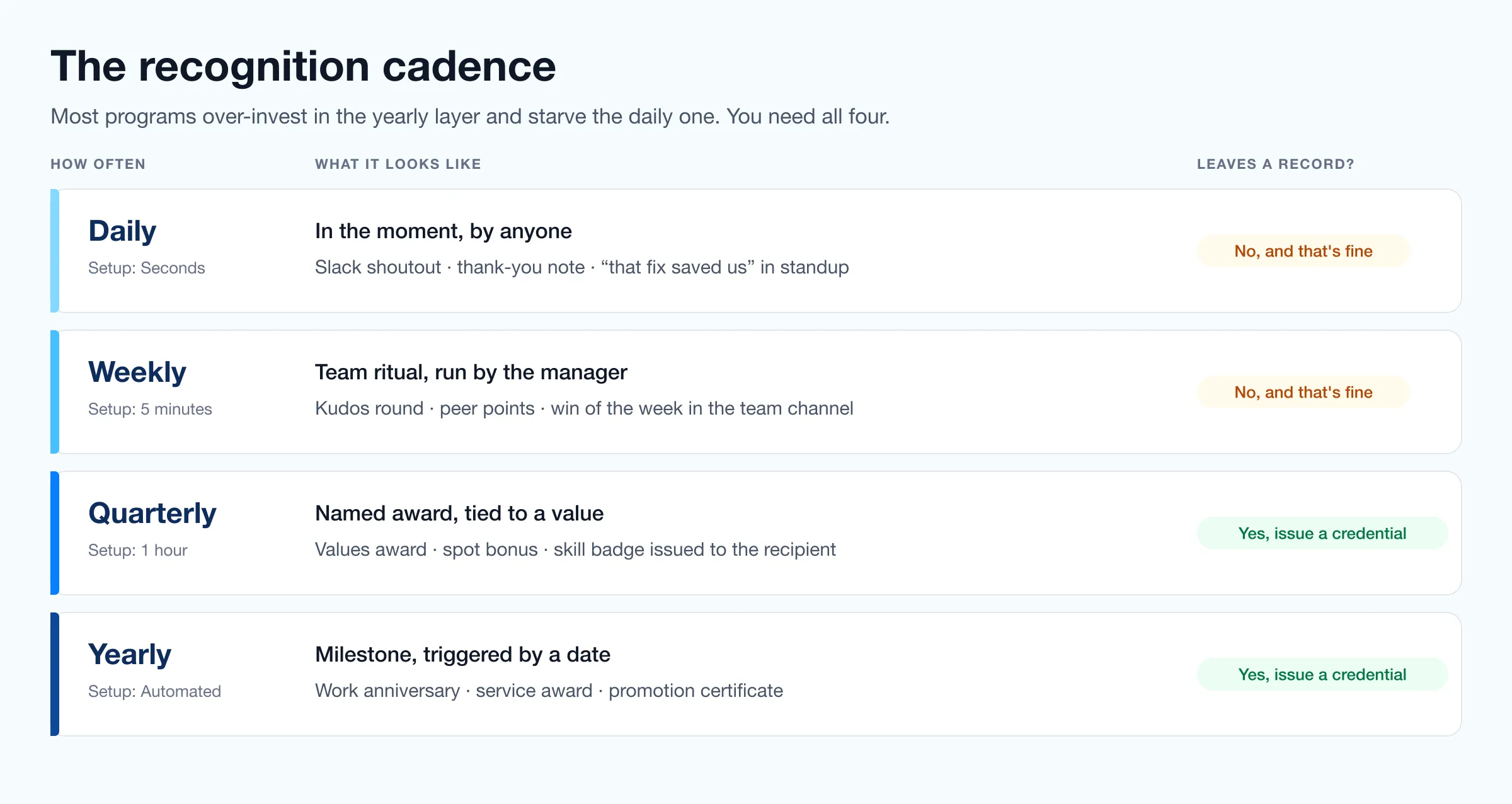
Layer the cadence
Daily praise, weekly team rituals, quarterly awards, annual milestones. Programs die when they only exist at the annual layer.
- 5
Leave a record for anything that mattered
Anything you'd bring up in a performance review should exist as something the employee owns: a credential, not a chat message that scrolls away.
Everyday employee recognition ideas (1–10)
These cost nothing, take under five minutes, and are the layer that most programs skip entirely.
1. Recognize the specific decision, not the general vibe
Instead of "thanks for all your hard work this quarter," say what they did and what it changed: "You pushed back on the Q3 scope and that's the only reason we shipped on time." Specificity is what makes praise feel earned rather than routine.
How to run it: Before you send any thank-you, force yourself to finish the sentence "…and because of that, ___."
2. Use the 24-hour rule
Recognition given within a day of the work lands. Recognition given a month later feels like an audit. Make same-day the default and reserve the formal stuff for the quarterly cycle.
How to run it: Managers keep a running note during the week. Anything worth mentioning gets said within 24 hours, and the note becomes the source for quarterly awards.
3. Say it in front of the person whose opinion they care about
Public praise is only valuable if the audience matters to the recipient. For most engineers that's their technical peers, not the whole company. For most salespeople it's the opposite.
How to run it: Ask in the 1:1: "Whose opinion of your work matters most to you here?" Then recognize them in front of that person.
4. Write actual handwritten notes
When Doug Conant was CEO of Campbell Soup, he wrote 10 to 20 handwritten notes to employees every day, more than 30,000 over his ten-year tenure. He did it partly because more than half of Campbell's staff didn't use a computer, and partly because every note celebrated a specific contribution rather than a generic effort.
How to run it: Buy the cards before you commit to the habit. Two notes a week is a realistic starting point; ten a day is not.
5. Open your standup with "who helped you"
Sixty seconds at the top of the weekly team meeting where anyone can name someone who unblocked them. It surfaces the invisible help that never shows up in a ticket.
How to run it: The manager goes last, not first, or everyone just echoes them.
6. Recognize the work that didn't break
The person who quietly keeps the build green or renews the certificates on time gets nothing, because nothing happened. That's exactly the problem. Absence of incidents is a result.
How to run it: Once a quarter, pick a system that hasn't had an outage and publicly thank whoever maintains it.
7. Copy the person two levels up
The same thank-you means substantially more when the recipient's manager's manager is on the thread. It costs one extra name in the "To" field.
How to run it: Make it a norm, not an event. If you only do it for the big stuff, it becomes a signal that everything else was small.
8. Run an always-on "caught in the act" channel
Hilton's long-running Catch Me At My Best program exists to celebrate exceptional performance in the moment it happens, rather than saving it for a review. A dedicated Slack or Teams channel does the same job at zero cost.
How to run it: One rule for the channel: every post must name a specific action. Enforce it for the first month and it'll self-police after that.
9. Recognize the attempt that didn't work
If you only celebrate wins, people stop taking swings. Recognizing a well-reasoned experiment that failed is the cheapest way to buy risk tolerance.
How to run it: In the quarterly review, include one "best thing we tried that didn't work" and say what you learned.
10. Ask people how they want to be recognized
Some people are mortified by the all-hands shoutout. Asking takes two minutes and prevents your entire program from feeling like a tax on introverts.
How to run it: Add three questions to onboarding: public or private, written or spoken, and what kind of reward actually appeals to you.
Peer-to-peer employee recognition ideas (11–18)
Manager recognition is the most memorable, but it doesn't scale, and managers miss most of what happens. Peer recognition fills the gap.
11. Give every employee a real recognition budget
Zappos gives employees the ability to award each other $50 a month for going above and beyond, what they call "WOWing" someone. It works because the money is genuinely theirs to give, with no approval queue.
How to run it: Start small ($20–$50/month), make it use-it-or-lose-it so it doesn't accumulate into an annual bonus, and publish who gave what.
12. Create an internal currency people actually want to spend
Zappos also runs "Zollars," an internal currency employees earn and exchange for branded merchandise or charitable donations. Points systems only work when the catalog contains things people want. Most fail because the catalog is a stack of branded water bottles.
How to run it: Let people convert points to charity donations. It reliably becomes one of the most-used options and costs the same.
13. Run a public kudos feed
Google's internal gThanks tool lets employees post recognition publicly to a shared feed alongside peer bonuses and spot bonuses. The feed matters more than the money. It makes good behavior visible to people who weren't in the room.
How to run it: Pin the feed somewhere people already are. A recognition tool nobody opens is worse than a Slack channel.
14. Fund peer nominations properly
Cisco's Connected Recognition program is funded at roughly 1% of payroll, with peers and managers nominating each other for awards tied explicitly to company values. The number is the point: an unfunded nomination program signals that recognition is a nice-to-have.
How to run it: Even 0.1% of payroll, ring-fenced and visible in the budget, changes how seriously people take nominations.
15. Let peers vote on the award
Atlassian's ShipIt has run since 2005: employees get 24 hours to build anything, then present it, and colleagues vote on the winner. The winner takes a trophy and a limited-edition t-shirt. The recognition is peer-conferred, which is precisely why it carries weight.
How to run it: Keep the prize small and the voting real. The moment leadership overrides the vote, the program is dead.
16. Set up a cross-team thank-you exchange
Teams recognize their own and ignore their dependencies. Pair up two teams that work together and have each nominate one person from the other team each month.
How to run it: Rotate the pairings quarterly so it doesn't calcify into the same two people thanking each other.
17. Use a traveling trophy
A physical object, ideally a ridiculous one, that passes from the last recipient to the next, with the outgoing holder choosing who gets it. The handover ceremony is the recognition; the object is just the excuse.
How to run it: The outgoing holder must say why in front of the team. Without that, it's just an object moving desks.
18. Recognize the onboarding buddy, not just the new hire
Everyone celebrates the new starter. Nobody thanks the person who spent 15 hours of their own time getting them productive.
How to run it: At the end of a new hire's first 90 days, ask them to name who helped most, then recognize that person publicly.
Manager and leadership recognition ideas (19–26)
Gallup found the most memorable recognition comes from a direct manager or a senior leader. This is the highest-leverage section in the list.
19. Put recognition on the 1:1 agenda permanently
Not "if there's time." A standing first item: one thing you did this week that I want to call out. Fixed agenda items survive busy weeks; good intentions don't.
How to run it: Put it in the recurring calendar invite description so it survives a manager change.
20. Do skip-level recognition on purpose
A note from your manager's manager, referencing something specific, is disproportionately memorable, largely because it proves the work traveled upward.
How to run it: Senior leaders block 30 minutes a month to read team updates and send three notes. That's the whole ritual.
21. Name the number in the all-hands
"Thanks to the support team" is forgettable. "The support team cut first-response time from 14 hours to 3 this quarter, because Kelly and James rebuilt the triage flow" is not.
How to run it: Make it a rule that every all-hands shoutout includes a metric and at most three names.
22. Write recognition into the permanent record
If someone did something outstanding in March, the reviewer in December will not remember. Recognition that never reaches the performance file quietly converts into a lower rating.
How to run it: Every quarterly award and badge issued should be attached to the employee's record. This is where digital credentials do the work a Slack message can't.
23. Reward with scope, not swag
For high performers, the most meaningful recognition is often being handed the next genuinely hard problem, with the authority to solve it their way.
How to run it: Pair it with the explicit statement, "I'm giving you this because of how you handled X," or it reads as more work, not recognition.
24. Praise publicly, correct privately, and never in the same breath
The "great work, but…" sandwich destroys the value of both halves. If you have feedback, deliver it in a separate conversation on a separate day.
How to run it: If you catch yourself typing "but" in a recognition message, split it into two messages.
25. Recognize managers for developing people
Most companies recognize managers for delivery and then wonder why nobody invests in their team. Make "people you developed" an explicit award category.
How to run it: Source it from promotion and internal-mobility data, not manager self-reporting.
26. Send something to the house
A note or a gift that arrives at the employee's home, addressed to them, gets read by their family. That's a category of recognition an office announcement can't reach.
How to run it: Always ask before sending anything to a home address, and never make it a surprise for someone who hasn't opted in.
Work anniversary and milestone recognition ideas (27–34)
Milestones are the easiest recognition to automate and the most conspicuous to miss.
27. Automate the anniversary so it can never be forgotten
A work anniversary that arrives two weeks late is worse than none, because it proves nobody was tracking. This is a date field in your HRIS, so there's no excuse for a human to own it.
How to run it: Trigger the credential from the HRIS date field directly. Our guide to automating certificate issuance with Zapier walks through the wiring.
28. Make the milestone about the work, not the number
"Congratulations on 5 years" is a fact. "Five years, three product launches, and eleven people you trained" is recognition.
How to run it: Ask the person's manager for three specifics a week ahead. Put them on the certificate itself.
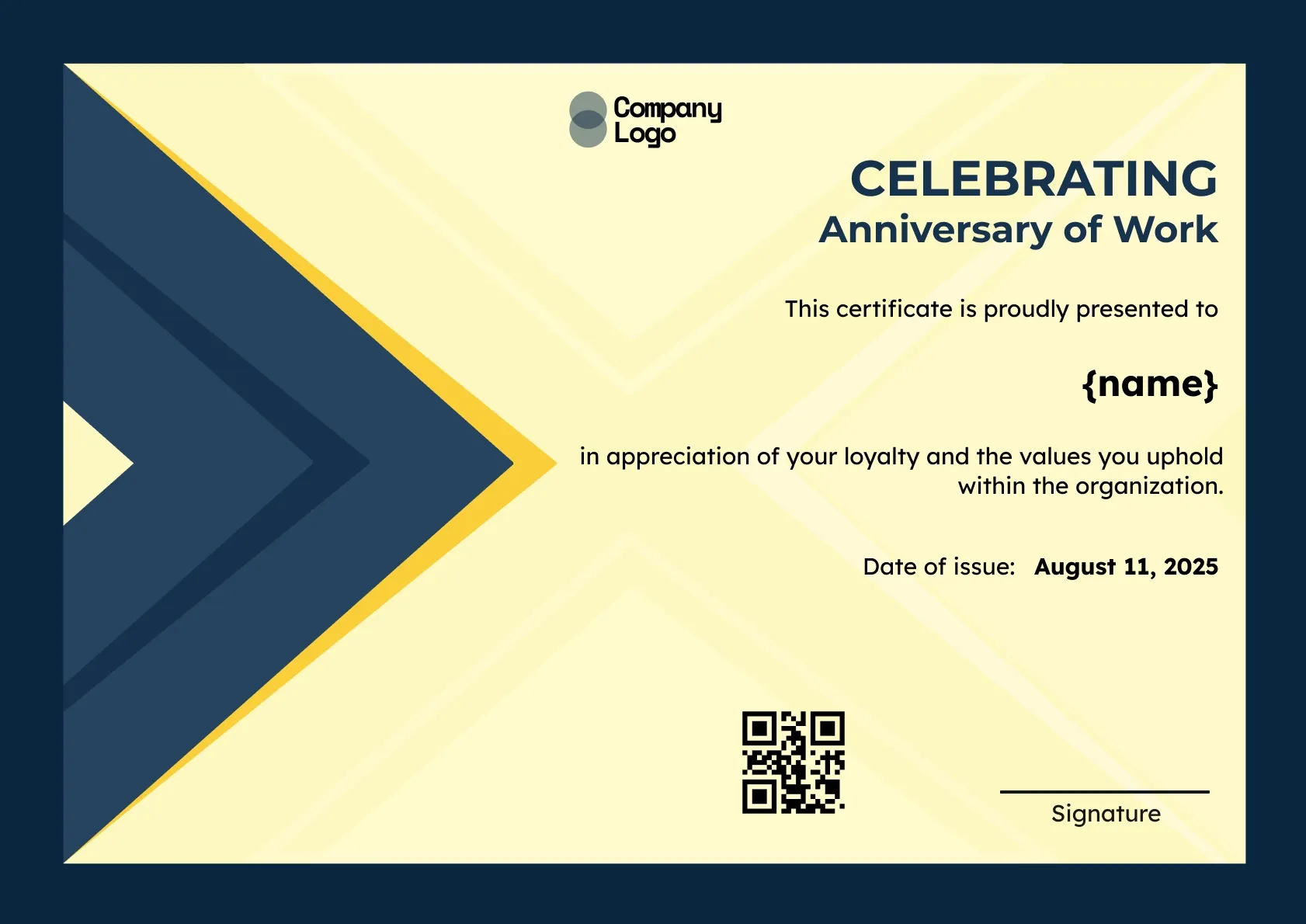
29. Issue a years-of-service certificate people can actually verify
A years-of-service PDF is a nice gesture that lives in a downloads folder. A verifiable credential with a unique ID and a QR code is something they can add to LinkedIn and prove independently.
Elegant Years of Service Recognition Certificate - free editable template
Preview ↗Use template30. Celebrate the 90-day mark, not just year one
The first 90 days is when new hires are most likely to leave and least likely to be recognized. A short, genuine "you're through the hard part, and here's what you've already changed" note has outsized impact.
How to run it: Trigger it from the start date, same as the anniversary. Include one specific thing they've already improved.
31. Attach earning criteria to promotion announcements
Promotions announced without reasons breed suspicion. Promotions announced with the criteria that were met teach everyone else the path.
How to run it: Publish the level definitions first. Then the announcement can simply point at them.
32. Convert tenure into time, not trinkets
An extra day of leave per completed year, or a sabbatical at five, is worth more than a plaque and costs less than the turnover it prevents.
How to run it: Make it automatic and non-negotiable. A benefit people have to ask for isn't recognition.
33. Recognize people on the way out
The way you treat a good leaver is watched extremely closely by everyone staying. A genuine send-off and a credential for what they built is the cheapest employer-brand investment available.
How to run it: Issue their credentials before their access is revoked, and make sure they resolve to a wallet they still own afterwards.
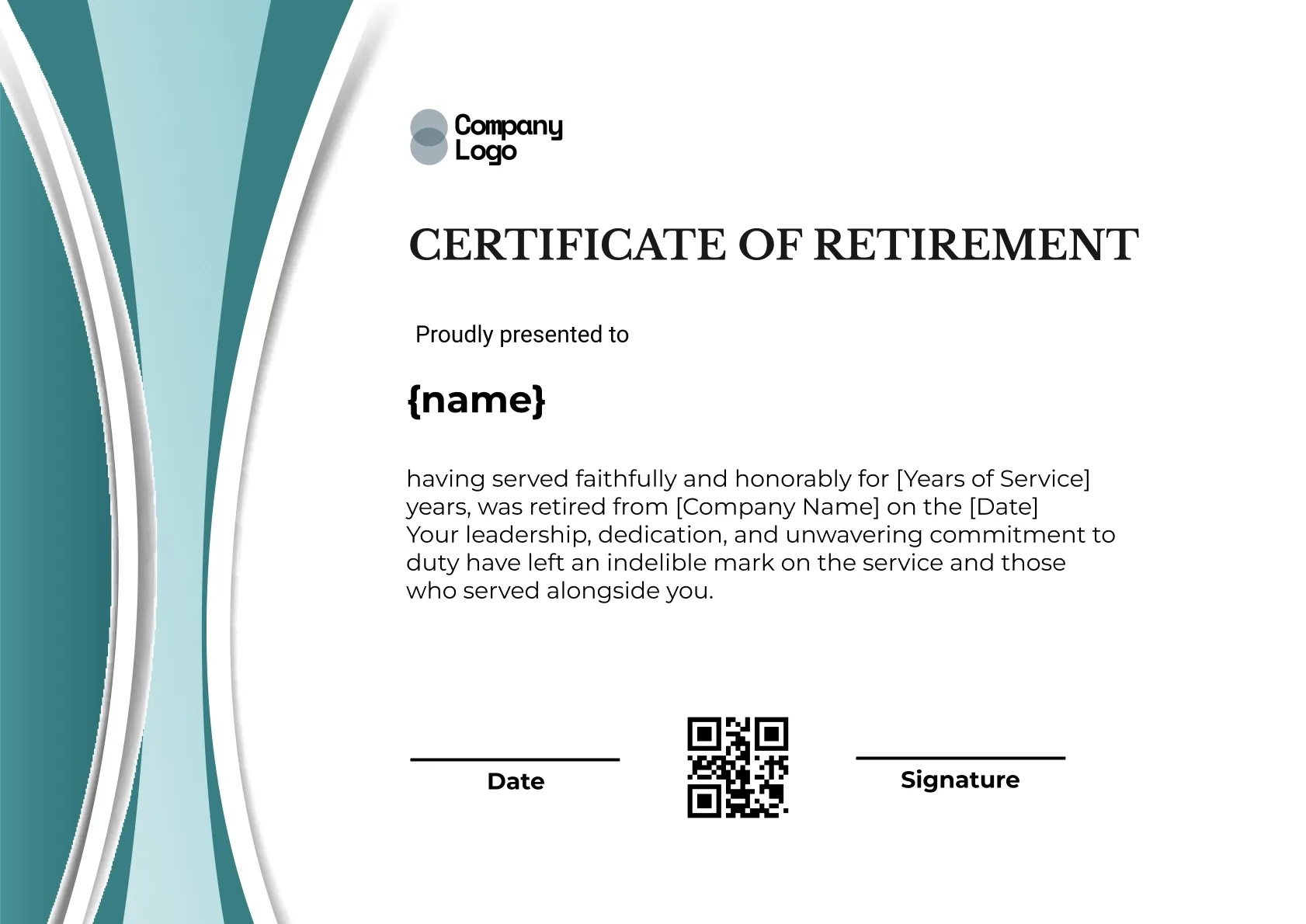
34. Do retirement recognition properly
Decades of work deserves more than a card passed round the office. A formal certificate, a named contribution, and the people who were actually there.
Dedicated Service Retirement Certificate Template - free editable template
Preview ↗Use templateEmployee recognition ideas for remote and hybrid teams (35–42)
Remote recognition fails in a specific way: it becomes invisible. Nobody overhears the praise, so nobody learns from it.
35. Make recognition asynchronous-first
If recognition only happens live, everyone outside the meeting's time zone is structurally excluded from it. Write it down first, say it second.
How to run it: The written version goes in the channel. The live mention is a bonus, not the delivery mechanism.
36. Recognize where the work happened
Praise on the pull request, the ticket, the design file, or the doc, not in a separate recognition tool. It gets seen by the people who understand what was hard about it.
How to run it: This one is free and immediate. It's also the single highest-signal recognition most engineers ever receive.
37. Ship something physical to their door
Remote employees never get the office cake. Something tangible arriving at home is the closest substitute, and it doesn't have to be expensive.
How to run it: Let people choose from three options rather than guessing. Guessing produces drawers full of branded socks.
38. Run a virtual demo day with peer voting
Atlassian moved ShipIt fully remote and kept the format: 24 hours, a show-and-tell, and colleagues voting on the winner. Distributed teams can absolutely run peer-judged recognition; it just has to be scheduled.
How to run it: Record the presentations. Half the recognition value is people watching later.
39. Upgrade their setup as the reward
A better chair, a second monitor, a decent microphone. It's recognition that improves their working life every single day, which very few awards do.
How to run it: Offer a fixed budget they choose from, rather than picking for them.
40. Give experience credits instead of cash
Airbnb leans on travel credits, team experiences, paid volunteer time and flexible benefits rather than pure cash awards. The reward reflects what the company is actually about.
How to run it: Pick rewards that connect to your product or values. Generic gift cards are forgettable by design.
41. Put the badge where their profile already is
A digital badge in an email signature, a Slack profile, or a LinkedIn certifications section keeps working long after the announcement scrolls past. Our guide to sharing credentials on LinkedIn covers how to make that land properly.
How to run it: Send the share link with the badge. If people have to figure out how to post it, most won't.
42. Protect the recognition ritual on the calendar
Remote rituals die silently, because no one notices an empty room. The weekly kudos round needs an owner and a recurring invite, or it lasts six weeks.
How to run it: Name a single owner and a named backup. Not "the team."
Low-cost and no-budget employee recognition ideas (43–47)
Every idea here costs under $50 or nothing at all.
43. Give time back
An early Friday, a meeting-free afternoon, or a genuine "don't check Slack tomorrow" after a hard push. Time is the reward people consistently rank highest and companies consistently offer least.
How to run it: The manager must say it out loud and cover for them. Unofficial time off that people are scared to take is worse than nothing.
44. Recognize with access
Invite someone to the meeting they're normally not in, or to present their own work to leadership instead of having their manager present it.
How to run it: Brief them properly beforehand. Access without preparation is a trap, not a reward.
45. Fund the thing they want to learn
A conference pass, a course, or a certification is recognition that compounds. Employers increasingly reward verified skills directly, and micro-credentials can raise starting salaries by up to 15%, which tells you how seriously the market takes them.
How to run it: Issue an internal badge when they finish, so the learning is visible rather than buried in an expense report.
46. Let them choose the next project
Adobe's Kickbox gives employees the resources to chase their own ideas; LinkedIn's InDay sets aside time for passion projects. Both convert recognition into autonomy, which is the reward high performers actually want.
How to run it: Time-box it hard, one day or one week, and require a share-out at the end.
47. Write them a public LinkedIn recommendation
It takes ten minutes, costs nothing, and is one of the very few forms of recognition that follows someone for the rest of their career.
How to run it: Write it while the specifics are fresh, not when they resign.
Company-wide awards and big-moment recognition (48–51)
48. Build the awards around your values, and publish the criteria
Salesforce's Ohana Awards honor employees who embody trust, innovation, equality and customer success. HubSpot recognizes people for demonstrating HEART: humble, empathetic, adaptable, remarkable, transparent. In both cases the award name teaches the value every time it's given.
How to run it: If you can't write a one-sentence earning criterion for an award, don't create the award.
49. Run an awards moment that isn't excruciating
Short, specific, and read by someone who was actually there. The failure mode is an hour of HR reading citations for people they've never worked with.
How to run it: Cap it at 20 minutes. Have the nominator present, not the organizer.
50. Let customers nominate your employees
Atlassian added a customer-judged prize to ShipIt, where an actual customer picks the project that delivered them the clearest value. External validation carries a weight internal awards can't manufacture.
How to run it: Pull nominations from support tickets and NPS comments. The praise is already sitting there unused.
51. Publish your recognition data
Once a quarter, share who's giving recognition and who's receiving it, by team. It exposes the manager who has never recognized anyone and the team that recognizes only itself.
How to run it: Report it at team level, never individual. The goal is to find gaps, not to shame people.
How to use digital credentialing for employee recognition
This is the section that turns the previous 51 ideas into something durable.
Almost all workplace recognition is ephemeral. The Slack message scrolls away. The certificate PDF sits in a downloads folder until the laptop is wiped. The award is announced in an all-hands that nobody recorded. Six months later, the recognition exists only as a vague memory, and it certainly can't be proved to anyone outside the company.
A digital credential fixes that. It's an award record the employee owns, with a unique ID, verification link and QR code, that they can share, that an outsider can independently confirm, and that doesn't disappear when they leave.
The difference in one table
| Slack shoutout | Certificate PDF | Verifiable credential | |
|---|---|---|---|
| Survives 12 months | No | Sometimes | Yes |
| Owned by the employee | No | Yes | Yes |
| Can be independently verified | No | No | Yes |
| Shareable on LinkedIn | No | Awkwardly | One click |
| Can be forged | n/a | Trivially | No |
| Survives them leaving | No | Yes | Yes |
| Effort to issue 200 of them | High | Very high | One upload |
Note what the table doesn't say: credentials are not a replacement for the daily layer. Nobody wants a badge for holding a door. Use the top two layers of the cadence, quarterly and yearly, as your credentialing line.
Build a three-tier badge ladder
The most common credentialing mistake is issuing badges for everything until they mean nothing. Three tiers is enough for almost any organization.
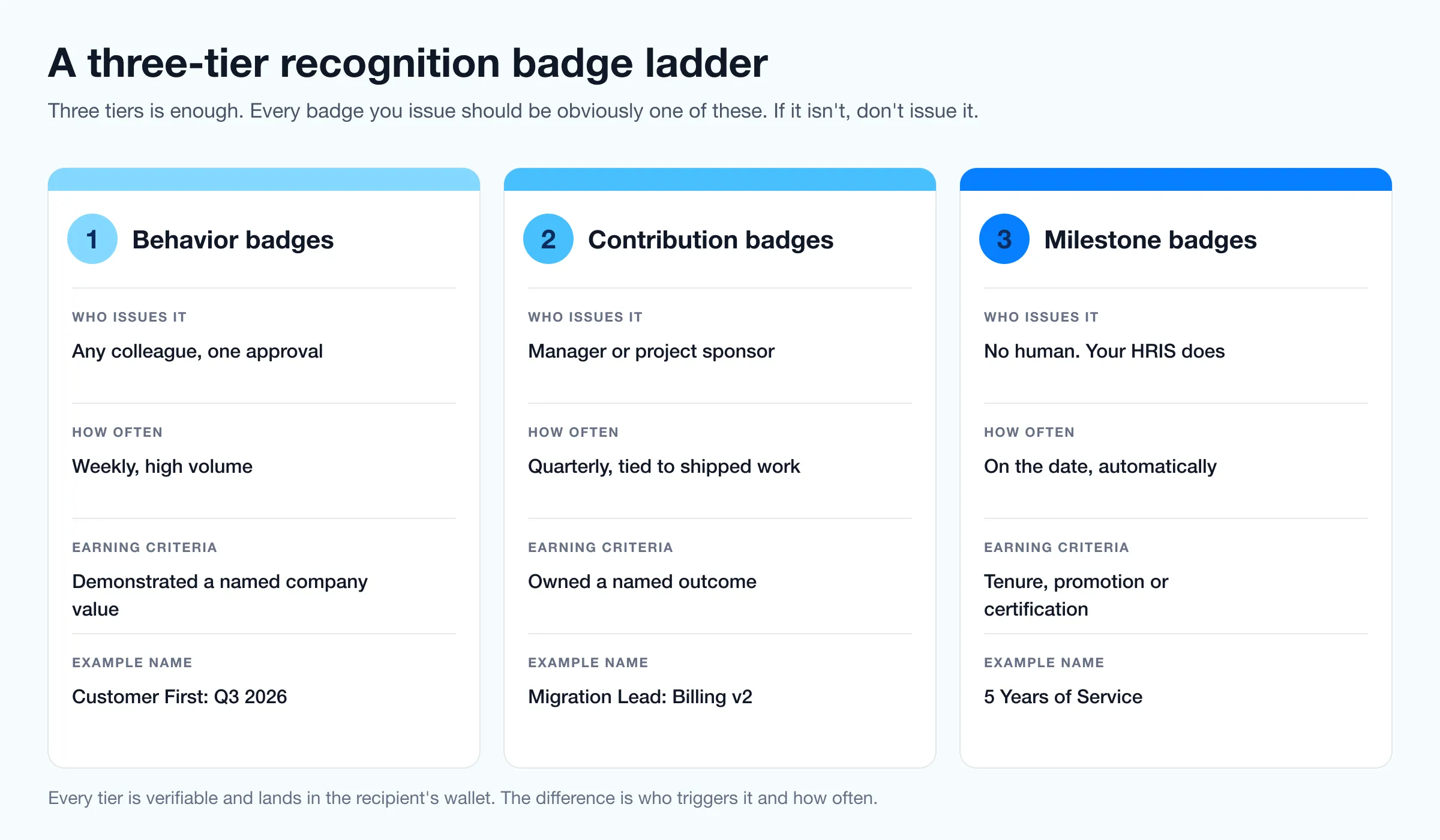
Tier 1: Behavior badges. Issued by peers, weekly, for demonstrating a named company value. High volume, low ceremony. This is where your Cisco-style nomination program lands.
Tier 2: Contribution badges. Issued by a manager or project sponsor, quarterly, for owning a named outcome end to end. Fewer of these, and each one should be defensible in a promotion conversation.
Tier 3: Milestone badges. Issued by nobody, triggered automatically from a date in your HRIS. Work anniversaries, promotions, completed certifications.
IBM's internal badge program is the reference implementation at scale: by the end of 2018 it had issued 1.4 million badges across 195 countries with a 91% claim rate, and internal research found 72% of respondents said it recognized employees for achievement while 76% said it motivated them to develop current skills.
Name the badge after the behavior, not the award
"Employee of the Month: March" tells a future employer nothing. "Incident Commander: Payments Outage, March 2026" tells them exactly what the person can do.
This is the single highest-value change you can make. Badge names that describe a demonstrated capability turn your recognition program into a skills inventory you can actually search when staffing a project.
- Name the capability, not the ceremony
- Include the scope or the system
- Date it, because recency matters
- Keep it under eight words
- Avoid internal jargon outsiders can't parse
- One badge, one behavior
Write earning criteria before you issue anything
Every credential should carry the criteria that were met. Not "for outstanding contribution," but the actual bar. Two reasons: it makes the badge credible to outsiders, and it tells everyone internally what they'd need to do to earn one.
If you can't write the criterion in one sentence, the award isn't well-defined enough to issue yet.
Make sure it lands somewhere the employee keeps
An emailed PDF is a credential you've handed over and then abandoned. A credential that lands in a recipient wallet is one they can find in three years, re-share when they update LinkedIn, and keep after they leave your company.
That last part feels counterintuitive. Why build recognition your leavers keep? Because a credential your alumni still display is a permanent, verifiable advertisement for your employer brand, issued by someone with no reason to flatter you.
Automate issuance or it will die in month three
Every manual recognition program dies the same way: it depends on one enthusiastic person, and that person gets busy. Automation is what carries a program past the launch quarter.
- 1
Design each badge once
Build the template, set the dynamic fields (name, date, criteria, issuing manager), and lock it. See our badge template library for starting points.
- 2
Wire the trigger to the system of record
Anniversaries and promotions come from the HRIS. Training badges come from the LMS. Nomination badges come from the form. Nobody should be typing names into a spreadsheet.
- 3
Bulk-issue everything else
For quarterly award cycles, one CSV upload issues the whole cohort at once. See how to send bulk certificates.
- 4
Give the recipient a one-click share
The share link goes in the same email as the credential. If sharing requires effort, adoption collapses.
- 5
Track what happens next
Claim rate, share rate and verification hits tell you which badges people actually value, and which ones to retire.
Our Zapier automation guide covers connecting an HRIS or form to automatic issuance, and the QR code verification guide covers making each credential independently checkable.
Recognition templates you can start from
You don't need a designer to start. These are all editable, and every one issues with a unique verification ID and QR code attached.
For the quarterly values award:
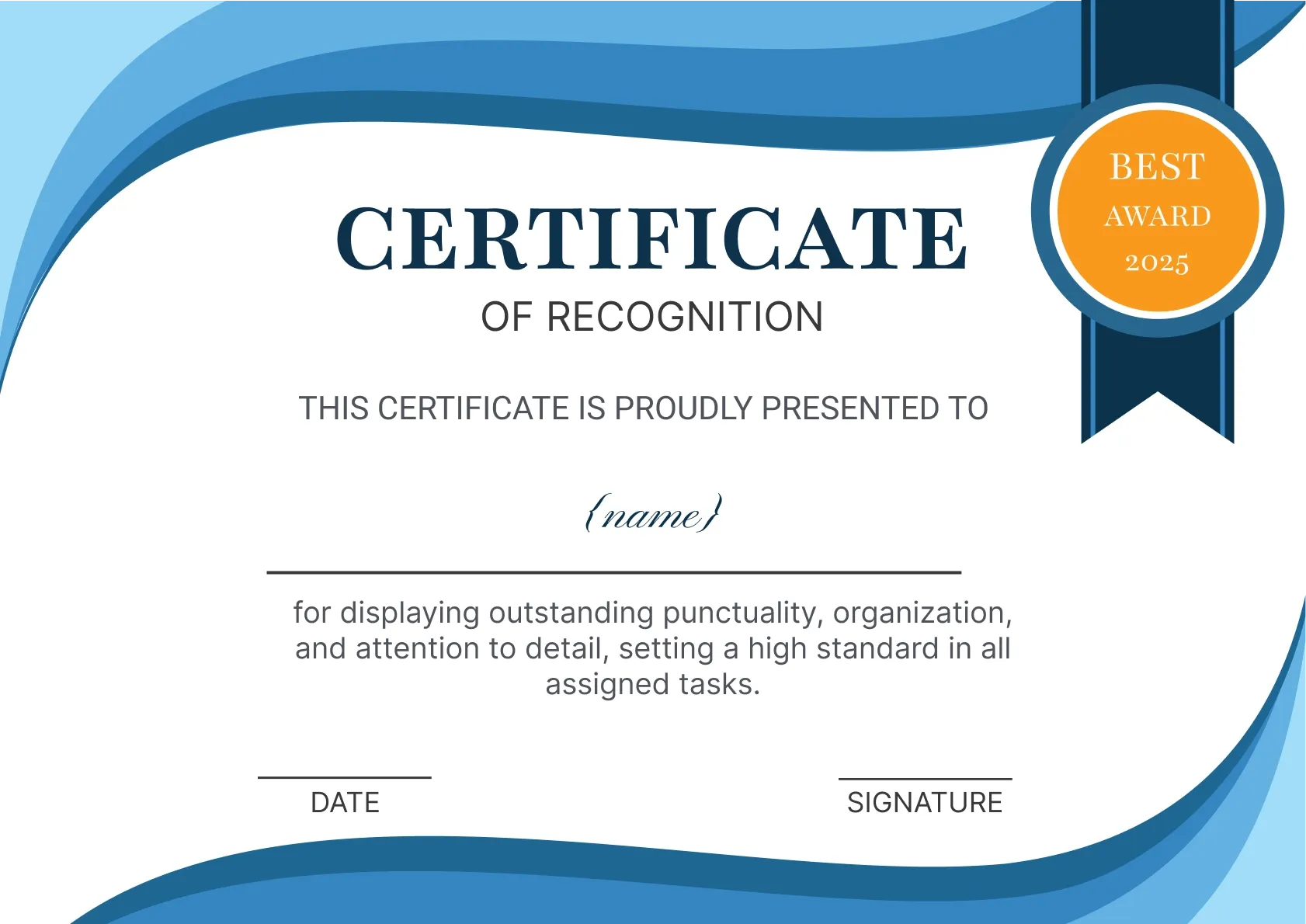
Dark and Professional employee recognition certificate template - free editable template
Preview ↗Use templateFor a best-employee or standout-contributor award:
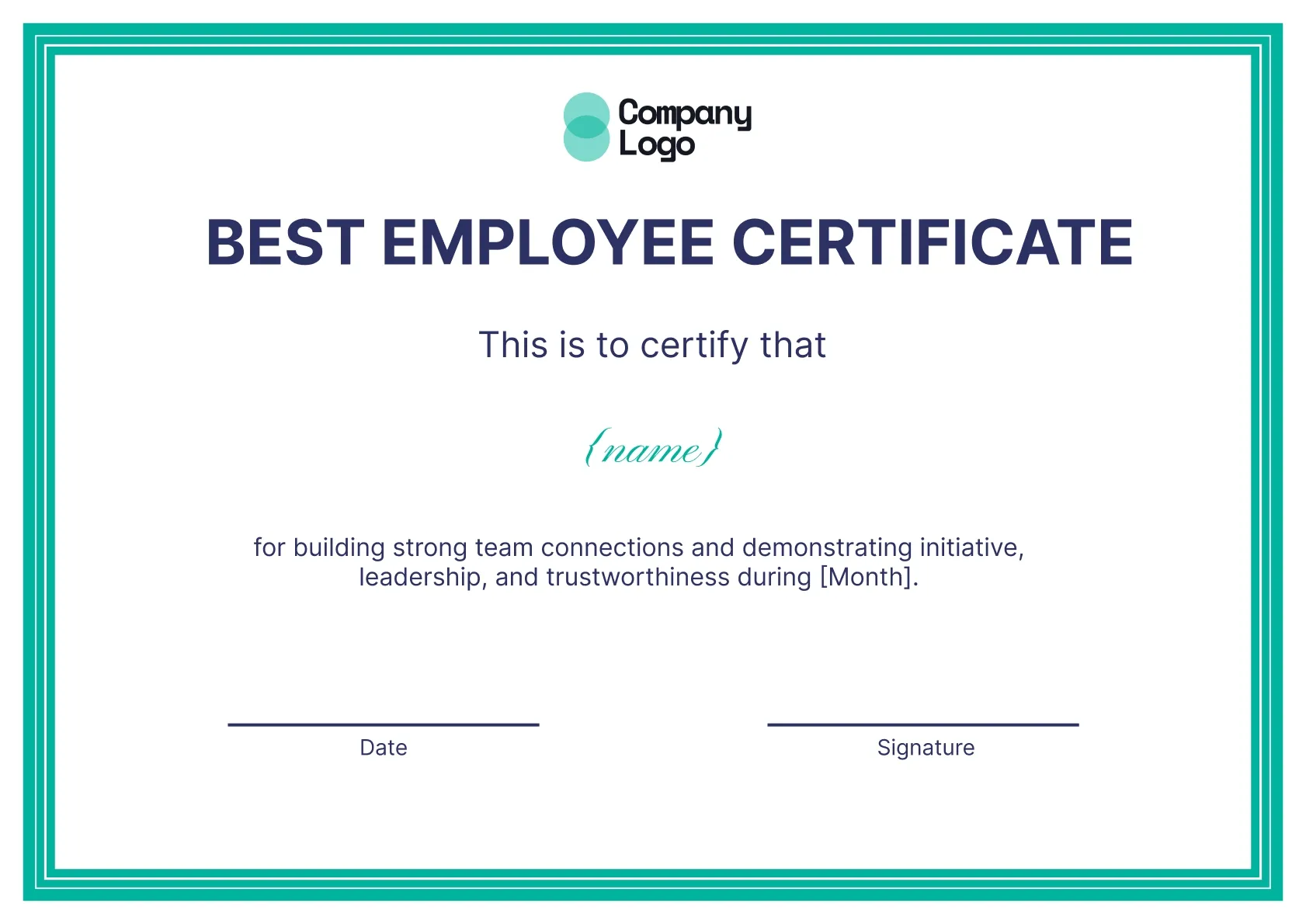
Professional and pristine best employee certificate template - free editable template
Preview ↗Use templateFor work anniversaries and service milestones:
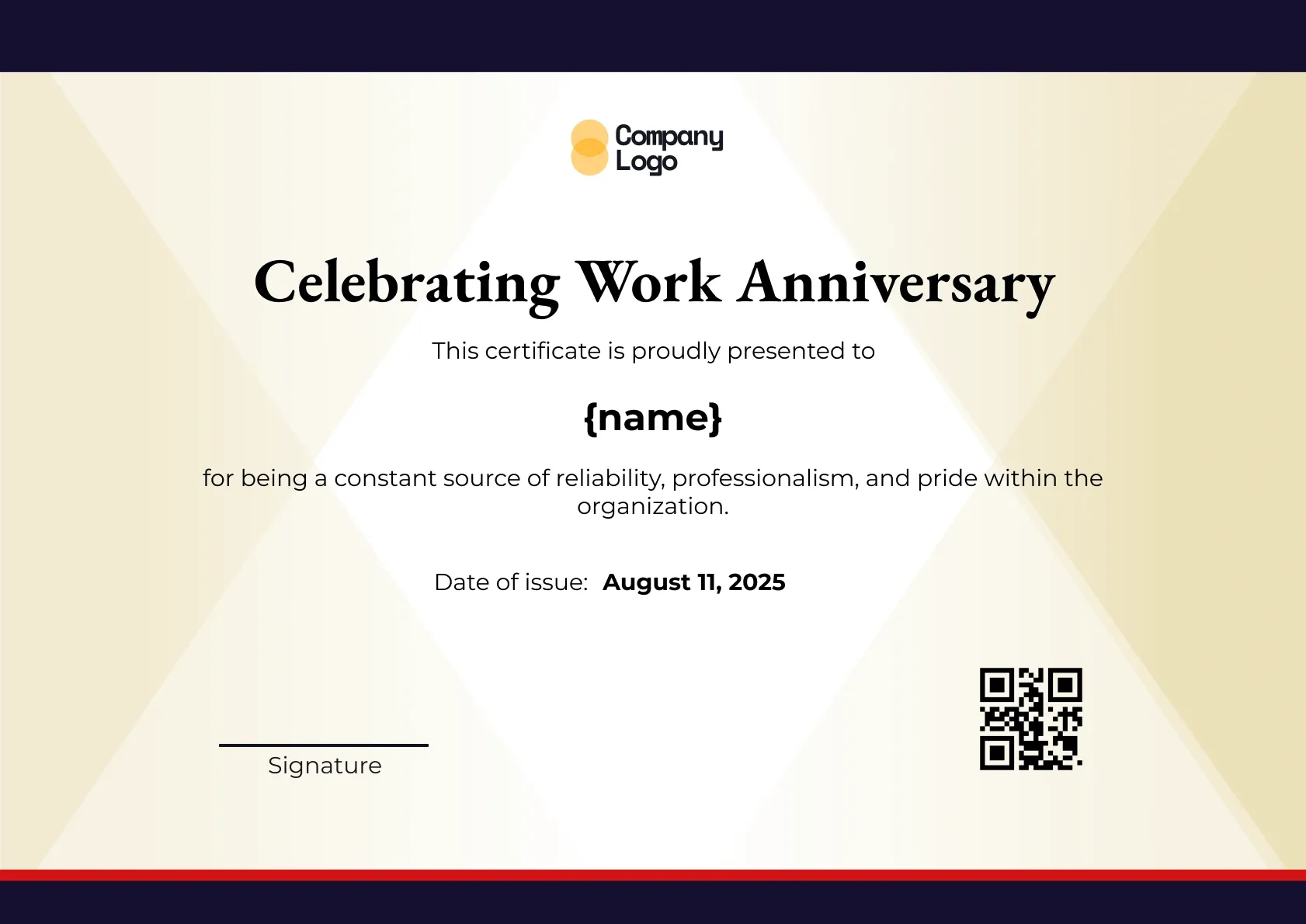
Celebratory Employee Work Anniversary Certificate - free editable template
Preview ↗Use templateFor promotion and scope milestones:
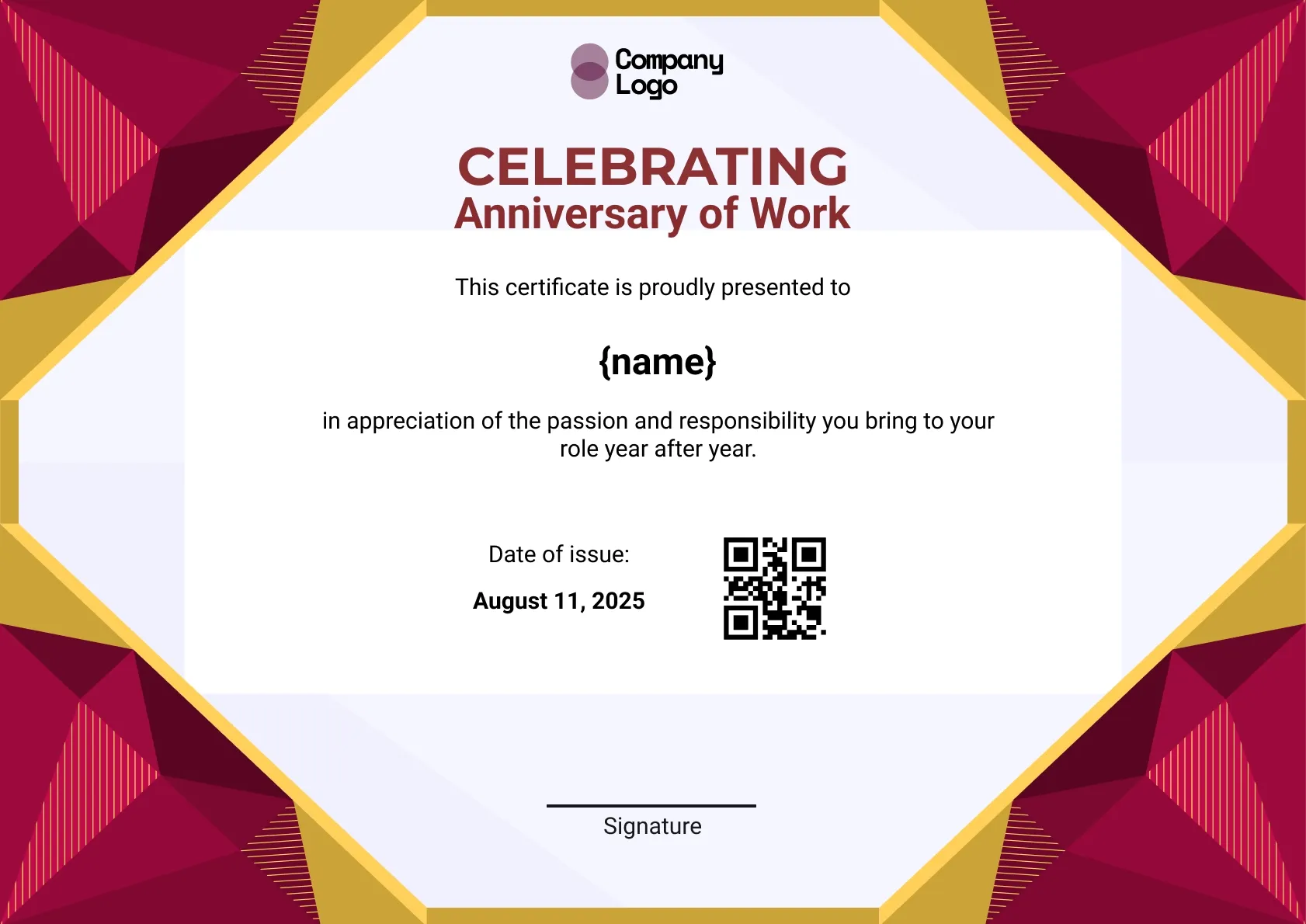
Modern Employee Milestone Certificate Template - free editable template
Preview ↗Use templateFor leadership recognition:
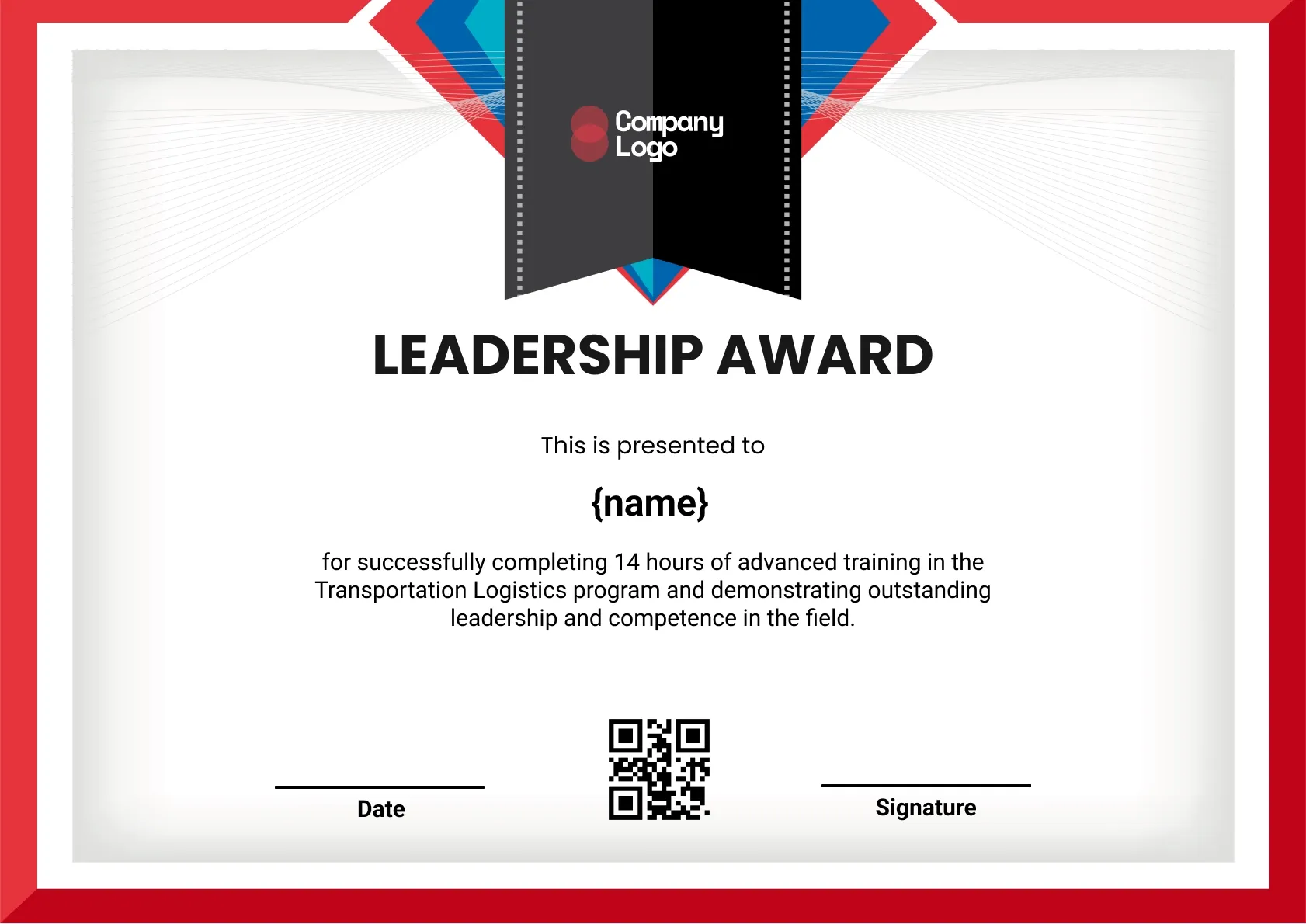
Outstanding Leadership Recognition Certificate Template - free editable template
Preview ↗Use templateFor a lighter, more celebratory award:
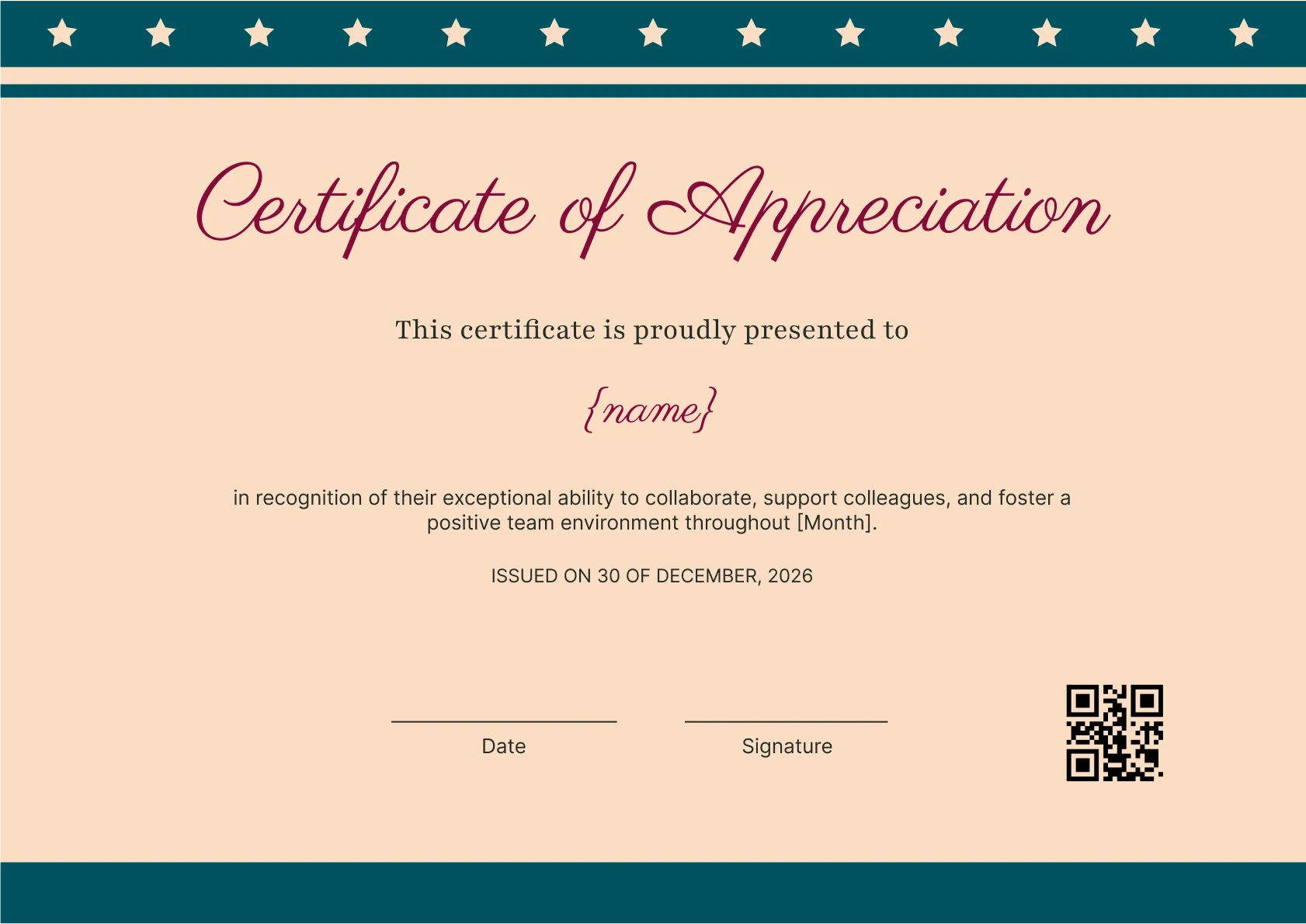
Simple and professional best employee certificate template - free editable template
Preview ↗Use templateNot every award needs to look like a bank statement. This one is retro-styled, with a peach background, a teal border and star accents, and it suits the awards that are meant to be fun: the traveling trophy, the team-voted prize, the quirky category you invented because someone earned it.
For a compact peer-recognition badge:
Professional and clean green appreciation badge template - free editable template
Preview ↗Use templateIf you'd rather work in landscape, the Simple and Professional Certificate of Employee template uses a soft blue background with darker blue borders and works for any recognition type, not just best-employee awards.
More options: employee of the month templates, work anniversary templates and certificates of appreciation.
Five credentialing mistakes to avoid
- 1
Issuing a badge for everything
Volume is the enemy of meaning. If everyone has fourteen badges, nobody looks at any of them.
- 2
Using unverifiable PDFs
A PDF anyone can edit in a browser is worth exactly nothing to an external employer, and it quietly signals that your recognition is decorative.
- 3
Vague criteria
"For outstanding service" is not a criterion. It's a phrase that survived from 1974.
- 4
Locking credentials inside your systems
If the badge dies when their SSO account is deactivated, it was a company asset, not recognition.
- 5
Launching without a retirement plan
Decide up front which badges expire, which get superseded, and who reviews the catalog annually. Programs bloat by default.
How to tell whether your recognition program is working
Four numbers, reviewed quarterly. Everything else is decoration.
| Metric | What it tells you | Warning sign |
|---|---|---|
| Coverage | % of employees who received any recognition this quarter | Below 60%: the program serves a clique |
| Giver spread | % of managers who gave recognition this quarter | Below 80%: recognition is one person's hobby |
| Claim rate | % of issued credentials the recipient actually claims | Below 70%: the badges aren't valued |
| Share rate | % of credentials shared externally | Near zero: the badge names are meaningless outside |
The claim and share rates are the honest ones. People don't claim recognition they don't value, and they never post a badge that would embarrass them professionally. IBM's 91% claim rate is the benchmark to aim at.
A 30-60-90 day rollout
- 1
Days 1–30: Fix the daily layer first
No tooling, no budget. Get managers doing specific, same-day recognition and put it on the 1:1 agenda. Run the "how do you want to be recognized" survey. If this layer doesn't work, no platform will save you.
- 2
Days 31–60: Define the ladder and design the templates
Write earning criteria for three to six badges across the three tiers. Design the templates. Pick your issuing tool. Do not launch yet. Launching with vague criteria is the mistake you can't undo.
- 3
Days 61–90: Automate the milestone tier and launch
Wire anniversaries to your HRIS so the automatic layer runs itself, then launch peer nominations. Measure coverage, giver spread, claim rate and share rate from day one, and review the badge catalog after two quarters.
Turn recognition into something people keep
Design a badge once, issue it to your whole team in a single upload, and give every recipient a verifiable credential they own for life.
FAQs on Employee Recognition Ideas
- What are the best employee recognition ideas for a small team? Specific same-day praise, a weekly "who helped you" round, and an automated work-anniversary credential. Small teams don't need a platform for the daily layer, but they do need automation for milestones, because there's no HR function to catch a missed date.
- How often should employees be recognized? Gallup's research points to weekly as the target for informal recognition, with only one in three U.S. workers currently reporting recognition in the past seven days. Formal, credential-bearing recognition works best quarterly and annually.
- What's the difference between employee recognition and employee rewards? Recognition is the acknowledgment of a specific behavior; a reward is the thing attached to it. Recognition works without a reward. A reward without recognition is just compensation, and people notice the difference immediately.
- Do digital badges work for employee recognition, or only for training? Both, and internal recognition is often the higher-value use. Badges convert one-off awards into a searchable skills record, which is why programs like IBM's cover advocacy and contribution alongside training completion. See our digital badges guide and the badge vs. certificate comparison for where each format fits.
- How much should an employee recognition program cost? Cisco funds Connected Recognition at around 1% of payroll, which is the high end. Most organizations get most of the benefit from a fraction of that, because the highest-impact layer, specific and timely manager recognition, is free. Budget for the credentialing infrastructure and the milestone rewards; the daily layer costs nothing but attention.
- What should go on an employee recognition certificate? The recipient's name, the specific behavior or outcome being recognized, the earning criteria, the date, the issuing person or team, and a verification ID with a QR code. The criteria line is the one most organizations skip and the one that makes the credential meaningful to anyone outside the company.
Start with the layer you're missing
Run through the list honestly. Most organizations have an annual awards ceremony and nothing else, which means recognition happens to about 5% of employees, once, in a way nobody can prove afterwards.
Fix the daily layer with rules 1 through 10. Add peer recognition once managers are consistent. And credential the two layers that matter, quarterly awards and annual milestones, so that the recognition someone earned this year is still something they own, and can prove, long after the Slack message has scrolled away.