Employee Badge Maker: Recognition People Actually Wear

A few years ago, a friend who ran ops for a 60-person company proudly showed me their "Employee of the Month" wall. Twelve framed photos, one per month, printed on the same template since 2019. I asked her who was on it in March. She had to walk over and check.
That is the problem with most employee recognition, in one wall. It exists, someone approved a budget for it, and nobody remembers it a week later. The badge, the certificate, the little laminated card: they were designed to be seen once and then filed away.
An employee badge maker is supposed to fix that. Not by making a nicer PNG, but by turning recognition into something portable, verifiable, and worth keeping, on LinkedIn, in an email signature, in a resume. This post is about why most badge programs quietly fail, what an employee badge maker actually needs to do, and how to build one your team will not forget by March.
The Cork Board Problem
Every office has some version of the cork board. A framed certificate, a shoutout in a Slack channel that scrolls away, a gift card email that gets archived. The intent is good. The format is disposable.
Recognition that disappears does not compound. A "great job" that lives for one Slack scroll does nothing for the person's LinkedIn profile, their next performance review, or their sense that the company keeps a real record of what they have done. It is felt for a day and forgotten by the next sprint.
Digital badges were built to solve exactly this. Not as a prettier version of the cork board, but as a durable, shareable, verifiable record that an employee actually earned something, whether that is a skill, a milestone, or simply being recognized by a peer.
What Is an Employee Badge Maker?
An employee badge maker is a tool that lets you design, personalize, and issue digital badges to employees for skills, achievements, milestones, or recognition, then track whether recipients view, share, or verify them. Good tools also automate issuance, so a badge goes out the moment someone hits the trigger for it, rather than whenever HR gets around to it.
It is worth being precise here, because "employee badge" gets used for two very different things:
Recognition badges vs. ID badges
A physical employee ID badge is an access card: a photo, a name, maybe an RFID chip, printed by security or facilities to get someone through a door. That is a hardware problem, solved by card printers and access control systems.
A digital employee badge, the kind this post is about, is a credential: a visual, verifiable record that someone completed training, hit a milestone, demonstrated a skill, or was recognized by a manager or peer. It lives online, carries data about why it was earned, and travels with the employee, to LinkedIn, a CV, an internal skills profile, wherever it is useful. If you searched for an employee badge maker expecting the first kind and landed on the second, this is your sign that the digital version is usually the more useful one for recognition and skills tracking.
Why Digital Employee Badges Work Better Than a Wall Plaque
Three things separate a good digital badge from a nice-looking image:
- Portability. A badge that lives only on an office wall reaches nobody outside that office. A badge added to LinkedIn reaches a recipient's entire network, and by extension, everyone who might one day hire, promote, or refer them.
- Verifiability. Anyone can print "Certified Expert" on a card. A real digital badge carries a unique ID and, ideally, follows the Open Badges standard, so a recruiter or manager can confirm it is genuine rather than take it on faith.
- Data. A good badge is not just a picture. It records who issued it, when, and for what criteria, which makes it useful for skills inventories and internal mobility, not only for looking nice on a profile.
None of this is a nice-to-have. Gallup's research on workplace recognition found that only one in three US workers strongly agree they received recognition for good work in the past seven days, and employees who feel under-recognized are twice as likely to say they will leave within a year. Recognition is cheap to give and expensive to skip. A badge maker just makes it easy to give consistently, at scale, in a format people keep.
The Real Reason Employee Badge Programs Quietly Die
I have watched this happen enough times to see the pattern. It is rarely that leadership stops caring about recognition. It is that the program was built as a one-time project instead of a system.
- 1
Badges become a launch, not a habit
Someone designs a set of badges for a big rollout, everyone is excited for a month, and then nobody adds a new one or issues an old one because there is no process for it, just a memory of the launch.
- 2
Issuance depends on someone remembering
If a badge only goes out when a manager manually logs into a tool and fills in a form, it goes out late, inconsistently, or not at all. Recognition that lags the moment by three weeks barely counts as recognition.
- 3
The badge has nowhere to live once it is issued
A badge emailed as a flat image gets downloaded once and never opened again. Without a shareable link, a verification page, and a one-click way to post it to LinkedIn, the badge dies the day it is issued.
Fix those three failure points and most of what people call "employee recognition fatigue" goes away, because the badges stop depending on someone's memory and start running on a system.
What to Look for in an Employee Badge Maker
Before you commit to a tool, check that it actually covers the basics that separate a system from a one-off design project:
- Ready-made templates for skills, milestones, and appreciation
- Automation that triggers issuance from an event, not a manual click
- Open Badges support for portable, verifiable credentials
- QR code or link-based verification, no login required
- Full white-label branding with your logo and colors
- Analytics on opens, shares, and LinkedIn adds
- One-click LinkedIn sharing from the delivery email
- A free plan you can pilot before you commit budget
If a tool is missing automation or verification, you have found a design tool, not a badge maker. Those are different problems, and only one of them scales past 20 employees.
Building an Employee Badge Program That Actually Sticks
Pick the moments worth recognizing, not everything.
A badge for every small task dilutes the ones that matter. Start with a short list: a skill mastered, a training completed, a work anniversary, a peer nomination. Add more only once the first set is running smoothly.
Design badges people want to be seen wearing.
Generic clip-art badges get downloaded and ignored. A clean, branded design with a clear title (skip vague labels like "Star Performer" in favor of something specific, like "Advanced Excel Modeling") makes the badge worth adding to a LinkedIn profile.
Automate the trigger.
Connect the badge to the event that earns it: a course completion in your LMS, a milestone in your HRIS, a form submission from a manager. This is the difference between recognition that happens the day it is earned and recognition that happens whenever someone remembers.
Make sharing a one-click action.
The delivery email should include a direct "Add to LinkedIn" button, not a PDF attachment. Friction is the single biggest reason badges go unshared.
Watch the data and keep the set current.
Track opens, shares, and verification clicks. Retire badges nobody earns anymore, and add new ones as your skills or programs change. A badge program is maintained, not launched once and left alone.
If you already run internal training or certification programs, this same automation logic applies. See how it plays out for building HR training programs people trust or HR training certification for the broader credentialing picture.
Employee Badge Ideas Worth Stealing
Not every recognition moment needs a full certificate. Badges work well for the smaller, more frequent wins that a formal certificate would over-serve.
| Badge type | Good for | Example title |
|---|---|---|
| Skill badge | Proving a specific, job-ready skill | "Advanced Data Analysis" |
| Milestone badge | Work anniversaries, tenure | "5 Years at [Company]" |
| Training badge | Completing internal or external courses | "Onboarding Complete" |
| Culture badge | Living a company value | "Customer-First Award" |
| Peer badge | Recognition nominated by a colleague | "Team Player" |
| Safety/compliance badge | Certifying required training | "Workplace Safety Certified" |
Here are two badge styles built for exactly this kind of recognition:
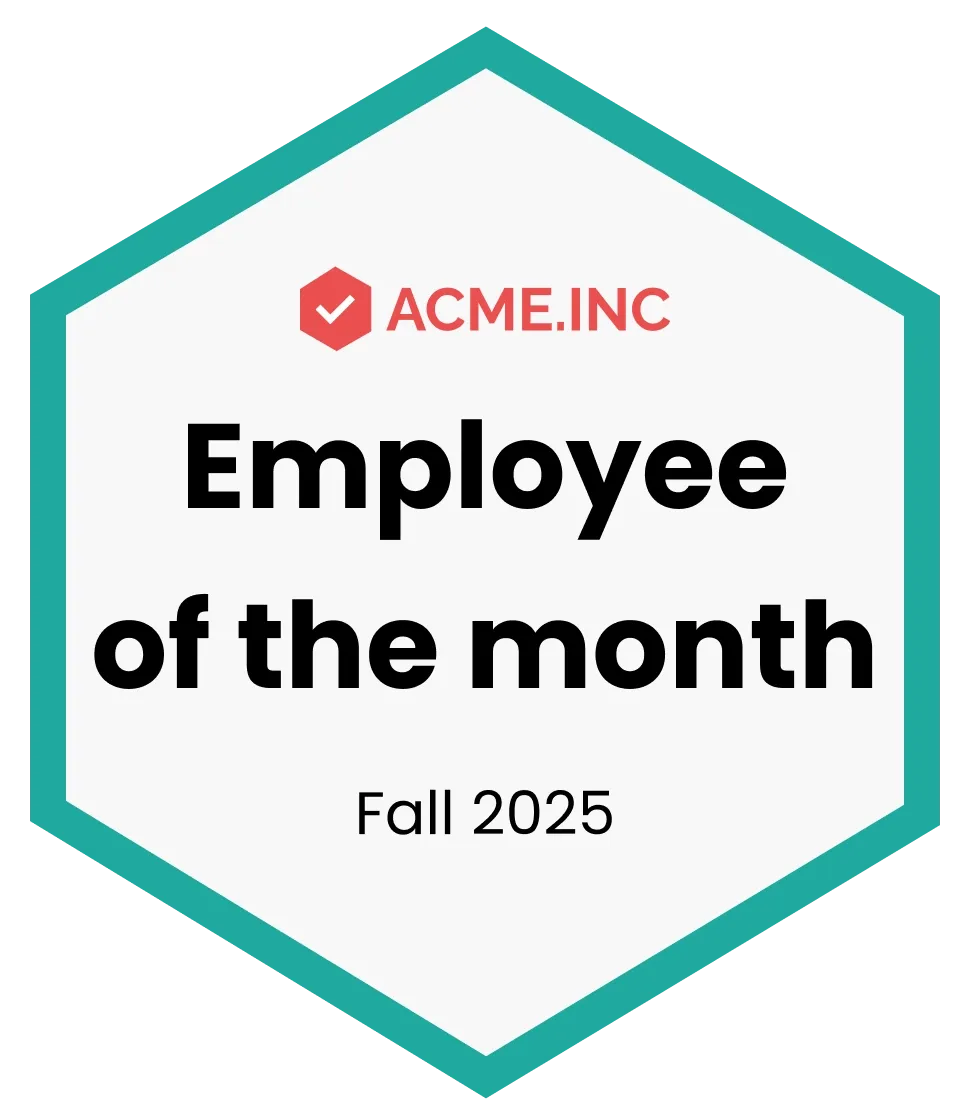
Professional and clean green appreciation badge template - free editable template
Preview ↗Use template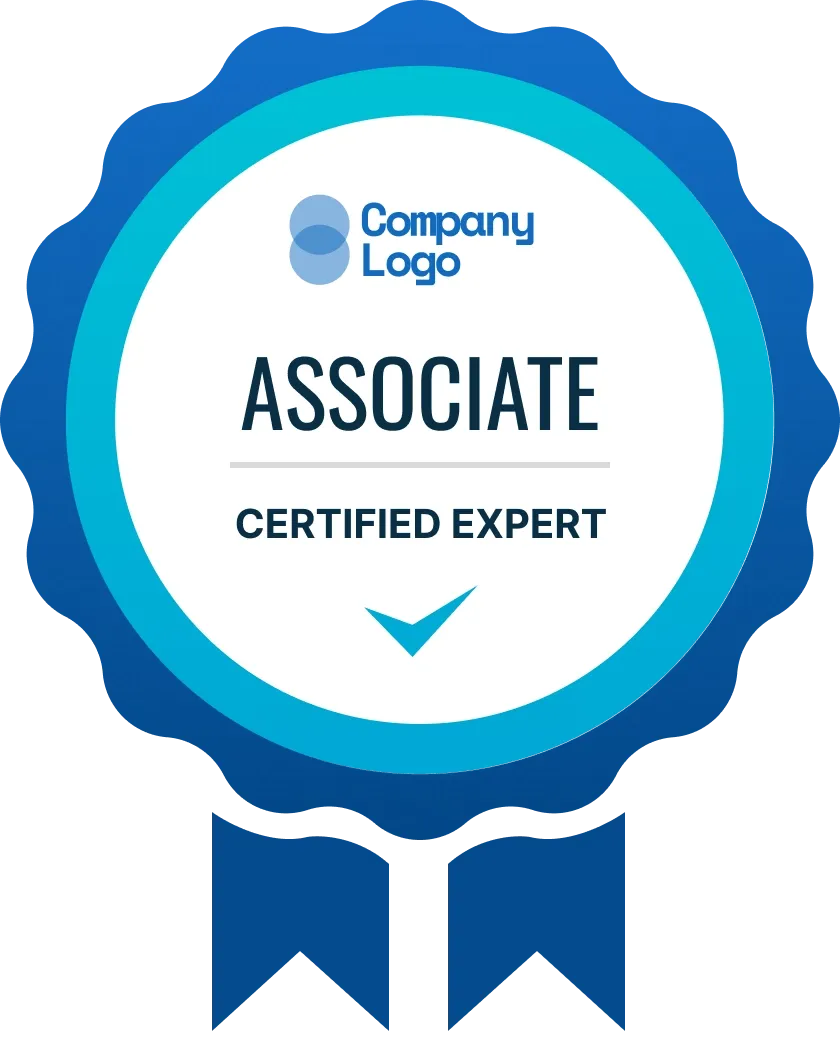
Neat and traditional blue achievement badge template - free editable template
Preview ↗Use templateFor more ready-made options, browse 15 badge templates for training, certification, and employee growth or 25 free digital badge templates you can customize in minutes.
Badges or Certificates? Use Both, Deliberately
Badges and certificates are not competitors, they cover different moments. A badge suits a frequent, lightweight win: a skill, a shoutout, a milestone. A certificate suits a formal, complete achievement: finishing a full program, passing an assessment, earning an accreditation. If you are unsure which one fits a given program, the difference between digital badges and digital certificates breaks down when to use each.
How Wauld Fits In
Wauld's badge maker is built around the exact failure points above: automation so issuance does not depend on someone remembering, Open Badge 3.0 compliance so badges are portable and verifiable, and one-click LinkedIn sharing so recognition does not die in an inbox. Every badge carries a QR code linked to a public verification page, no login required, and the free plan covers up to 300 credentials a year with automation and analytics included, so you can pilot a program before committing budget.
FAQs on Employee Badge Maker
What is an employee badge maker? An employee badge maker is a tool for designing, personalizing, and issuing digital badges to employees for skills, milestones, training, or recognition. Good ones also automate issuance and let recipients share the badge to LinkedIn or a public verification link.
How is an employee badge different from an employee ID badge? An employee ID badge is a physical access card, made by facilities or security for building entry. A digital employee badge is a credential that recognizes a skill, achievement, or milestone and can be shared or verified online. This post covers the digital kind.
Are digital employee badges free to create? Many platforms, including Wauld, offer a free tier. Wauld's free plan covers up to 300 credentials a year with automation, analytics, and templates included, so you can run a small program at no cost before upgrading.
Can employees add their badges to LinkedIn? Yes, if the badge maker supports it. Look for a tool with a one-click "Add to LinkedIn" option in the delivery email, since making recipients download and re-upload an image is friction that kills sharing.
Do employee badges need to follow the Open Badges standard? It is not mandatory, but it is worth requiring. Open Badges is an open standard that makes a badge portable and verifiable outside the issuing platform, which matters if an employee ever wants to prove the badge is real to a future employer.
How do I automate employee badge issuance? Connect the badge maker to the event that earns it, a course completion in your LMS, a milestone in your HRIS, or a form a manager submits, using an API, webhooks, or a no-code tool like Zapier. This removes the dependency on someone remembering to issue it manually.
What's the difference between an employee badge and an employee certificate? Badges suit frequent, lightweight recognition: a skill, a shoutout, a small milestone. Certificates suit formal, complete achievements: finishing a full program or passing an assessment. Most programs use both, for different moments.
How many badges should an employee recognition program start with? Start small, four to six badges covering your most common recognition moments: a skill, a training completion, an anniversary, and a peer nomination. Add more once issuance is running automatically and people are actually sharing what they earn.
Build an employee badge program people keep
Design, automate, and issue verifiable employee badges in minutes, free for up to 300 credentials a year, no credit card required.