How Schools Can Prevent Forged Diplomas With Digital Credentials

Schools can prevent forged diplomas by issuing digital credentials that anyone can verify in seconds. Instead of a paper certificate or a PDF that is easy to copy, each graduate gets a credential with a unique ID, a QR code, and a public verification page. An employer clicks once and sees the truth. No phone calls to the registrar, and no guessing.
I care about this topic more than most people, and not because it is my job. I care because I watched forged diplomas hurt people I liked. This guide is for registrars, faculty, and school leaders who want proof that actually holds up. I will share what I saw, why paper fails, and how a tool like Wauld fixes it.
Key takeaways
The classmate who got my dream job
Let me tell you about a guy. Let's name him A.
We studied at the same well-known college. Good campus, tough professors, the whole thing. A was fun at parties. He was not fun at exams. Meanwhile, a friend of mine named B lived in the library. She earned every mark.
Placement season arrived. A great company came to hire. A showed up with a shiny stack of certificates, including a "summer internship" and a "data analytics course" that, as far as anyone knew, he had never attended. The certificates looked official. They had a logo, a signature, and a fancy gold seal.
He got the offer. B did not.
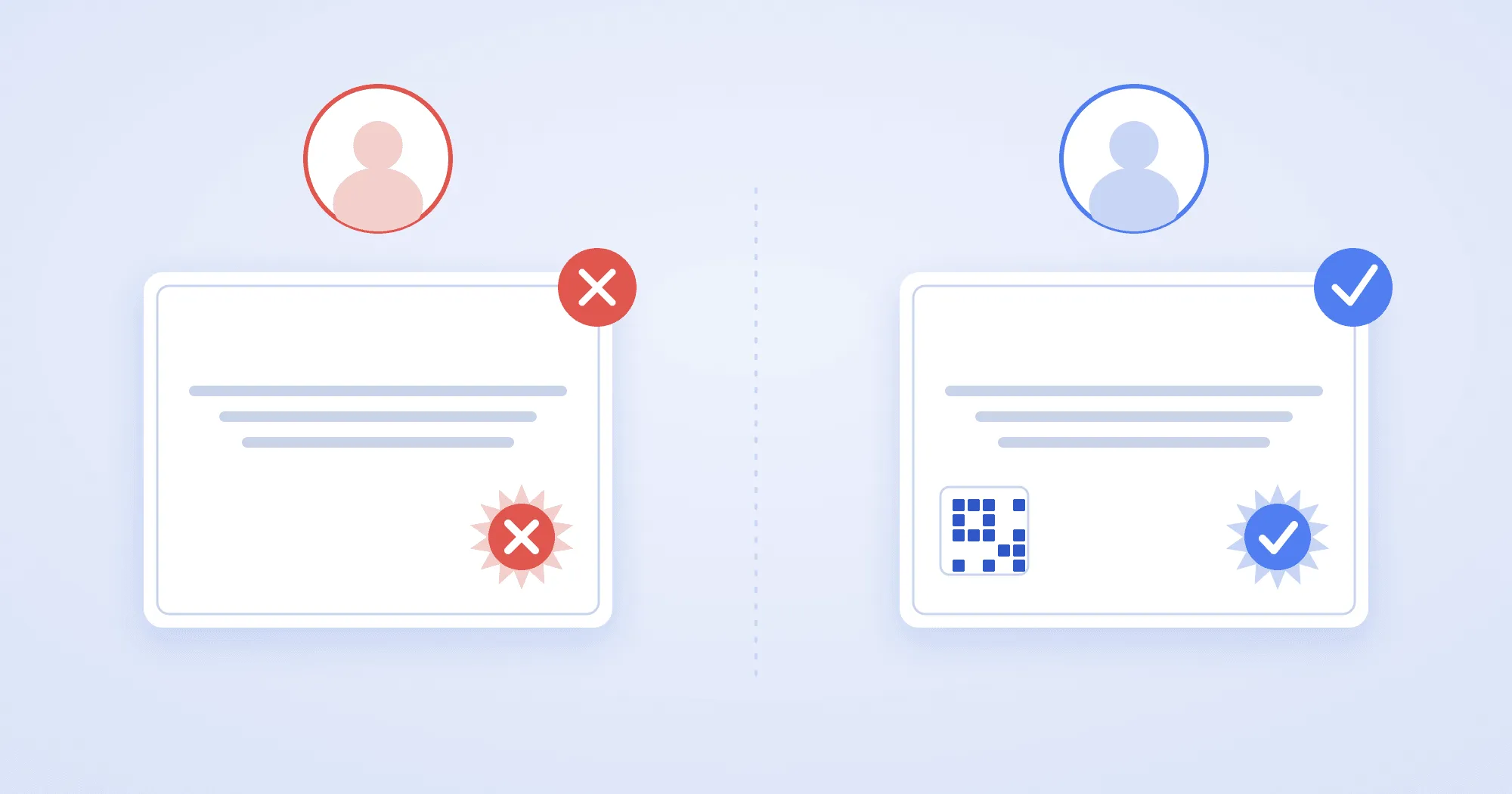
Nobody checked the certificates. The recruiter had forty resumes and one afternoon. Why would she call some training institute to confirm a PDF? So the forged paper won, and the honest student lost. That stung, and it stuck with me for years.
Here is the part that bothered me most. It was not really A's fault alone. The system made cheating easy and honesty risky. When proof is just ink on paper, forged diplomas are almost inevitable.
Why forged diplomas are a bigger problem than schools think
This is not a rare story. It is a global industry.
The scale is genuinely shocking. In 2015, prosecutors charged the Pakistani company Axact after it sold fake degrees from hundreds of made-up universities and earned an estimated 140 million dollars. A U.S. Government Accountability Office investigation into diploma mills even bought a degree undercover and found federal employees using diploma mill credentials on the job.
Diploma fraud shows up in a few forms:
- Diploma mills. Fake "universities" that sell degrees for cash, with no real study involved.
- Forged certificates. Real school names copied onto fake documents, often edited in a photo tool.
- Doctored PDFs. A genuine certificate with the name, grade, or date quietly swapped out.
Each fake certificate that slips through does real damage. A deserving graduate loses a role. An employer hires the wrong person. And your school's name ends up on a document you never issued. That last one should worry every registrar, because it is your reputation on the line.
Why paper diplomas and PDFs are so easy to fake
Traditional diplomas fail for a simple reason. They were designed to look impressive, not to be checked.
Think about what a paper or PDF diploma actually offers:
- Anyone with a design tool can copy the layout in an hour.
- A seal and a signature can be scanned and reused.
- There is no fast way to confirm the document is real.
- Verification means emailing the registrar and waiting days for a reply.
Because checking is slow, most employers skip it. Therefore the forgery usually works. A diploma that cannot be verified quickly is not really proof. It is just decoration that we all agreed to trust.
What are digital credentials?
A digital credential is a diploma or certificate issued online in a format that can be verified instantly.
It looks like a normal certificate, so students still get something they are proud to share. However, the important part is invisible. Behind the design sits data that proves who issued it, who earned it, and when. Many credentials follow the Open Badges standard, a shared format built for verifiable achievements in education.
In plain terms, a digital credential answers three questions on demand:
- Did this school really issue it?
- Did this exact person really earn it?
- Has anyone changed it since?
A paper diploma cannot answer any of these without a phone call. A digital credential answers all three with one click.
How digital credentials prevent forged diplomas
Digital credentials do not just make forgery harder. They make it pointless. Here is how they close each gap that fakers rely on.
- Unique credential ID. Every diploma gets its own ID. A copied one will not match your records, so the fake falls apart on the first check.
- Public verification page. Anyone can open a live page hosted by the issuer that confirms the credential is genuine. No login, and no waiting.
- QR code. A recruiter scans it with a phone and lands straight on that verification page. Checking takes seconds, so people actually do it.
- Tamper-evident data. Change the name or the grade and the credential no longer validates. The edit shows.
- Central control for the school. You can update or revoke a credential if something changes, which paper can never do once it is printed.
For example, imagine B's story with digital credentials. A's fake "data course" certificate has no valid ID and no verification page. The recruiter scans, sees nothing, and asks questions. B's real diploma scans clean. Suddenly the honest student has the advantage, which is exactly how it should be.
What is Wauld, and how I ended up here
After college, I kept thinking about B. Then I joined Wauld, and I learned that this whole mess is a solved problem. Schools do not have to accept forged diplomas as the cost of doing business.
Wauld is a digital credential platform. It handles the full life of a credential: design it, issue it, deliver it, verify it, and track it. In short, it does everything a paper diploma cannot.
Here is what a school gets with Wauld:
- A branded certificate or digital badge designed in the studio, so it still looks like your school.
- A unique ID, a QR code, and a public verification page on every single credential.
- Automated issuing, so students receive their diploma the moment they qualify.
- One-click sharing to LinkedIn, which students genuinely love.
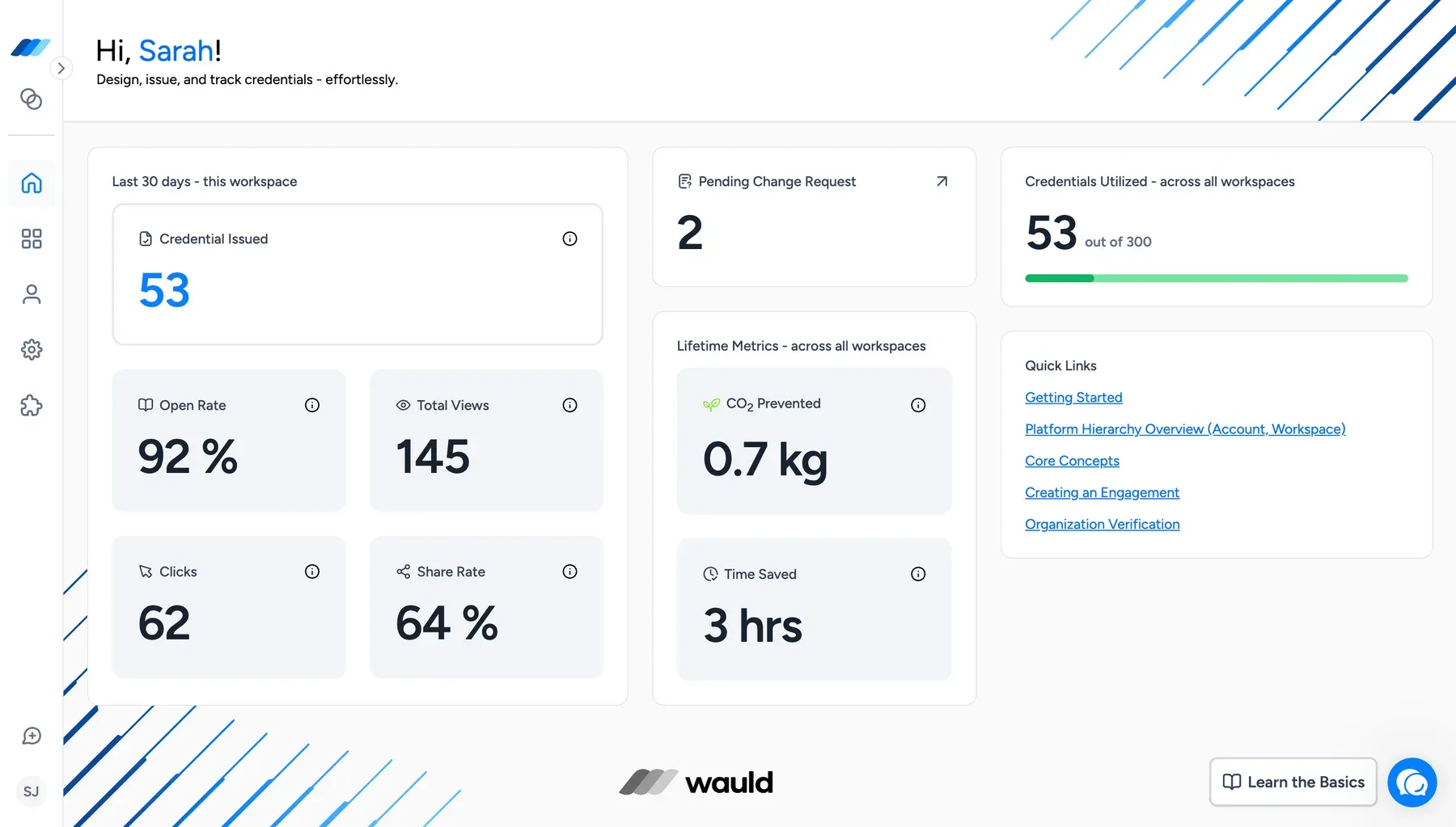
- Analytics on views, downloads, and verifications, so you can see the credential working.
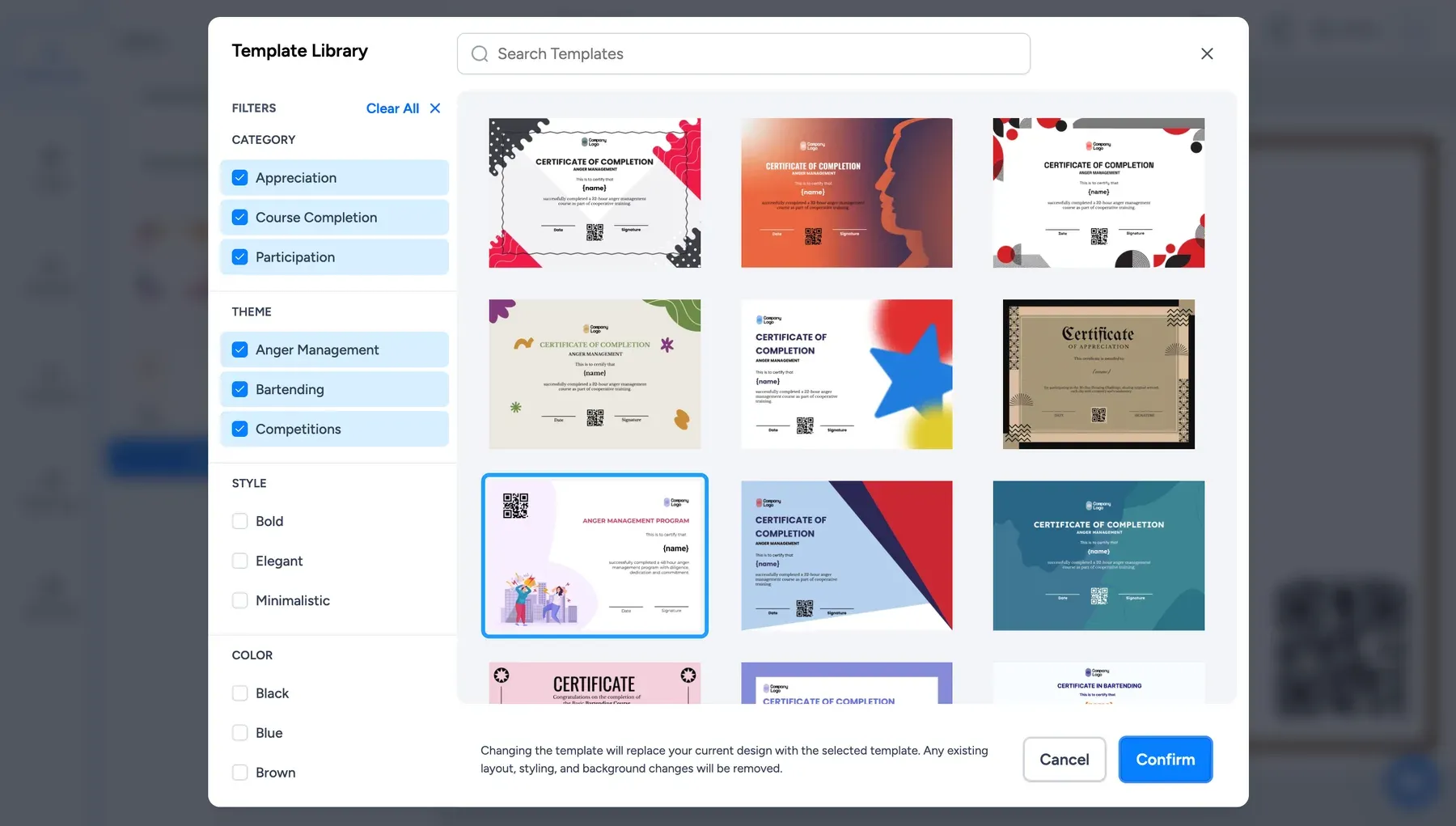
Every credential you design carries a unique ID, a QR code, and a public verification page, so you can also watch each one work in real time.
Wauld is built for exactly this audience. The higher education solution issues verifiable diplomas, transcripts, and badges, and it follows the Open Badge 3.0 standard so credentials stay readable anywhere. You can also see how the security side works on the trust center.
Paper vs PDF vs digital credentials
| What matters | Paper diploma | PDF certificate | Wauld digital credential |
|---|---|---|---|
| Looks professional | Yes | Yes | Yes |
| Hard to forge | No | No | Yes |
| Unique ID per credential | No | No | Yes |
| Verify in seconds | No | No | Yes |
| QR code and verify page | No | No | Yes |
| Can be revoked or updated | No | No | Yes |
| Shareable on LinkedIn | No | Clumsy | Yes |
How a school can start issuing verifiable diplomas
You do not need a tech team to move off paper. The setup is friendlier than it sounds.
- Design your credential. Upload your diploma layout or build one in Wauld's studio. Add your logo, colors, and signature so it still feels like your school.
- Set your issuing rule. Decide when a credential goes out, for example when a student completes a program or passes a final assessment.
- Connect your systems. Wauld links to tools like Moodle and other platforms through Zapier, or through webhooks for custom setups. When a student qualifies, the credential issues on its own.
- Issue and verify. Students get a verifiable diploma in their inbox. Employers scan, check, and trust it in seconds.
You can start on Wauld's free plan, which covers up to 300 credentials a year with automation and analytics included. If you already automate other certificates, this will feel familiar. Our guide to a Waybook certificate of completion walks through the same kind of flow for training.
An honest note on limits
Digital credentials are strong, but let me be straight with you.
They only work if people actually verify them. A recruiter who ignores the QR code still learns nothing, so schools and employers both need to build the quick check into their habits. The good news is that scanning a code is far easier than calling a registrar, which is why verification rates go up once credentials go digital.
Digital credentials also do not undo old paper diplomas already in circulation. They protect what you issue from now on. That is still a huge win, because it closes the door on future forged diplomas and slowly makes the fakes stand out.
Give honest graduates the edge again
Forged diplomas exist because paper made cheating easy and checking hard. Digital credentials flip that. They make honest work easy to prove and fake work easy to catch.
If I could go back, I would want B to have a diploma that scanned clean while A's fakes led nowhere. That is not wishful thinking anymore. It is a setting you can turn on.
Schools that switch to verifiable credentials protect their name, help real graduates win, and shut down diploma fraud at the source. You can do it without ripping up your current systems, and you can start for free.
Issue diplomas that cannot be forged
Create a free Wauld account and give every graduate a credential the world can verify in seconds.
FAQs On Prevention Of Forged Diplomas With Digital Credentials
What is a forged diploma? A forged diploma is a fake or altered document that claims someone earned a degree or certificate they did not. It can be a mill-issued degree, a copied school certificate, or a real PDF with the name, grade, or date changed. Forged diplomas work because paper and PDF proof is hard to verify quickly.
How can schools prevent forged diplomas? Schools prevent forged diplomas by issuing digital credentials instead of paper. Each credential carries a unique ID, a QR code, and a public verification page. A copied version will not match the school's records, so the fake fails the moment anyone checks. Tools like Wauld automate this for every graduate.
How do employers verify a digital diploma? An employer scans the QR code or opens the verification link on the credential. That page is hosted by the issuing school and confirms the holder's name, the credential, and the issue date in seconds. If a detail was changed, the credential will not validate, which flags the forgery.
Are digital credentials safer than paper certificates? Yes. Paper certificates are easy to copy and slow to check, so most people never verify them. Digital credentials are tamper-evident, carry a unique ID, and can be verified instantly by anyone. A school can also revoke or update a digital credential, which is impossible with printed paper.
What is a diploma mill? A diploma mill is a fake institution that sells degrees for money with little or no real study. Buyers use these degrees to appear qualified. Because a diploma mill certificate has no legitimate issuer and no verifiable record, digital credentials with public verification make these fakes easy to spot.
Can Wauld replace our paper diplomas? Yes. Wauld is a direct replacement for paper and PDF certificates. You upload your design, set your issuing rules, and students receive a verifiable digital credential they can store, share, and prove is real. There is no printing, no postage, and no lost certificates, and the free plan covers up to 300 credentials a year.