Digital Credential Innovation: How to Implement It in Your University

Traditional credentials have served higher education well, but we're at an inflection point. As industries evolve faster than ever-particularly driven by AI and emerging technologies-traditional diplomas and static credentials can't keep pace. Universities worldwide are discovering that digital credentials-verifiable, secure, instantly shareable, and dynamically updated-offer a compelling alternative that better serves students, employers, and institutions alike.
This isn't just about digitizing a piece of paper. Digital credential innovation represents a fundamental reimagining of how academic achievement is recognized, verified, and leveraged throughout graduates' careers. It's about creating a system where learning is continuous, credentials are stackable through micro-credentials, and skills remain relevant in a rapidly changing job market.
Why Universities Need Digital Credentials Now
The Problem with Traditional Credentials
Traditional credentials-primarily static diplomas and certificates-have significant limitations in today's rapidly evolving world, especially with technological disruption reshaping skills requirements:
- Can't keep pace with skill evolution: A degree earned four years ago may not reflect the skills employers need today. In the age of AI and continuous technological change, graduates need ways to demonstrate ongoing skill development and learning throughout their careers. Traditional credentials become outdated quickly and don't capture emerging competencies. Learn more about how digital credentials support continuous learning.
- Lack of micro-credentialing: Universities can only recognize achievements at the degree level. There's no systematic way to validate individual courses, certifications, or skill development. A student who excels in data science, machine learning, and AI should be able to showcase those specific competencies independently. Stackable credentials provide a solution.
- Slow and cumbersome verification: Employers and graduate programs struggle with outdated, manual verification procedures. A simple credential check can take weeks or months, slowing hiring decisions and grad school admissions.
- Limited accessibility: Diplomas can be lost, damaged, or difficult to access when needed. A graduate studying abroad, changing countries, or starting a new job faces complications when they need proof of credentials.
- No real-time engagement: Once a diploma is issued, the university loses visibility into how graduates use and benefit from their credentials. There's no data on employment outcomes or whether the education remains relevant.
How Digital Credentials Change the Game
Digital credentials solve these problems while opening entirely new possibilities for learners and institutions:
- Stackable micro-credentials throughout careers: Instead of waiting four years for a degree, students can earn and display credentials for individual courses, certifications, skill development, and accomplishments. A student mastering AI and machine learning can prove those skills immediately. Professionals can build credential stacks that reflect continuous learning and stay current as industries evolve.
- Dynamic, evolving credentials: Digital credentials can be updated to reflect new skills, additional coursework, or endorsements from employers. A graduate's credential isn't static-it grows with their career, showing both their foundational education and emerging expertise.
- Instant verification: Employers and institutions can verify credentials in seconds, not weeks, through secure, tamper-proof systems with embedded verification codes and cryptographic signatures.
- Portable and lifelong: Graduates can store, share, and showcase credentials across platforms-LinkedIn, job applications, professional portfolios, and employer verification systems-without worrying about physical loss or forgery.
- Enhanced employability and recruitment: When credentials are easily verifiable and shareable with rich skill metadata, graduates become more competitive in the job market. Employers can match specific skills to job requirements quickly, making hiring faster and more accurate.
- Real-time engagement and employment insights: Universities gain valuable analytics about graduate outcomes, employment placement, salary progression, and how their credentials perform in the real world. This data helps universities continuously improve programs and stay aligned with employer needs.
Universities Leading the Credential Innovation Movement
Leading institutions are already implementing digital credential systems and seeing significant results. These examples demonstrate the practical impact of credential innovation:
University of Maryland issues digital badges for course completion and skill development. Their approach allows students to earn micro-credentials throughout their degree program, building a comprehensive credential portfolio alongside their diploma. Graduates report increased confidence when approaching employers with verifiable, stackable credentials.
MIT has pioneered digital credentialing through their verified certificates and micro-credentials programs. Their approach focuses on breaking down traditional degree programs into verifiable skill-based credentials, allowing learners to demonstrate mastery in specific areas and employers to identify precisely the skills they need.
Arizona State University launched a comprehensive digital credential system allowing students to earn and display verified badges for competencies, certifications, and course completions. Their system integrates with LinkedIn, enabling graduates to automatically showcase their achievements to employers.
Coursera-partnered universities worldwide have adopted digital credentialing, issuing verified certificates and professional credentials that employers recognize. This model shows how digital credentials can bridge academic learning and career advancement when properly implemented. Read more about credential verification best practices.
These institutions recognize that credential innovation isn't just about technology-it's about meeting learners where they are in a fast-changing job market and providing proof of skills that employers value today, not just four years ago.
A Step-by-Step Implementation Roadmap
Implementing digital credentials is a strategic initiative that requires planning, stakeholder buy-in, and phased execution. Here's how to approach it:
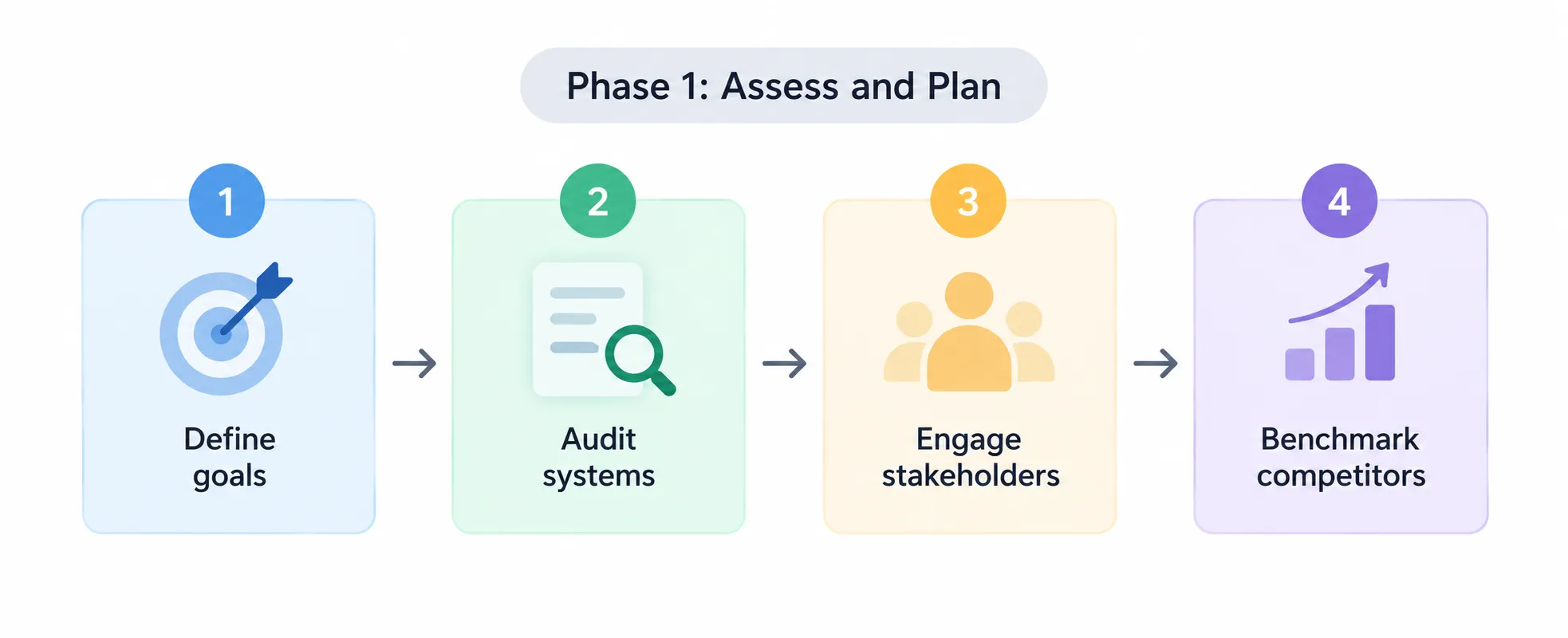
Phase 1: Assess and Plan
Define your goals: Are you primarily focused on faster verification? Improving graduate employability? Creating new revenue through micro-credentials? Your specific goals will shape your technology choices and rollout strategy.
Audit your systems: Review your current student information system, registrar processes, and graduation workflows. Understanding existing data flows is essential for seamless integration.
Identify key stakeholders: Engage registrars, IT leaders, career services, faculty, and importantly, students. Digital credentials affect everyone, and early buy-in ensures smoother adoption.
Benchmark competitors: Research what peer universities and leading institutions have implemented. Many are willing to share lessons learned.
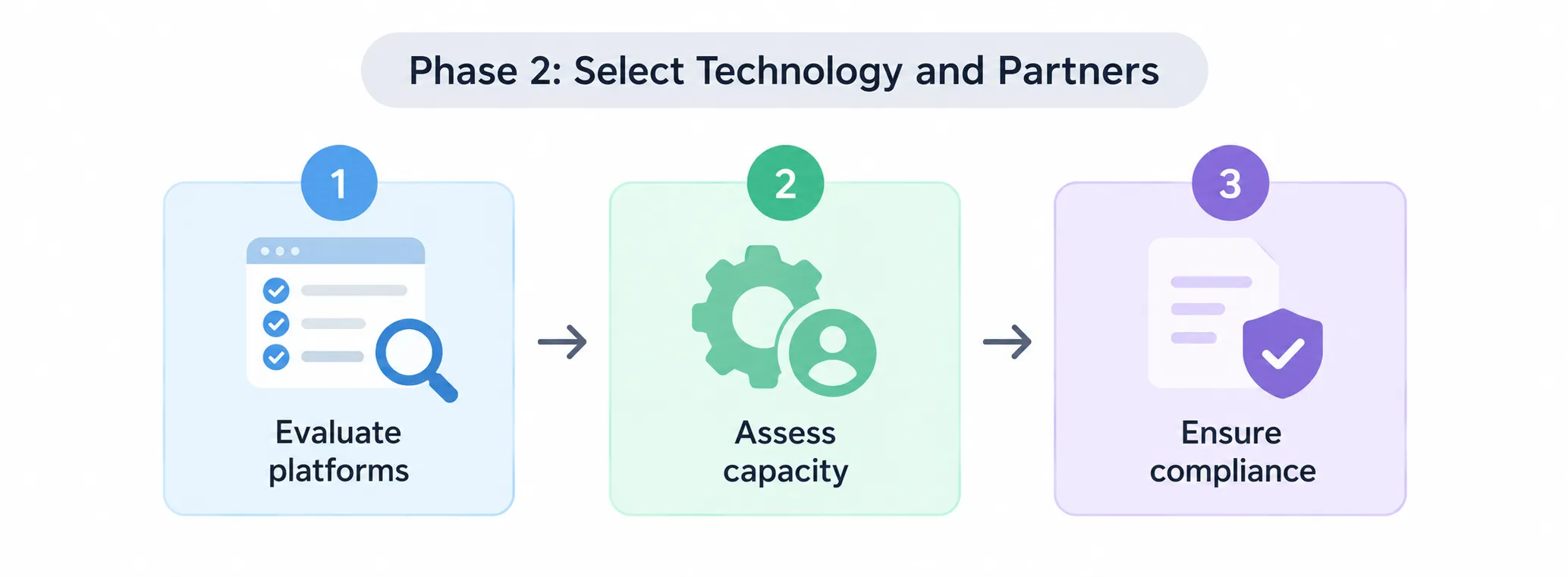
Phase 2: Select Technology and Partners
Evaluate credential platforms: Look for solutions that offer:
- Compliance with emerging standards like Open Badges and W3C Verifiable Credentials
- Integration capabilities with your existing student information system
- Strong security and privacy protections
- Intuitive user interfaces for both issuers and recipients
- Analytics and reporting capabilities. Learn about digital credential management software.
Consider your institution's capacity: Will you build internally, adopt an all-in-one platform, or use a modular approach? Consider your team's technical expertise, budget constraints, and timeline.
Ensure compliance: Verify that your chosen system meets regional regulations around educational records, data privacy (GDPR, FERPA, etc.), and accreditation requirements.
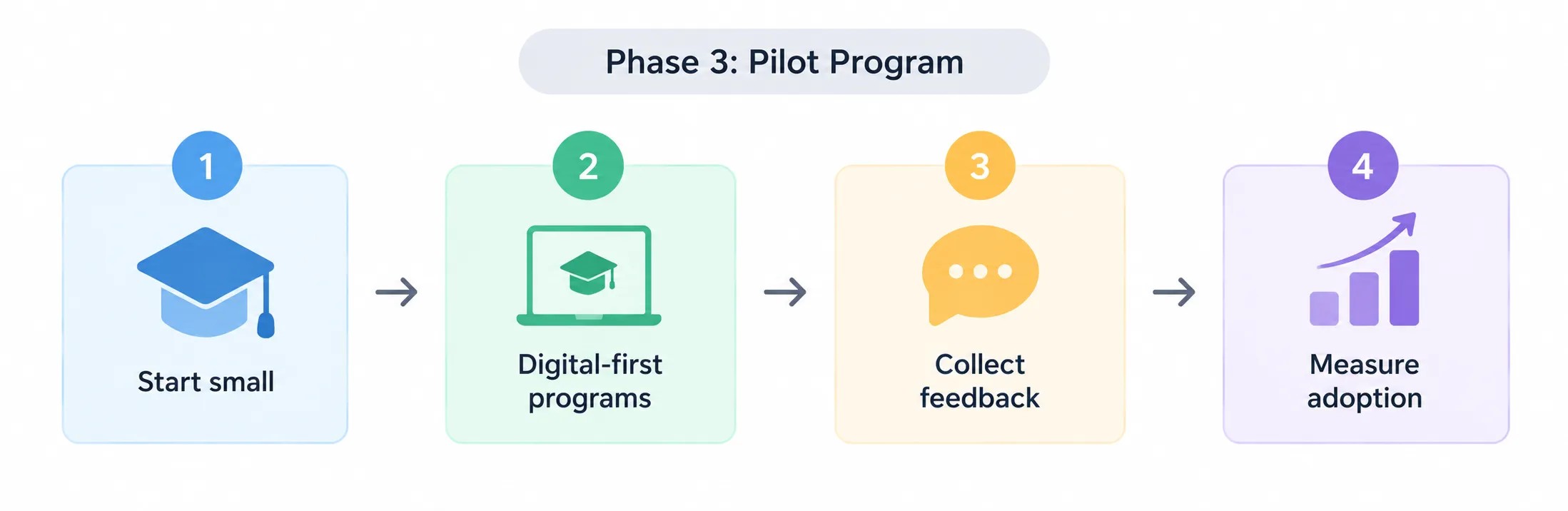
Phase 3: Pilot Program
Start small: Launch with a single department, program, or graduating class. This allows you to test workflows, identify issues, and refine processes before full rollout.
Focus on digital-native programs first: Online degree programs, executive education, or professional certificates are ideal pilot candidates since they already work with digital-first audiences.
Collect feedback ruthlessly: Gather input from students, registrars, faculty, and employers. What worked? What was confusing? What features are most valuable?
Measure adoption: Track how many graduates download and use their credentials, where they share them, and what employers think about the verification process.
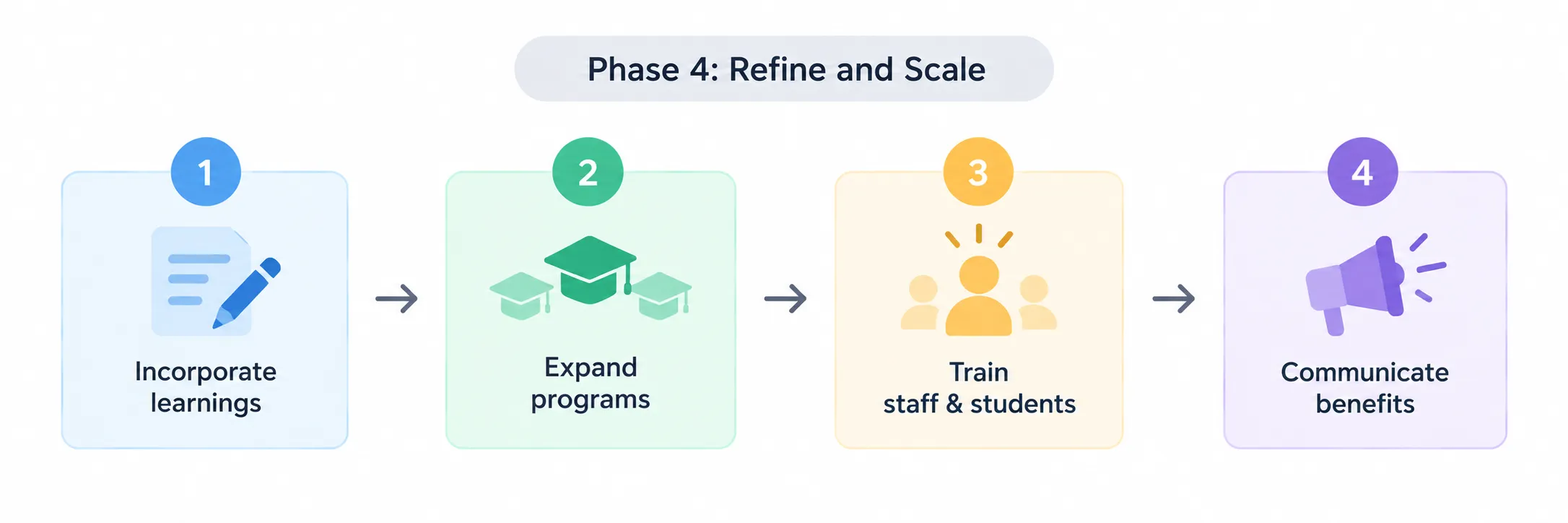
Phase 4: Refine and Scale
Incorporate lessons learned: Use pilot feedback to refine your credential design, user interface, and workflows.
Expand to additional programs: Roll out to more departments, degree levels, or credential types based on pilot success.
Train staff and students: Ensure your registrar team and student-facing staff can explain digital credentials and help graduates use them effectively.
Create clear communication: Develop materials explaining the benefits of digital credentials to graduates. Help them understand why this matters for their career.
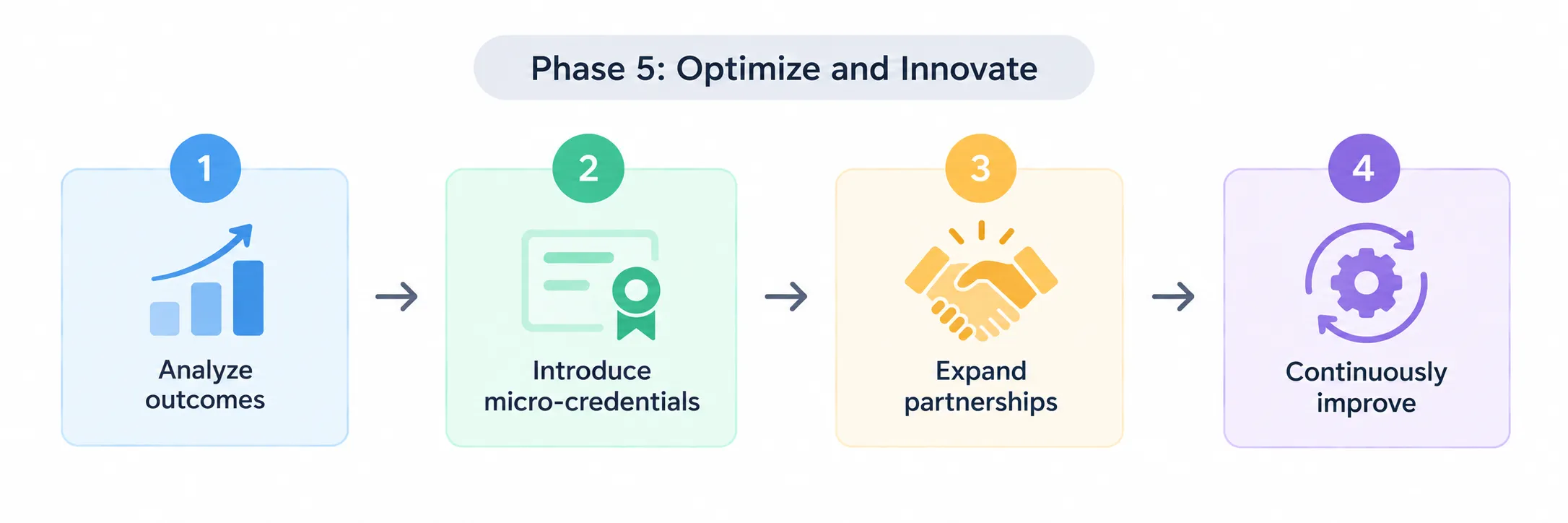
Phase 5: Optimize and Innovate
Analyze outcomes: Use analytics data to understand how digital credentials are impacting graduate employment, job satisfaction, and employer satisfaction.
Introduce micro-credentials: Once traditional degrees are established, consider issuing digital certificates for course completion, skill development, or professional accomplishments.
Expand partnerships: Work with employers to highlight credentials they value, and with professional bodies to align credentials with industry standards.
Continuously improve: Digital credential technology is evolving rapidly. Stay informed about new standards, security practices, and features that could benefit your graduates.
Implementation Best Practices
- Prioritize User Experience: The system must be intuitive for everyone: graduates receiving credentials, registrars issuing them, and employers verifying them. A confusing system will see low adoption.
- Ensure Strong Security: Digital credentials must be more secure than paper diplomas. Implement encryption, secure storage, and tamper-proof verification methods. Security breaches would devastate trust. Explore how QR codes enhance credential security.
- Build Employer Awareness: Digital credentials only create value if employers use them. Include employer outreach and education in your implementation plan. Show employers how digital credentials streamline their hiring process.
- Support Multiple Credential Types: Beyond degrees, enable micro-credentials, course certificates, skill badges, and honors distinctions. This creates opportunities for continuous recognition and engagement beyond graduation.
- Maintain Accessibility: Ensure that all graduates can access and use digital credentials, regardless of technical skill level or device availability. Consider offline access options and multiple sharing methods.
- Plan for Compliance and Auditing: Digital systems require robust audit trails for accreditation and legal purposes. Ensure your system maintains detailed records of all credential issuances and verifications.
Overcoming Common Challenges
Challenge: Resistance from traditional stakeholders
Solution: Emphasize that digital credentials enhance, not replace, the value of degrees. Highlight employer demand and graduate feedback. Show concrete outcomes from pilot programs. Example: When Arizona State University launched their digital credential system, they invited faculty to see employers actively requesting credential verification, which shifted perception from threat to opportunity. Research from LinkedIn's 2024 Workforce Report shows 92% of employers now verify digital credentials before hiring.
Challenge: Integration with legacy systems
Solution: Choose platforms with strong API capabilities and work closely with IT to ensure smooth data flows. Don't underestimate integration complexity-budget time and resources accordingly. Example: Most universities find that mapping data from student information systems (like Ellucian Colleague or Banner) to credential platforms requires 3-6 months of planning. Use middleware solutions if direct integration proves complex. Consult the EDUCAUSE guidance on credential systems for technical best practices.
Challenge: Ensuring broad adoption among graduates
Solution: Make the credential experience frictionless. Provide clear benefits, multiple sharing options, and ongoing support. Consider incentives in early phases. Example: Universities that offer LinkedIn integration see 60% higher adoption rates in the first year. Provide one-click sharing to professional profiles and email templates. Conduct webinars about credential value during new student orientation and graduation proceedings to build awareness early.
Challenge: Managing change in registrar workflows
Solution: Invest heavily in training and change management. The registrar team will be critical to success-their buy-in and competence are essential. Example: Implement a phased rollout where registrars manage credentials for one department or program first. Many institutions budget 20-30 hours of training per staff member. The AACRAO (American Association of Collegiate Registrars and Admissions Officers) offers resources and peer networks for digital credential implementation success.
The Competitive Advantage
Universities that implement digital credentials effectively gain several competitive advantages:
- Enhanced recruitment: Prospective students are attracted to institutions that recognize the value of their credentials beyond graduation.
- Stronger alumni networks: Digital credentials keep graduates connected to the university through credential platforms and engagement tools.
- Better employer relationships: Streamlined credential verification creates goodwill with employers, potentially leading to more graduate hiring and internship opportunities.
- Improved outcomes tracking: Universities can demonstrate to accreditors and stakeholders how their programs lead to employment and career success.
- Innovation leadership: Being an early adopter positions your institution as forward-thinking and student-focused.
Looking Ahead: The Future of Academic Credentials
Digital credential innovation is just beginning. As the technology matures and adoption spreads, we can expect:
- Blockchain integration: Greater use of blockchain technology for permanent, decentralized credential storage and verification.
- AI-powered matching: Employers using AI to match job requirements with graduate credentials and skills. Explore how employers verify credentials.
- Lifetime learning records: Credentials extending beyond formal degrees to include professional development, certifications, and skills acquired throughout a career.
- Interoperable standards: Greater standardization enabling credentials to be recognized globally and across institutions through digital credential platforms.
Getting Started
Implementing digital credentials is a significant undertaking, but the benefits for students, employers, and institutions are substantial. The key is starting with clear goals, involving stakeholders early, piloting before scaling, and maintaining focus on user experience.
Your graduates deserve credentials that reflect their achievement and serve them throughout their careers. Digital credentials make that possible.
Ready to innovate? The universities leading this transformation are those who start now and learn as they go. Consider launching your pilot program this academic year, and position your institution as a leader in recognizing and leveraging academic achievement in the digital age.
Ready to issue your first credential?
Design, issue, and verify certificates and badges in minutes — free for up to 300 credentials, no credit card required.